The race of a yacht club that never existed, Les Voiles de Saint-Tropez 2026
A race that began in Saint-Tropez in 1981 with a bet between two boats invited the maxis with a telex sent in the name of a yacht club that did not exist. Today it is called Les Voiles de Saint-Tropez, and 253 boats entered in 2026, three of them Turkish. We tell the story from the very beginning, as simply as we can.
 Yazan Rana Akkurt
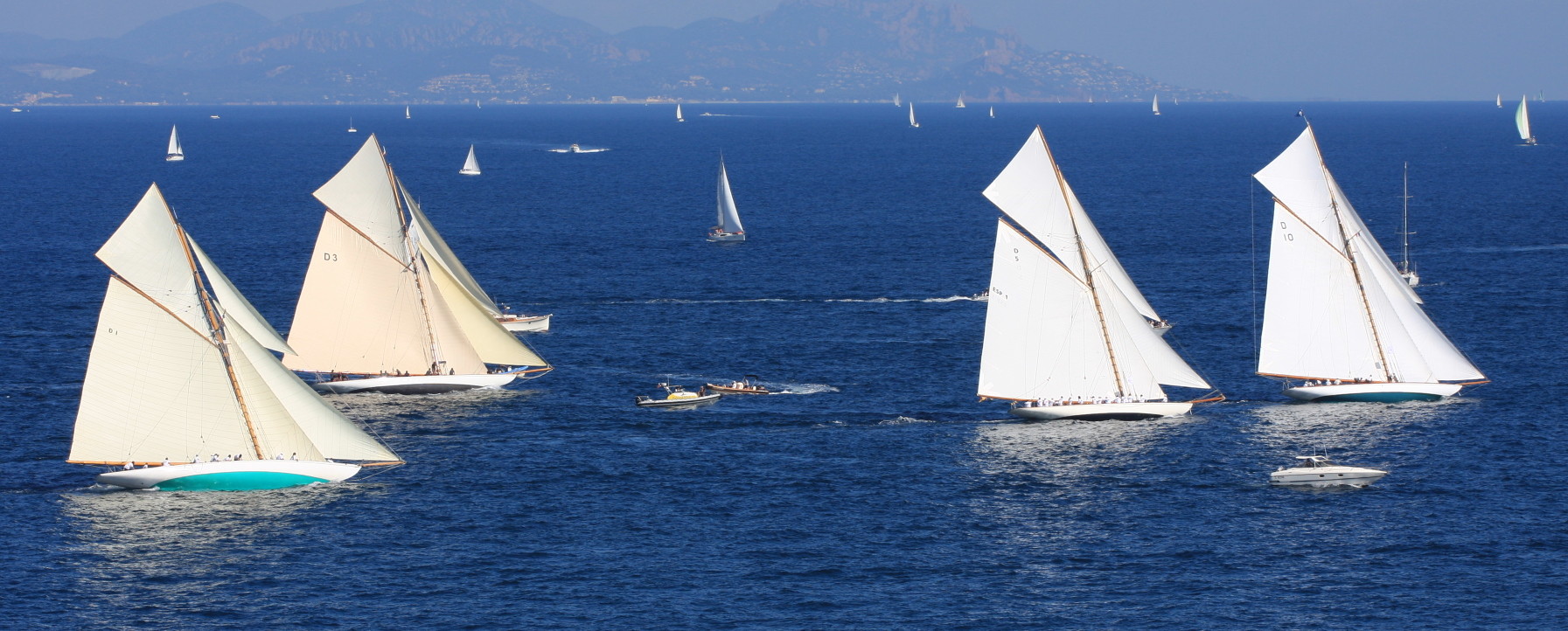
The finish line was in front of a restaurant
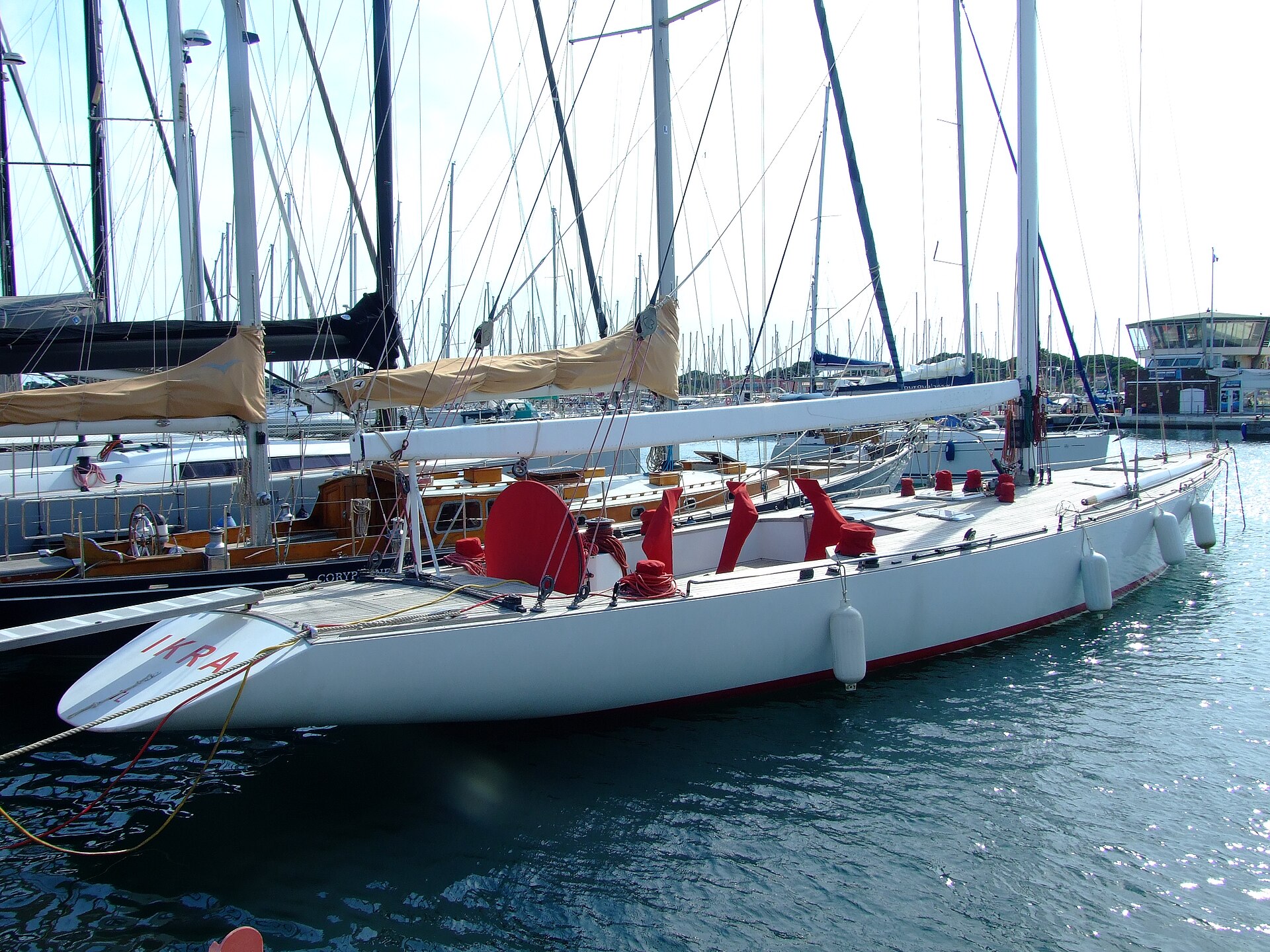
The story begins at the end of September 1981 in Saint-Tropez. An American couple returning from the Swan Cup in Sardinia stayed on in Saint-Tropez with their Swan 44, Pride. While the owner, Dick Jason, was talking about his racing successes, the 12 Metre Ikra sailed into the harbour. Someone asked whether he could beat Ikra. Dick Jason replied that he would race if Ikra accepted. Patrice de Colmont, owner of the Club 55 restaurant on Pampelonne beach, ran straight to Ikra’s skipper Jean Lorrain, who agreed to race the next day.
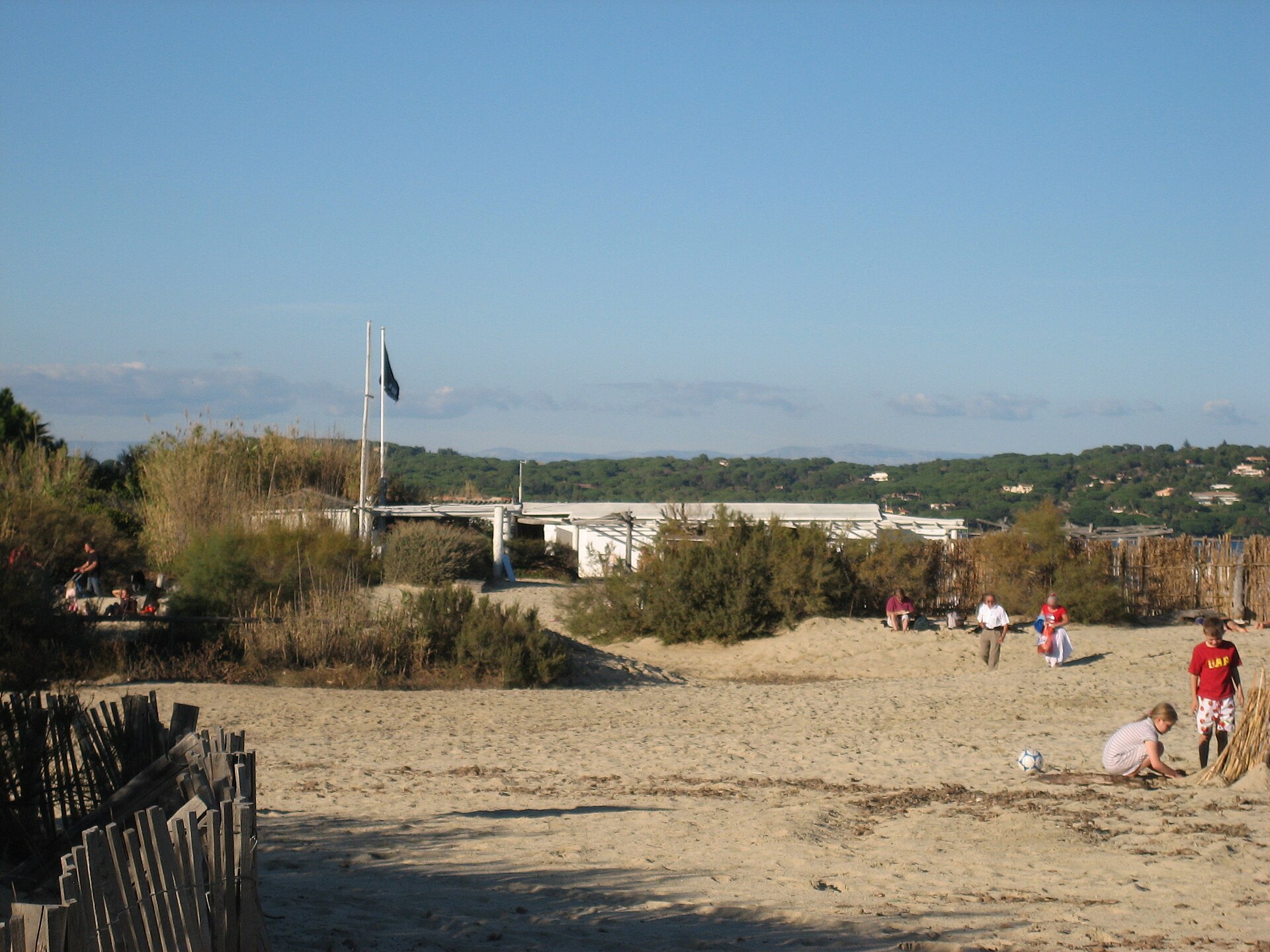
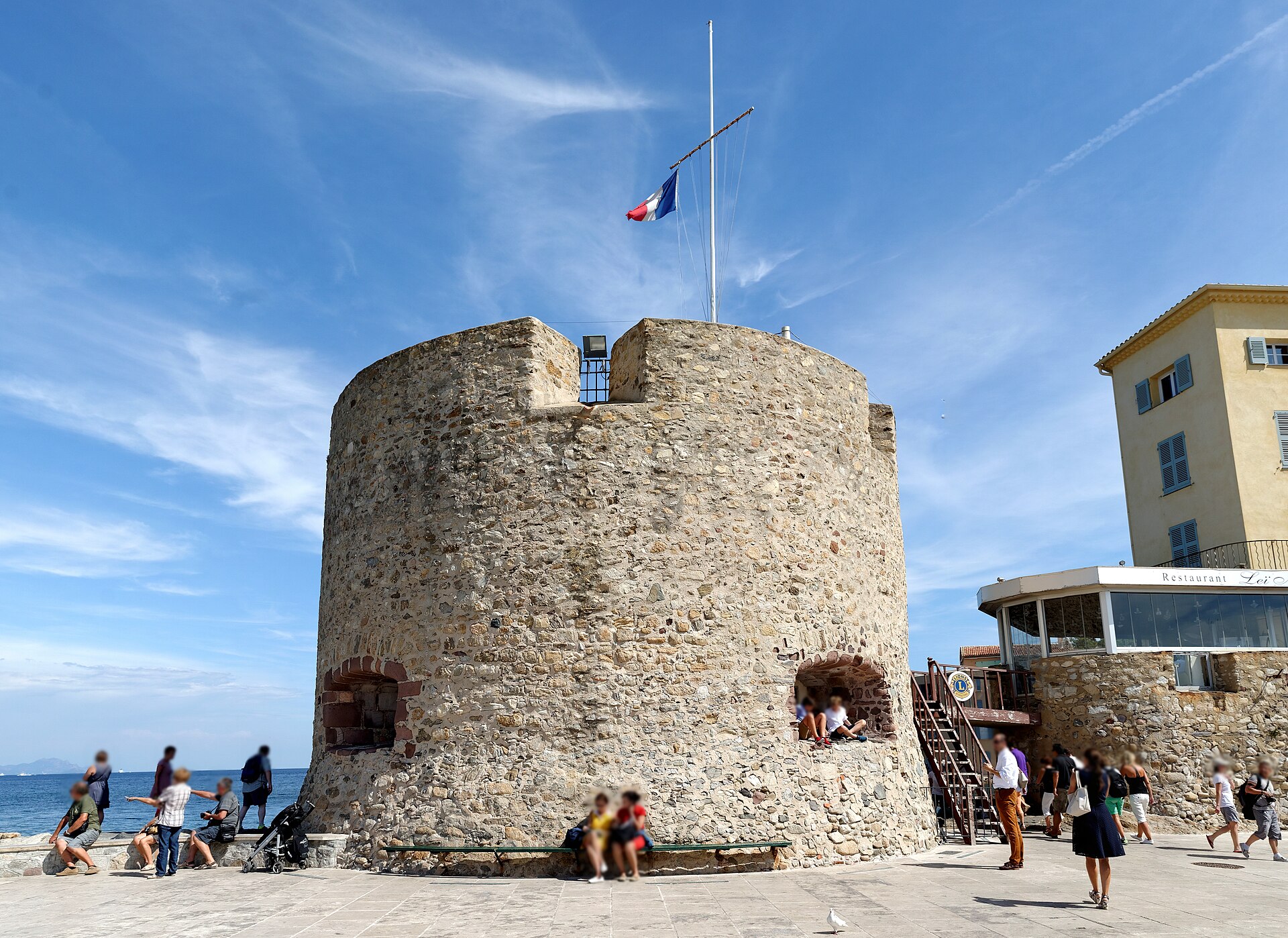
A nautical chart seemed too expensive, so the course was pencilled onto a road map. The start was given off the Tour du Portalet, right in front of Saint-Tropez. The boats rounded the buoy on the Nioulargo shoal and finished in front of Club 55, where a long table was waiting on the beach for both crews. Ikra won the race on 29 September 1981. Instead of a cup, Patrice de Colmont gave the winner a silver fruit bowl from the French Navy’s tableware.
During lunch a reporter from the local paper Var Matin turned up and asked who these people having so much fun were. Patrice de Colmont named the race on the spot. The Club 55 Cup. The crews played along, saying it had been a tough race and that they would take their revenge the following year. The next morning Var Matin ran the headline “A new America’s Cup is born!” Over time the race took the name Nioulargue. In Provençal the word means “nest of the open sea”, and it is the name of the shoal the course rounded.
The rival was an America’s Cup contender
Ikra’s story begins before Saint-Tropez. The 12 Metre class, which we covered in our America’s Cup story, was the Cup’s boat from 1958 to 1987. Ikra was built in Scotland in 1964 to a David Boyd design under the name Kurrewa V, as a British America’s Cup contender. She lost the trials to Sovereign and never raced in the Cup. In 1970, as Levrier de Mer, she served as a training boat for the French challenge. From 1976 to 2005 she belonged to Jean Rédélé, founder of the Alpine car brand.
How did a race with potatoes as a prize get onto the maxi calendar?
In September 1982 Pride asked for a rematch and a few more boats joined the challenge, among them the one-tonner Fantomas, Helisara and Bourru III, that year’s only classic. At the prize-giving the mayor handed out the town’s medal and a Belgian crew won its own weight in potatoes. According to Patrice de Colmont, there was even a pumpkin among the prizes.
When a friend remarked that “without maxis, your thing is not a regatta”, what Patrice de Colmont calls the biggest bluff in yachting began. The team sent a telex to the Aga Khan, president of the Yacht Club Costa Smeralda, which was hosting the maxi world championship in Sardinia. Sent on behalf of a “Saint-Tropez Yacht Club” that did not exist, it asked for a meeting to present a racing programme to the maxi owners. The meeting was granted within 24 hours. The team flew to Sardinia, invited the owners and was politely turned down. Before leaving, they laid on a surprise breakfast for 200 people on the pontoon where the maxis were moored. A few weeks later the maxi Mistress Quickly came to nearby Port-Grimaud to have her electronics repaired. The team invited her to Saint-Tropez and kept her there with dinners, late nights and boules tournaments. Then Midnight Sun arrived and Christian de Galéa announced that he wanted to race his new maxi. With four maxis side by side in the harbour, the secretary of the maxi class announced that the Nioulargue would join the class’s official calendar from the following year.
For Patrice de Colmont there was a single idea behind it all. “To have fun, only to have fun.” Saint-Tropez worked all summer, and when 1 October came it went to sea for its own pleasure. The race had no commercial aim.
The Nioulargue quickly drew international attention and gave a huge boost to the restoration of classic yachts. Owners began searching archives to rebuild boats faithfully, and original rigs gradually returned to the gulf. Eric Tabarly put it this way. “I never imagined I would one day see for real everything I had seen in books.”
Over the years the great names of sailing came to the gulf. On the evening of the 1983 America’s Cup final, the crew of Kiaola III celebrated Australia II’s historic victory in Saint-Tropez. In 1984 the J Class Velsheda arrived, and the maxi Coriolan IV, helmed by Eric Tabarly, raced conductor Herbert von Karajan’s maxi Helisara. Five three-masted yachts came in 1990, and in 1991 Tabarly’s Pen Duick, the J Class Endeavour and Bill Koch’s world champion maxi Matador. In 1992 Endeavour duelled with Ville de Paris, a recent America’s Cup challenger.
From the Nioulargue to Les Voiles
Since 1999 the race has been organised by the Société Nautique de Saint-Tropez under the name Les Voiles de Saint-Tropez. 2026 was the 28th edition under this name. In 2015 the fleet had reached 330 yachts and 4,000 sailors.
What sets Les Voiles apart from other big regattas is its fleet. Classic yachts more than a century old and the latest racing boats compete in the same gulf in the same week. The fleet has three main groups. Modern boats race in Modernes, classics in Traditions and the largest yachts in the Maxi division.
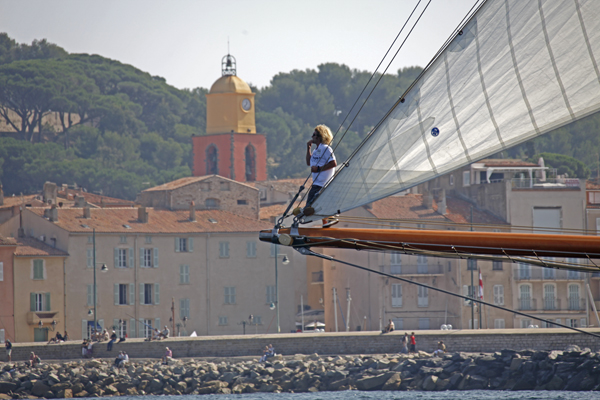
The 2026 edition ran from 26 September to 4 October, with 253 boats entered. Around 50 of them were Maxis and some 80 were classics, more than 20 of which were over a hundred years old. 123 boats were entered in the five Modernes groups.
The America’s Cup of the 1930s in the gulf
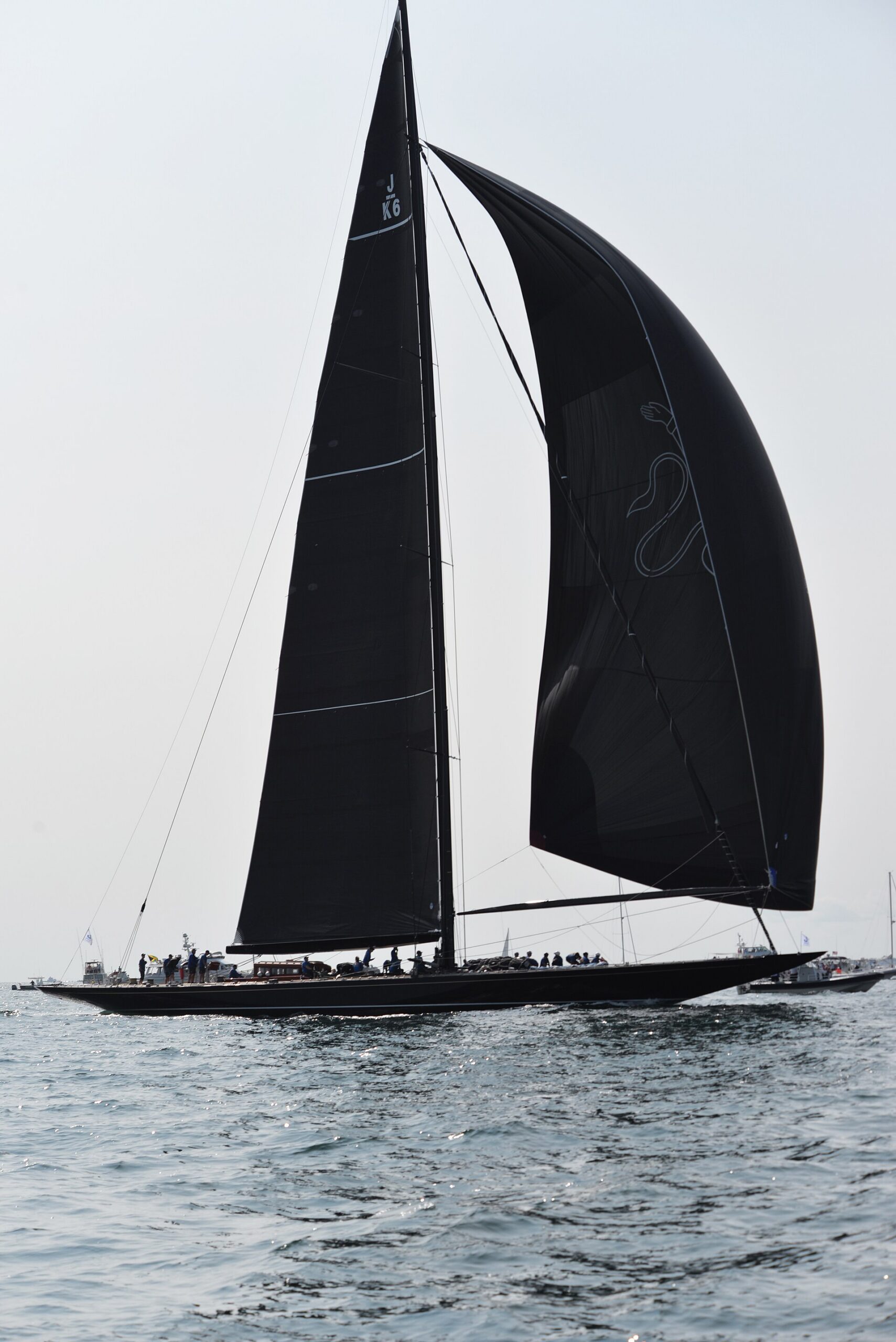
The 2026 fleet included three yachts from the J Class, the America’s Cup class of the 1930s. Rainbow is a 2012 replica of the Rainbow that defended the Cup in 1934. Hanuman is a 2009 rebuild of Endeavour II, which challenged for the Cup in 1937. Svea was built in 2017 from 1937 drawings by Swedish designer Tore Holm.
On Thursday anyone can challenge anyone
One of the best-known traditions at Les Voiles is challenge day, which carries the spirit of the 1981 bet. On Thursday crews can challenge any boat they like, whatever its class or age, and the two race each other. These races keep a rule from 1981. Protests are banned, and anyone who wants to protest must bring a deposit. Preferably chilled rosé.
The tradition dates back to 1988. When the official races were cancelled that year because of a strong mistral, the owner of France II challenged the other boats and asked only for a start to be given and the finishes to be recorded. Born as the Florida Cup, these challenges now carry the name of the skipper of the first race in 1981 and are known as the Jean Lorrain Challenges.
In the evenings the crews parade along the quay to music.
How are boats of different sizes ranked in the same table?
In the modern fleet, results are decided under the IRC system. Each boat is given a rating based on characteristics such as length, sail area and weight. The time a boat takes to complete the course is multiplied by this rating, and the ranking is based on the corrected time. This allows a large, fast boat and a smaller one to be compared in the same table.
The modern boats race in five groups by rating, from IRC 0 to IRC 4. IRC 0 is the group for the highest-rated, and fastest, modern boats. In each race the winner scores 1 point and second place 2 points, and the boat with the lowest total leads. In 2026 each boat’s worst result was discarded after five races.
Pride is still in the gulf
The name of Pride, one of the two boats from the very first race in 1981, is still seen in Saint-Tropez. The 1973 Swan 44 of the same name was restored by Will Graves, son-in-law of her first owner, and returned to the gulf in 2023 after a long absence. In 2026 she finished second of 37 boats in the IRC 3 group.
The Turkish flag in Saint-Tropez
According to the official history of Les Voiles, a Turkish Mat 12 made her first appearance in 2008 and finished ninth in her 42-boat class. The crew promised that year to come back. In 2026 there were three Turkish boats in the modern fleet.
Arkas Blue Moon and a crew built with Turkish sailors
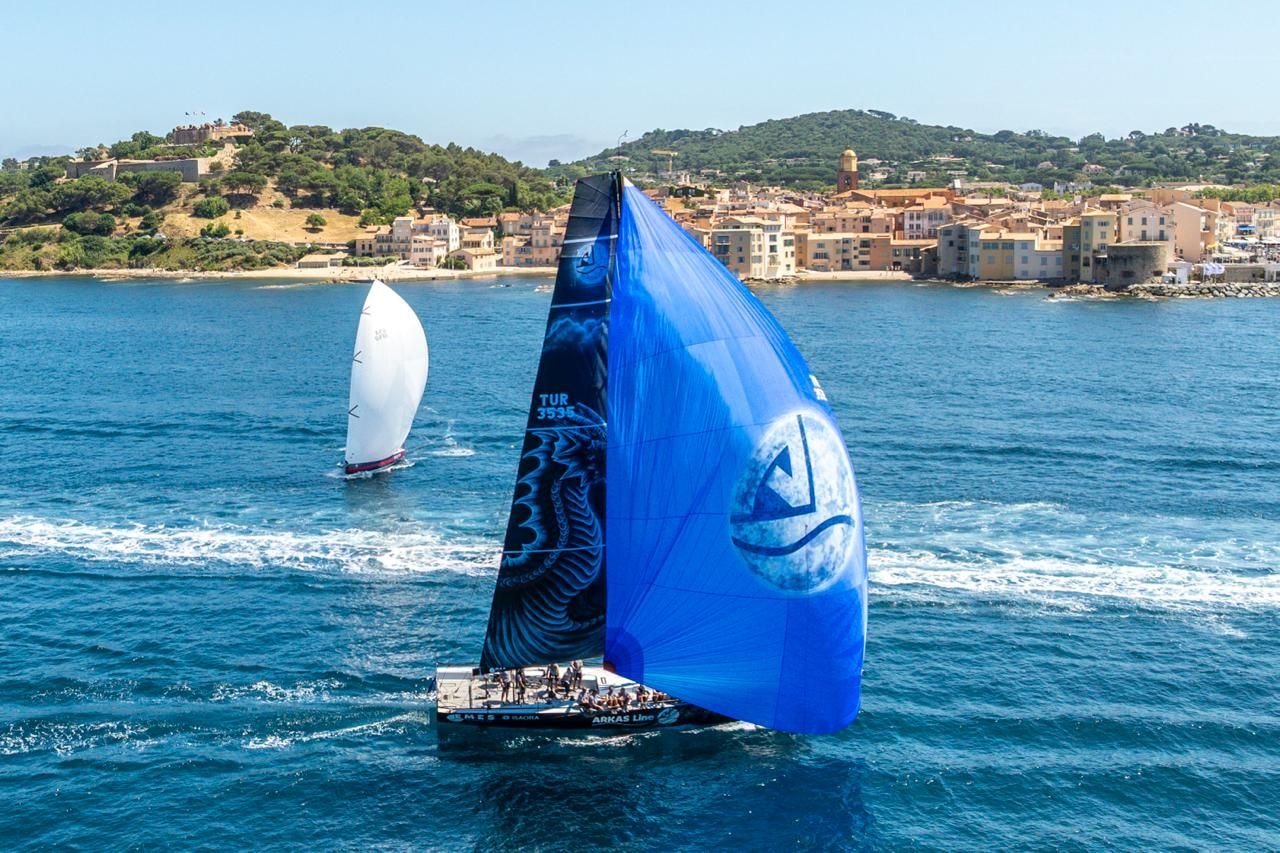
Arkas Blue Moon is a TP52 built in 2011 to a Judel/Vrolijk design and owned by Bernard Arkas. The dragon on her hull and sails draws on Bernard Arkas’s passion for art and on Turkish mythology. Arkas Sailing Team races with the support of Arkas Holding and a crew made up entirely of licensed Turkish sailors.
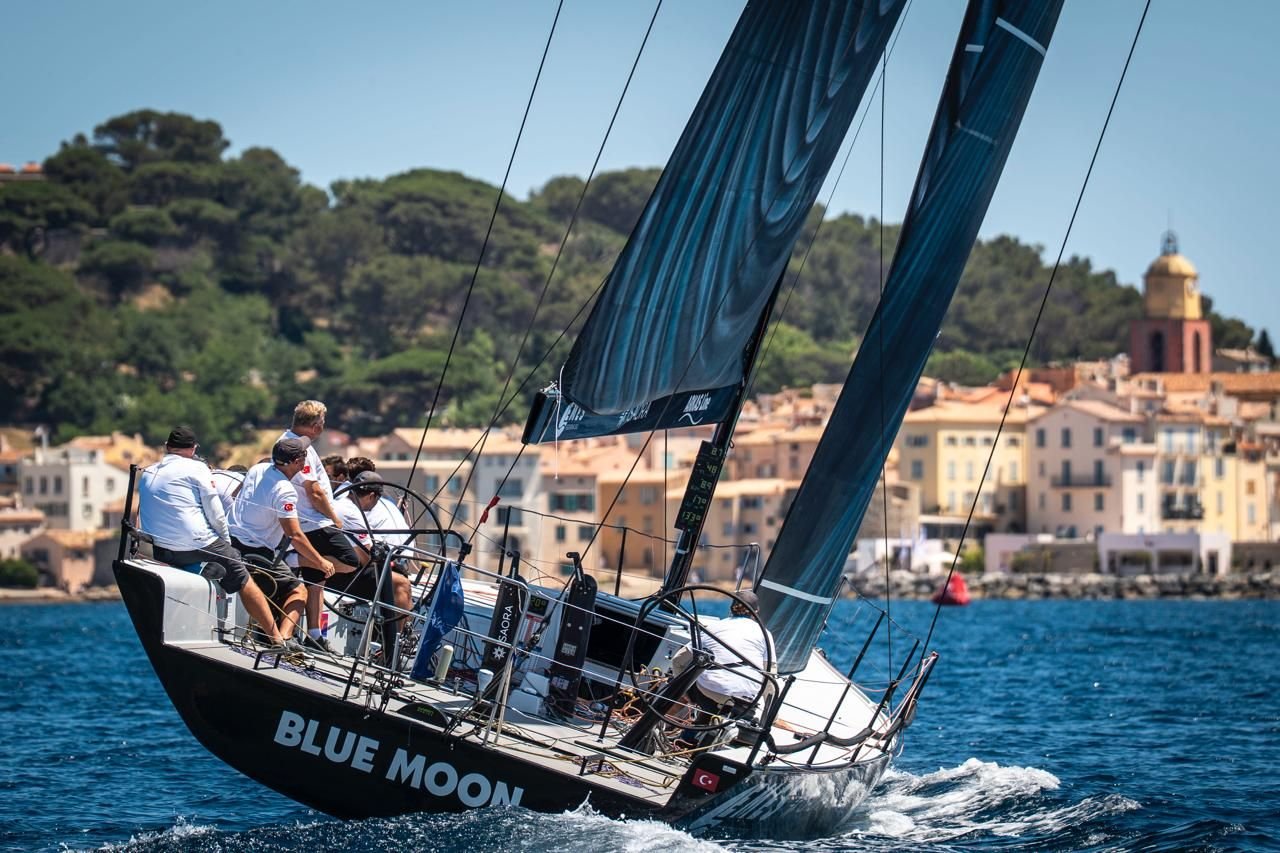
The team has a long international record. In 2015 Arkas Sailing Team won the IRC 3 and ORC 3 classes and finished fifth overall at the Rolex Middle Sea Race, regarded as the Mediterranean’s largest offshore race. The same year it won the Bosphorus Cup overall with Flying Box, and won it again in 2024 with Blue Moon. In 2023 the name Arkas Blue Moon appeared on the Les Voiles entry list on a Mat 1220. The team has raced in Saint-Tropez with the current TP52 since 2025.
They were in Saint-Tropez in June too
In 2026 Saint-Tropez was familiar water for this crew. At the 73rd Loro Piana Giraglia, the offshore leg started on 17 June after four days of inshore racing in Saint-Tropez. On the 241-mile course from Saint-Tropez to the Giraglia rock and on to Genoa, Arkas Blue Moon won IRC overall and IRC 1. Trimmer Fikret Oral described the result as “a dream come true”.
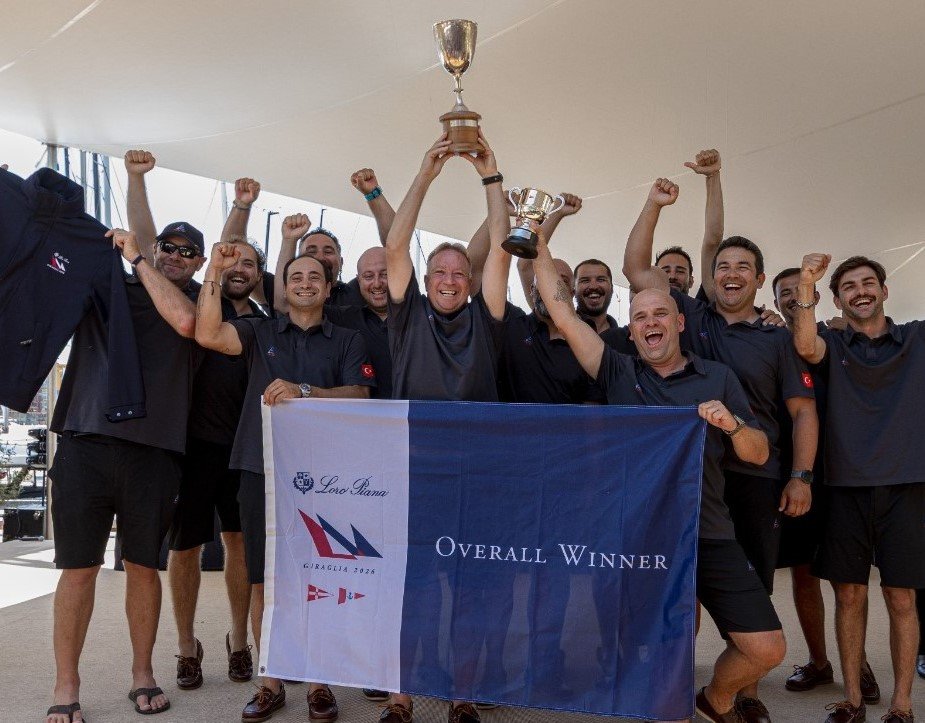
Skipper Serhat Altay summed up the result.
This result is the outcome of many years of dedication, discipline, and Arkas’s strong commitment to sailing. With Blue Moon, we have become increasingly competitive in international races with each passing season. The point we have reached today demonstrates that this structure built with Turkish athletes can compete among the world’s leading fleets.
In August, at the 21st Palermo-Montecarlo, a course of some 500 miles from Palermo to Monaco, she won ORC and IRC overall and was third across the line.
In the same group as the King of Denmark’s boat
At Les Voiles Arkas Blue Moon raced in the 11-boat IRC 0 group of the modern fleet. The group also included Nanoq, the boat of King Frederik of Denmark. According to the official bulletin, at midweek Spirit of Lorina led the group, while Arkas Blue Moon, Daguet 5, Nanoq and Interlodge were separated by no more than two points.
Arkas Blue Moon’s places in the five races were 7, 3, 3, 7 and 5. Her seventh place in the first race was discarded and she finished the week fifth in her group. The top three were Spirit of Lorina 2, Interlodge IV and Nanoq. Two boats shared the third places across the five races, two going to Arkas Blue Moon and three to Knutte.
Mercury and Wind Rider
The other two Turkish boats in the modern fleet raced in larger groups. Mercury, helmed by Erol Algül, finished 19th of 27 boats in IRC 1. Wind Rider, a Farr-designed Beneteau First 40 helmed by Tolga Gökova, finished 20th of 37 in IRC 3, the largest of the five groups. Her best result was 12th in the third race.
Fifth place in Saint-Tropez will only make Arkas Blue Moon hungrier
In 2026 Arkas Blue Moon won two Mediterranean classics, the Giraglia in June and the Palermo-Montecarlo in August. When she returned to Saint-Tropez in October, she raced in the same group as some of the world’s leading crews, fought hard against her rivals and made us proud.
For a crew that has spent the season winning, fifth place in Saint-Tropez is unfinished business. Arkas Blue Moon has raised the bar a little higher every season. As Serhat Altay said in June, this crew built with Turkish sailors races on level terms with the world’s leading fleets. The missing piece in Saint-Tropez is now clear.
Arkas Blue Moon in IRC 0, Mercury in IRC 1 and Wind Rider in IRC 3 represented Türkiye at one of the Mediterranean’s oldest regattas.
Having won the Giraglia, which starts in these waters, in June, we have no doubt the crew will work to win another trophy here. Congratulations to Bernard Arkas, skipper Serhat Altay and Tolga Yağlı, Serkan Yapan, Metin Şarifhan, Fikret Oral, Murat Çağıl, Şafak Temur, Altuğ Şenermen, Batu Zingal, Berk Can Çankaya, Deniz Altay, Teoman Kılıç and Turgut Gürbüz. We also congratulate Erol Algül on Mercury and Tolga Gökova on Wind Rider on their racing in Saint-Tropez. Here’s to more Turkish flags in the gulf next year.
Results are taken from the provisional overall standings of 3 October 2026.
Les Voiles de Saint-Tropez, Historique 1981
Les Voiles de Saint-Tropez, Comment tout a commencé
Les Voiles de Saint-Tropez, Money-time au soleil, 2 October 2026
Les Voiles de Saint-Tropez 2026 official notice board, Racing Rules of Sailing
Les Voiles de Saint-Tropez 2026, 253 voiliers, Figaro Nautisme
La Nioulargue au cœur, Figaro Nautisme
Arkas Sailing Team Achieves a Major Success, Arkas
Videos, interviews and live moments from the racecourse, on our Instagram.
@ruzgar.ustu
Follow on InstagramPodcast
Stories from sailing in Türkiye, told in English. Listen to Windward Türkiye on Spotify.
Listen on SpotifyRüzgar Üstü on Spotify
Keep reading
Eker Süzme is the first Cape 31 Gold Cup champion
Cape 31 sınıfı İngiltere ve Akdeniz filolarını ilk kez aynı start hattında buluşturdu. Saint-Tropez’de 12 ülkeden 28 teknenin yarıştığı ilk Gold Cup’ı Eker Süzme baştan sona lider götürerek kazandı.
Energy from the sun, water from the sea: Marmara Sailing Club brings the Kardeşlik Kupası onto the COP31 agenda
Türkiye begins hosting the UN Climate Change Conference COP31 in Antalya on 9 November. The sailing community is also discussing the climate agenda ahead of the summit. Two days before the 10th MASS Kardeşlik Kupası (Brotherhood Cup) on the Bosphorus on 24 October, Marmara Sailing Sports Club will host the “Setting Sail for COP 31” workshop under the auspices of the Turkish Sailing Federation (TYF) and in cooperation with TAYK.
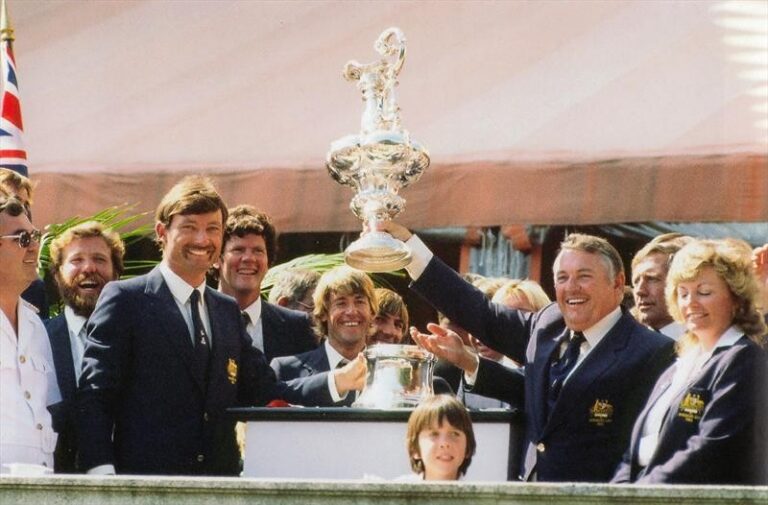
There is no second, Your Majesty. The story of the America's Cup from the beginning
A single race held around an English island in 1851 gave rise to the sport's oldest international competition that still continues today.