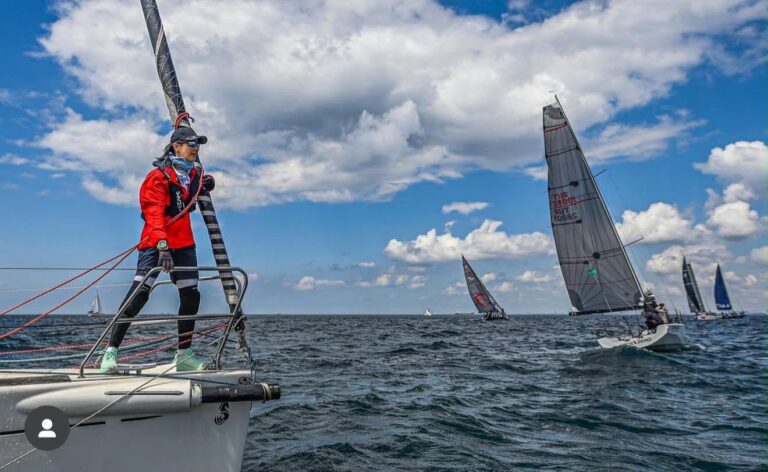
Starting yacht racing as an adult
Sailing is not a train you miss if you do not start as a child. On the contrary, most of the people filling boat decks at clubs around the world came to this sport in their thirties, forties or even fifties. This piece is for everyone wondering “is it too late for me?”
 Written by Rana Akkurt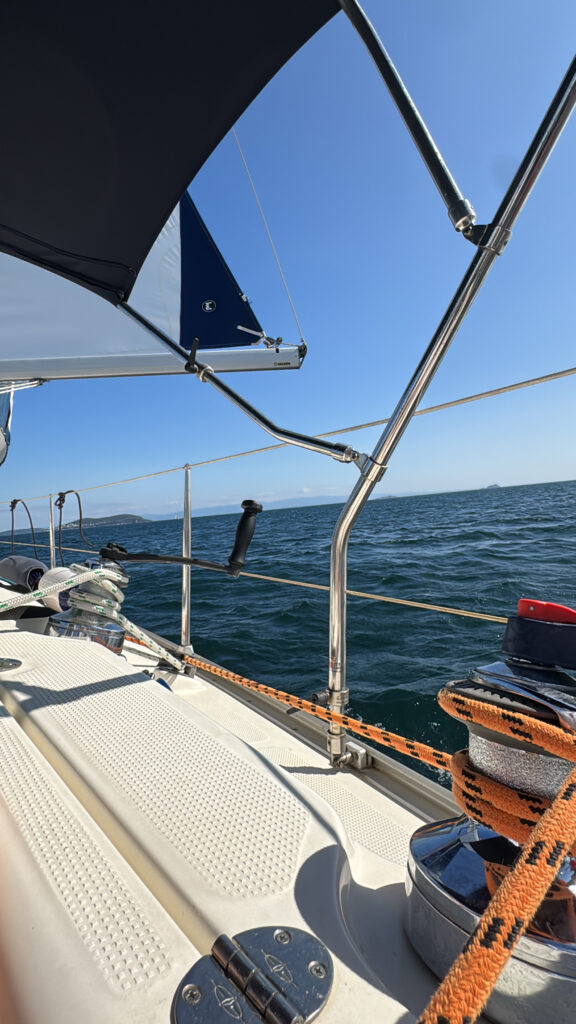
So what is sailing racing, really?
The basic logic of yacht racing is surprisingly simple: there is a course marked out on the water with buoys, there is a start line, and everyone sets off at the same time. The hard part is that you cannot sail straight into the wind. So on the upwind leg of the course, boats zigzag, sailing what is called “beating”; on the leg with the wind behind, a big spinnaker-type sail goes up. The winner is often not the fastest boat but the crew that correctly guesses where the wind will build and turns to the right side.
The sport falls roughly into two families. Inshore races last a few hours, turn between buoys and are sailed as a series packed into a weekend. Offshore races are about getting from point A to point B: they take days, sometimes months. Britain’s legendary Rolex Fastnet race is a 600-mile course starting at Cowes, rounding the Fastnet Rock off Ireland and finishing in Cherbourg — in recent years it has filled up with more than 400 boats entering within the first five minutes of registration opening.
Then there is the question of how boats are compared. In “one-design” racing everyone sails exactly the same boat: same design, same sail area, same crew number. So the difference comes from people, not equipment. When boats of different sizes and designs meet in the same race, handicap systems such as IRC, ORC or PHRF come in: times are corrected with a coefficient calculated from the boat’s measurements. That way a 12-metre boat really can race a 9-metre one.
How many people race?
There is no single answer, and that is one of the things that makes sailing interesting: within the same sport you can race on your own or be part of a crew of ten.
- Single-handedIn the Olympic ILCA 6 and ILCA 7 classes the sailor is alone on the boat. The most extreme version of this logic is the Vendée Globe: a solo, non-stop, unassisted round-the-world race of roughly 24,000 nautical miles. Charlie Dalin completed the 2024-25 edition in 64 days and 19 hours, breaking the record by more than nine days.
- Double-handedAt the Olympics the 470, 49er, 49erFX and Nacra 17 classes race with two people. Offshore, “double-handed” racing has boomed in recent years: the two-handed class that opened with 20 boats at the Fastnet in 2005 now makes up more than a quarter of an IRC fleet of over 400.
- Small crews (4–6 people)This is where the heart of club racing beats. On a one-design boat like the Melges 24 the racing crew is four or five people and the total crew weight cannot exceed 375 kilos. Classes like the J/24 are a similar size and are raced by thousands of boats worldwide.
- Big crews (8–15 people)On the 12–15 metre yachts of handicap fleets the deck gets crowded: every manoeuvre needs several people pulling on different ropes at once.
- Professional offshoreOn the IMOCA boats flying on foils in The Ocean Race Europe there are four racers plus a reporter filming on board: the rules require at least two different nationalities in the crew and at least one woman.
Who does what on board?
What worries beginners most is usually the question “what am I going to do out there?” The answer is reassuring: on a race boat the jobs are very clearly shared out, and every role has its own learning curve.
- Helm / skipperSteers the boat, leads the crew, manages speed and position relative to rivals.
- TacticianReads the wind, the current and the position of rival boats, and suggests where to turn.
- Sail trimmers (main / jib trimmer)Keeps the speed up by constantly adjusting the shape of the mainsail and the headsail.
- Pit and grinderCoordinates the ropes during manoeuvres and provides the muscle by winding the winches.
- BowmanAt the very front of the boat, manages hoisting and dropping the spinnaker: this is the most athletic and most fearless role.
- NavigatorManages the route and the weather forecasts on long races.
A newcomer almost always starts with weight balance and simple rope work: that is nothing to look down on, because when the wind is up, the boat’s balance is speed. Moving into a role like trim or pit within a season or two is completely normal.
Being a team: what the sport is really about
What separates yacht racing from many other sports is that the weight of decision-making keeps changing hands. A manoeuvre takes thirty seconds, and if the order of what five people do in those thirty seconds breaks down, the boat stops. That is why good crews almost codify the way they talk: as US Sailing’s piece on crew skills puts it, “codifying dialogue removes ambiguity” and makes it possible to fit complex information into three words.
The other points that same source underlines explain why this sport suits adults so well. Not everyone should talk at once; information needs to be filtered through to the helm. The crew accepts that the right decision can only be made 75 per cent of the time and learns to move on to the next decision without dwelling on the mistake. And in the debrief the question is not “who messed up” but “what did we miss”. These habits do not stay on the boat: plenty of people say that even their meetings at work changed after they started sailing.
There is another practical truth: finding a crew for a yacht race is harder than joining one. Almost every club spends the season short of crew. So someone inexperienced but keen, punctual and open to learning finds a place far more easily than they expect.
Videos, interviews and live moments from the racecourse, on our Instagram.
@ruzgar.ustu
Follow on InstagramPodcast
Stories from sailing in Türkiye, told in English. Listen to Windward Türkiye on Spotify.
Listen on SpotifyRüzgar Üstü on Spotify