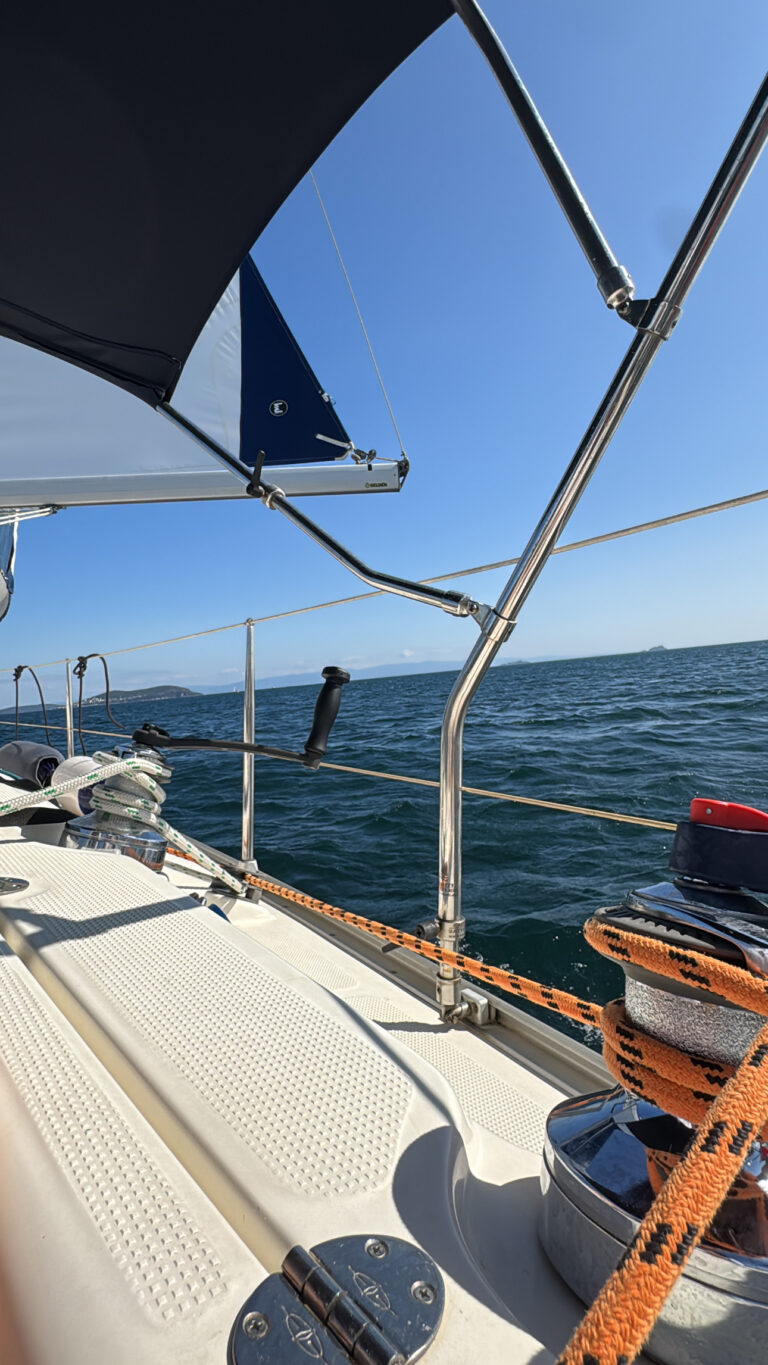
“Once the start is given, you have to stay in that moment”
A mother of two, a revenue director and board member in the hotel industry. She has been racing with different crews since 2023, and one of her most frequent roles on board is bowman. When an unlucky accident broke her heel, a long course of treatment lay ahead. She closed her season, stayed away from racing and, months later, went back on the boat. In that first race the point was not just to make the start, but to see that she could race again.
 Written by Rana Akkurt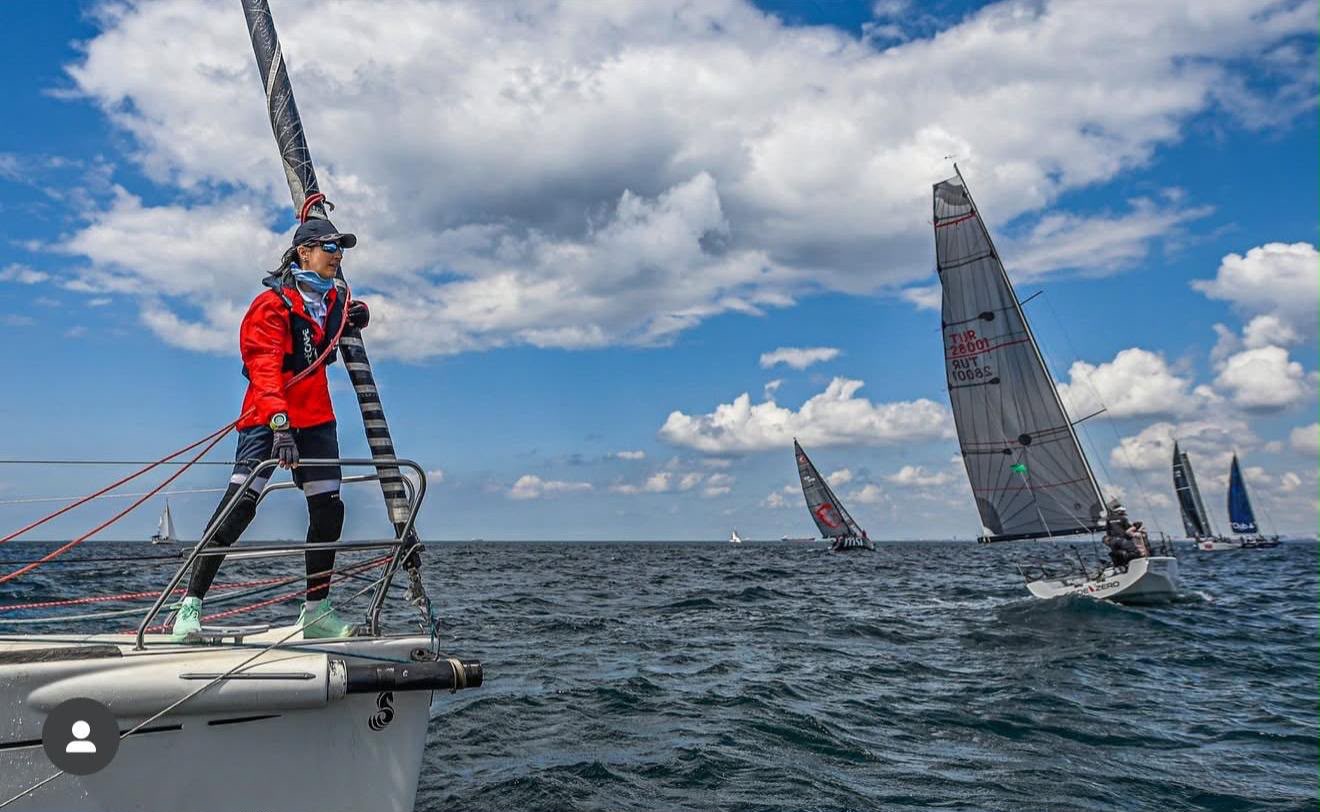
In the My First Race series, this time we listened to a sailor coming back to racing.
A sailing season sometimes ends outside the race calendar.
Planned races, training sessions and roles within the crew can suddenly give way to doctor’s appointments, physiotherapy and the question “when can I come back?”
That is what happened to her.
In a sailing story that began in 2023, she had raced with different crews and taken on a range of jobs in the race, from bow to mast, from genoa trim to other roles on board.
Then an unlucky accident broke her heel.
The doctor’s first prognosis was that she would not put weight on her foot for 4–5 months, and that the whole treatment would take 6–7 months.
At that point the goal was not to catch the next race, but to accept that her season was over.
When she got back on a boat months later, the meaning of that first start had changed.
In Rüzgar Üstü’s My First Race series, this time we listen not to someone racing for the first time, but to a sailor returning to racing.

First, let’s get to know you ashore. What do you do, how long have you been racing and which roles do you take on board?
I work as a revenue director and board member in the hotel industry.
My sailing life has been going since 2023. I race with the NTS Danışmanlık Sailing Team at Alfasail Sailing School. In some races I also had the chance to race with the MAD Parfüm Sailing Team, skippered by Deniz Yılmaz. From April 2026 I started competing with the Code Zero crew.
I have had the chance to do different jobs on board.
At NTS my main role was bowman, but at the skipper’s direction I also did genoa trim. At MAD I raced at the mast. At Code Zero I have mostly been on the bow so far, and alongside that I have taken on genoa trim and mast roles too.
Each different job lets you look at the race from another place.
An unlucky accident broke your heel. When the doctor told you about a 6–7 month treatment, what was the first thing you thought?
On the way to hospital I already sensed it was a bad break.
What I thought about most at that moment was getting through it without surgery. I was praying for that.
The next day the doctor explained that I would not be able to put weight on my foot for 4–5 months, and that the treatment would take 6–7 months in total.
You hear it, but at first you cannot quite take it in.
The first thing on my mind was getting myself used to the idea that my season was over.
I tried not to stress myself with thoughts like “when will I be back, which race can I catch?” I decided to take the process slowly and live it as it came.
I think that was the healthiest thing for me at that stage.
Is it hard for a racer to accept that the season is over?
Of course it is hard.
An order that has settled into your life is suddenly cut off.
Training, races, the time you spend with your crewmates, your weekend plans… all of it leaves your life at once.
In that period my priority was not “coming back”, it was getting better.
I did not want to set myself a date and live under that pressure.
You do not know how the process will go. You do not know how your body will respond. So I tried to move forward day by day as much as I could.
What was the hardest part of the recovery for you?
All of a sudden I had a physical disability.
I had to walk on two crutches and putting weight on my foot was absolutely forbidden.
For the first 4–5 days I wrestled a lot with “why?” and “how?”
Then my perspective started to change a little.
I realised the injury had come at a time when my fitness was good. Because coordinating your whole body on two crutches takes far more strength than you would think.
At that point I remembered again just how lucky I was.
Meanwhile your working life carries on and you have two children. How did daily life change in that period?
Daily life changes completely, of course.
Even the simplest movements you normally make without thinking start to need planning.
What really kept me going was my family.
My husband and my children were a huge support. They kept lifting my spirits, saying “you will get better and be back to your old self in no time.”
Being a mother of two already teaches you to organise life differently. Working life carries on just the same. So in this process you learn both to ask for help and to accept that there are things you cannot control for a while.
One of the most important things for me was that I was not going through this alone.
What was the support from your sailing crew like?
That was one of the things that moved me most.
The whole crew organised themselves. They took turns calling, coming to visit and asking how I was.
They never left me alone.
I am still very grateful for that.
Racing together in a sailing crew already requires a certain relationship of trust. On a boat everyone depends on everyone else. What one person does directly affects the next person’s job.
In that period I saw that this bond does not stay on the boat.
The crew’s support was one of the things that fed my motivation most.
So when did the idea of getting back on the boat start to feel realistic?
As the check-ups went on.
I felt it was important to wait for my doctor’s approval on this.
In April, after a check-up and my doctor’s approval, I joined a training session as a little surprise for the crew.
Up to that moment I had been following my body’s progress anyway.
Getting back on the boat is another matter.
Feeling good ashore is not the same as working on the bow of a moving boat.
The boat is constantly moving. You have to keep your balance, carry loads and react quickly.
So it was not possible to judge the comeback only by “I can walk now.”
You say the question of “knowing your body” matters to you. Where does sailing fit into that?
I think I am someone who knows her body, and I think everyone should be aware of that.
Knowing when you can push, when you have to stop and what your body is telling you is very important.
And sailing is a very special sport for noticing and developing your own potential.
You see your physical limits.
Balance, strength, endurance, reflexes… all of it is engaged at once.
At the same time you also have to keep making decisions mentally.
When these two come together, I think that alongside the check-ups, the person who understands the right moment best is still you.
The bow is one of the physical jobs on board. Did that make you anxious when you came back?
Of course you cannot help checking your body.
On the bow your working space is very dynamic.
In manoeuvres especially you have to be quick. You have to keep your balance and complete another job at the same time.
So the question “how does my foot feel?” does not disappear completely.
The interesting thing about racing is this: once your job starts, your focus shifts very fast.
After a certain point you stop thinking “I have an injury” and start thinking “what do I need to do now?”
For me that was one of the signs that the comeback was real.
Then came the first race day. What was going through your mind before the start?
I was very excited.
My mind was on the race.
The course, the manoeuvres to come, the jobs on board…
Being able to come back to racing with my crewmates was a real piece of luck for me.
As the start approaches your mind switches to the race anyway.
Instead of focusing on the injury, I was focusing on what I had to do.
You say “sailing forces you to stay in the moment.” Can you say a bit more about that?
That is exactly one of the things I love most about sailing races.
Whatever you are going through, you have to be in that moment.
You may be in pain.
You may be going through a very busy time at work.
You may have something else on your mind.
But from the moment the start is given, you have to stay inside the boat.
You have to follow the wind. You have to listen to the crew. You have to make the manoeuvre on time.
There is no room left to think about anything else.
That is why it is a sport that makes my heart beat faster every time and makes me say “I am so glad I do this.”
Whatever you are going through, you have to be in that moment. From the moment the start is given, you have to stay inside the boat.
What did you feel when you saw the finish?
I was in pain.
Seeing that I could finish the race in spite of the pain made me very happy.
I was proud of myself once again.
That day the finish really did mean something different to me.
That finish was not just the end of a race.
It was the concrete proof, after months of recovery, that I could race again.
How do you define success in a race? Is seeing the finish sometimes really enough?
Absolutely, I think so.
I do not believe it is right to enter a race only to get on the podium.
Of course we all want to race well, to get results, to improve.
Every sail carries a lesson of its own.
Sometimes you pull off a good manoeuvre.
Sometimes you make a mistake and you see why.
Sometimes you communicate better with your crew.
And sometimes simply finishing the race becomes the important thing for you.
What is valuable and meaningful for me is learning something from every race and keeping on making myself better.
That was my definition of success in that first race too.
Finishing the race. Staying on the boat. And seeing that I could do it again.
Two children, a demanding career and a race calendar… where does sailing sit in your life?
Sailing is not just a hobby for me.
The moment you race, you carry a real responsibility.
You are responsible to your crewmates. You have to know your job, be physically ready and stay focused.
At the same time it is a very special space where I can step outside daily life.
At work you have one set of responsibilities.
At home you have another role.
But when you step onto the boat, none of that makes a manoeuvre happen for you.
There, you have to do whatever the job is.
Maybe that is why I love it so much.
Did anything change in the way you look at sailing after this first race?
I can say that I understand better why I love sailing.
Being able to do something sometimes becomes completely normal in your eyes.
Then, when you cannot do it for a while, you realise on your return how precious that ordinary-looking thing is.
Racing again was a little like that for me.
I had taken starts before, I had seen finishes before.
But this time the same things did not carry the same meaning.
That is why that race really did feel like a “first race” to me.
My First Race
In this episode of the My First Race series, we listened to the story of a sailor who came back to racing after a 6–7 month recovery.
Between her career, family life, physical recovery and the support of her crew, she told us what returning to racing really takes.
Videos, interviews and live moments from the racecourse, on our Instagram.
@ruzgar.ustu
Follow on InstagramPodcast
Stories from sailing in Türkiye, told in English. Listen to Windward Türkiye on Spotify.
Listen on SpotifyRüzgar Üstü on Spotify