Looking for Türkiye on the World’s Clean Regatta Map
Of the 56 targets in World Sailing’s Agenda 2030, 17 are about events. Their most visible result on the water is the Clean Regattas certification, which reached 219 events in 44 countries in 2025. We looked at how the certification works, what it measures and where Türkiye sits on its map.
 Written by Rana Akkurt
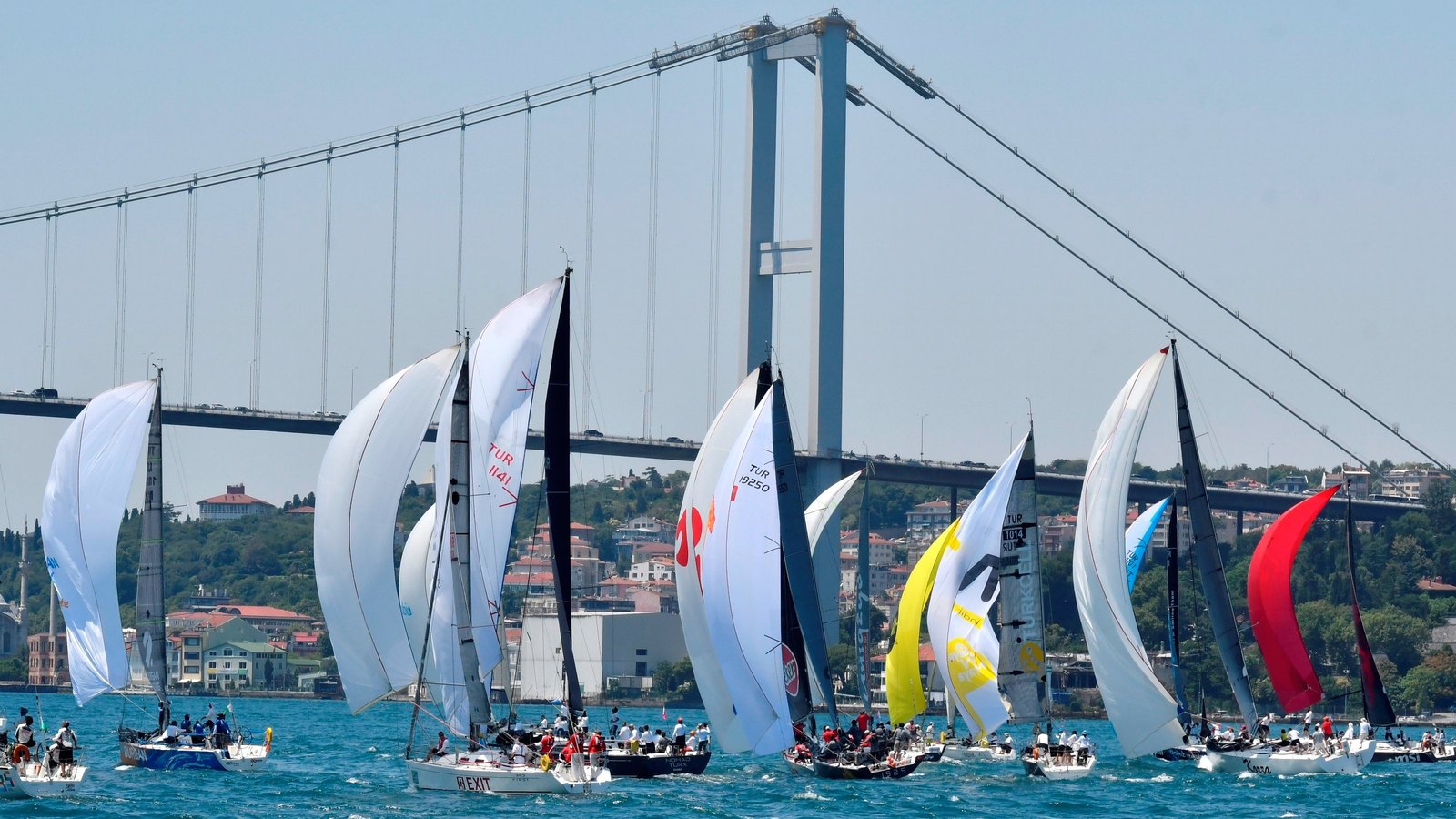
One figure in World Sailing’s 2025 Impact Report gives the most concrete measure of the environmental record of sailing events. In 2025, 219 events in 44 countries earned Clean Regattas certification.
That is a 43 per cent increase on the previous year. The number of events reaching Platinum, the highest level, rose by 59 per cent.
In the second article of our sustainable sailing series, we examine how that figure came about. What is a clean regatta certification, what does it ask of an event, and how does it relate to the promises World Sailing made for events?
It started with five regattas in Maine and now spans 53 countries
Clean Regattas is run by the ocean conservation organisation Sailors for the Sea. The organisation was founded in 2004 by David Rockefeller Jr. and Dr David Treadway, and joined Oceana in 2018.
The programme began in the summer of 2006 with five regattas in the US states of Maine and Massachusetts. According to Sailors for the Sea’s latest figures, more than 5,500 events in 53 countries have taken part so far, reaching 4.5 million sailors and spectators.
The process is simple. The organiser registers the event free of charge, chooses which practices to apply from a ready-made toolkit, and receives certification after documenting what was done.
A clean regatta starts at the registration desk
The easiest way to understand the twenty practices Clean Regattas asks for is to follow a race day from start to finish.
When sailors arrive at the registration desk, no paper forms are handed out. Entries and notices are handled digitally. The welcome pack comes in a reusable bag in place of a plastic one, and there is no plastic bottle inside. Water refill stations stand on the pontoon and crews go afloat with their own bottles.
Getting to the club is part of the plan too. The organisers encourage public transport, cycling and car sharing. Measures are taken to keep cleaning products and fuel used in boat maintenance out of the water, and crews are reminded of environmentally responsible boating. Marine wildlife and sensitive habitats in the racing area are covered at the briefing.
Back ashore, food is served without plastic plates or straws. The menu includes produce from local suppliers and vegetarian options. Waste bins are set out for sorting, with a green team of volunteers standing by them. Leftover food does not go in the bin.
On one day of the regatta week there is a beach or marina clean-up. Local environmental organisations are invited to the event, and signage around the venue explains to spectators what is being done.
The trophy handed over at the prize-giving is on the list as well. In place of trophies made new every year, the programme suggests a perpetual trophy, a prize made from upcycled material or a practical item the sailor will use.
Each of these twenty practices carries points according to its impact and the effort it takes. The total decides the event’s level. The levels are Bronze, Silver, Gold and Platinum. Platinum requires at least nineteen of the twenty practices.
A voluntary programme is becoming a condition of the racing calendar
World Sailing formally supports Clean Regattas and requires all events it owns to follow the programme.
A similar step came last year from the Offshore Racing Congress. At its 2025 annual general meeting, ORC decided that all ORC championships must be certified Clean Regattas.
These decisions show a programme that began as voluntary turning, step by step, into a condition of the international racing calendar.
The plastic promise was kept, the coach boat promise has yet to be
The events section of Sustainability Agenda 2030 contains 17 targets. The 2025 Impact Report states clearly where some of them stand.
World Sailing says it removed single-use plastics from its own events in line with the 2019 target. Water quality testing and the requirement that official boats are not solely reliant on fossil fuels have been written into the contracts of the events it owns. Its ISO 20121 certification was renewed in November 2023 and is audited every year by the British Standards Institute.
Some targets are behind schedule. The agenda set out to reduce the number of coach boats with combustion engines at Olympic class events by 50 per cent by 2024, compared with 2017. The report uses a different measure for this target and states that the number of coach boats at Paris 2024 was 26 per cent lower than at Tokyo 2020. Quotas for the 2027 World Championships are being set.
Work continues on the biosecurity strategy planned for 2022. The marine mammal guidance due by 2020 was published in December 2025.
The target date for removing single-use plastics from national sailing events is 2030. That target speaks directly to national federations and the clubs that organise races.
The organiser both declares and receives the certificate
Clean Regattas is a self-assessment programme. The organiser reports which practices were put in place. No independent auditor visits the venue.
This structure helped the programme spread quickly. It is free, easy to understand and workable for events of any size. The same structure also marks its limit, because the certificate shows declared practices and does not show measured results.
For organisers who want independent auditing, ISO 20121 exists. This standard for event sustainability management systems is certified by third parties. It is a general standard with no sailing-specific content, and because of the resources it demands it is mostly chosen by large events.
World Sailing’s agenda described this gap eight years ago. Target 21 called for an event sustainability standard, certified by ISEAL and available for voluntary use by all sailing events, to be in place by 2020. In the 2025 Impact Report this target is still listed as ongoing, with the Clean Regattas framework named as the voluntary standard.
Our expectation is that a certification based on independent auditing will come onto the agenda for sailing events in the coming years. At a time when sponsors and public bodies ask for verification of sustainability claims, sports events are unlikely to remain outside that expectation.
From Ilhabela to Dartmouth, the same twenty practices
Copa Brasil de Vela in Ilhabela, Brazil, reached Platinum level in 2025 by putting nineteen of the twenty practices in place. The organisers also set up a partnership to upcycle used sails.
The Garmin ORC Doublehanded European Championship became the first Clean Regatta held in Finland and earned Platinum.
The Port of Dartmouth Royal Regatta, which welcomes more than 80,000 visitors in a week, was certified at Platinum level for the third year running.
The Cascais leg of the 52 Super Series retained its Platinum level. In the 2025 season the series supplied more than 5,000 litres of purified water per event and passed surplus food on to local charities at all five events.
The programme works through the same twenty practices at a youth regatta and at an event watched by tens of thousands.
The programme also reaches beyond racing. In the United States, the Newport and Annapolis boat shows were certified through the same twenty practices. Annapolis overhauled its waste management, raised its recycling rate and set up five water refill stations across two weekends.
These shows also reveal the hard part. At a venue with hundreds of exhibitors, the organiser can set its own rules, but getting every exhibitor to follow them takes separate effort. Sailors for the Sea recommends regular communication with exhibitors before the event and sharing a guide prepared for them in advance.
The same difficulty applies to any regatta with sponsors, caterers and suppliers. A clean regatta depends on everyone at the venue taking part as much as on the organiser’s decision.
Türkiye is on the map with eight events
The Clean Regattas past events record lists eight events from Türkiye. Four are at Platinum level, one at Gold, one at Silver and two at Bronze.
| Level | Event | Organiser | Place and date |
|---|---|---|---|
| Platinum | KiteFoil Masters’ Worlds | International Kiteboarding Association | Istanbul, September 2025 |
| Platinum | WingFoil Racing World Cup Türkiye | International Wing Sports Association | Istanbul, August 2025 |
| Platinum | Formula Kite Europeans | International Kiteboarding Association | Urla, May 2025 |
| Platinum | 2022 Arkas Optimist World Championship | B.B. Bodrum Sailing Club and the Turkish Sailing Federation | Bodrum, June and July 2022 |
| Gold | Formula Wing Europeans | International Wing Sports Association | Urla, May 2025 |
| Silver | Marvy Sail 2020 | Club Marvy | Menderes, 2020 |
| Bronze | Dragon Spring Series | Turkish Dragon Association | Bodrum, 2022 |
| Bronze | Sunset Dinghy Sessions | Club Marvy | Menderes, 2018 |
The first record dates from 2018. Four of the eight events took place in 2025, and all four were run by the international kiteboarding and wing class associations in Istanbul and Urla. The Turkish Sailing Federation appears once, as co-organiser of the 2022 Arkas Optimist World Championship with B.B. Bodrum Sailing Club.
None of the eight records is an offshore yacht race. The trophies on Türkiye’s yacht racing calendar have yet to appear on this map.
These records only show events that applied for certification. Different efforts, from water distribution to waste management, are also in place at races that have not applied. They are not recorded within a shared framework, so they cannot be assessed side by side.
So we are putting the question directly to the clubs that organise races.
What do you do to reduce single-use plastics at your races?
How do you sort your waste, and what happens to surplus food?
Do you have a fuel or emissions plan for your committee and support boats?
Is Clean Regattas or a similar certification on your agenda?
We will ask these questions in interviews with clubs over the coming weeks. Each interview will be published in this series, built on the same questions. Türkiye’s place on the world’s clean regatta map will be defined by what the clubs themselves have to say.
To arrange an interview, reach us through our contact page →
This is the second article in our sustainable sailing series.
Part one, World Sailing Made 56 Promises for 2030. Where Does Türkiye Stand?
World Sailing 2025 Impact Report
World Sailing Sustainability Agenda 2030
Sailors for the Sea, Clean Regattas
Clean Regattas case study, boat shows
Videos, interviews and live moments from the racecourse, on our Instagram.
@ruzgar.ustu
Follow on InstagramPodcast
Stories from sailing in Türkiye, told in English. Listen to Windward Türkiye on Spotify.
Listen on SpotifyRüzgar Üstü on Spotify
Keep reading
World Sailing Made 56 Commitments by 2030. Where Does Türkiye Stand in These Commitments?
World Sailing's Sustainability Agenda 2030 includes 56 targets and specific deadlines under six headings. According to the 2025 Impact Report, 17 of the 32 monitored core targets have been achieved. So, where does Türkiye stand in fulfilling these commitments?

This Is How Sailing Started in Atıl and His Father’s Workshop
Atıl built a 5.70-metre plywood trimaran together with his father. Keçi was launched in 2020 and he learned most of his sailing on that boat. A second boat, Alida, arrived in 2025.