This Is How Sailing Started in Atıl and His Father’s Workshop
Atıl first met sailing as a child, alongside his father. Years later the two of them built a 5.70-metre plywood trimaran. Keçi was launched in 2020, and it was on that boat, largely by trial and error, that he learned to sail. In 2025 came a second boat, Alida.
 Written by Rana Akkurt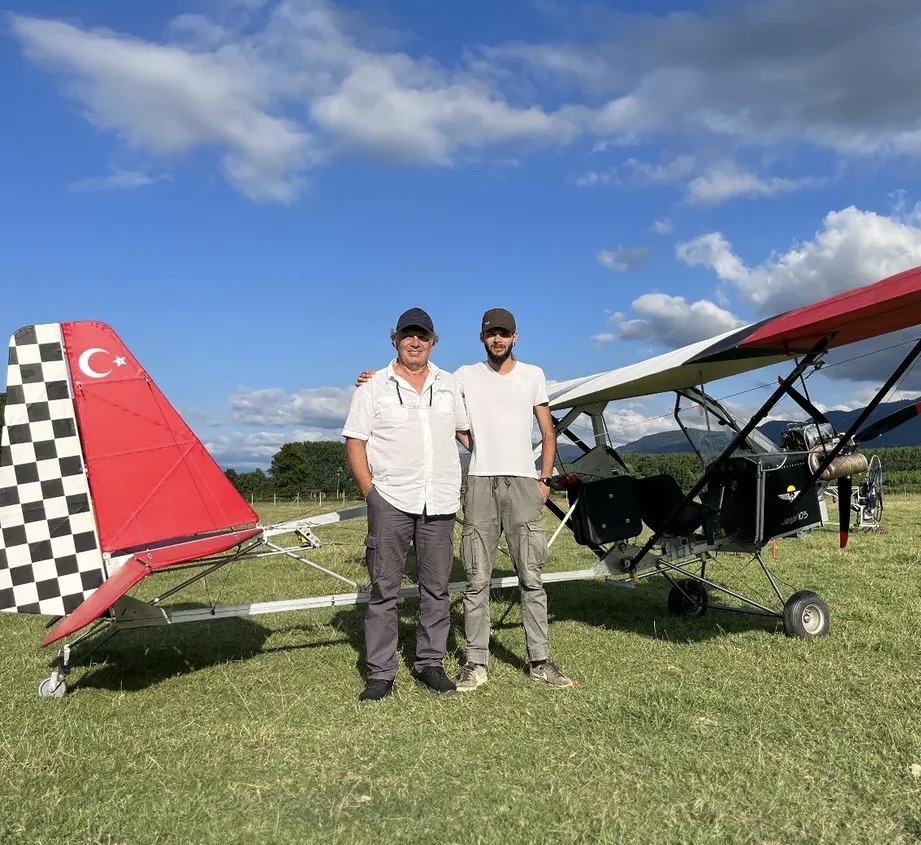
A new series starts on Rüzgar Üstü: Who Carries the Sail? The first piece features an amateur sailor who built two boats with his father and taught himself to sail.
Atıl came across sailing for the first time when he was 11 or 12. His father was taking lessons at a sailing school at the time, and at weekends they went out to sea together in the school’s small boats.
At that age, sailing did not become a permanent part of Atıl’s life. But building things together with his father did.
Over the years, father and son built single-seat gliders and ultralight aircraft. During his university years Atıl also worked on the production of two electric vehicles. So making a vehicle with your own hands, getting to know materials, experimenting and rebuilding when necessary was familiar ground for both of them.
“Shall we build this?”
At the end of 2019 his father sent Atıl a video of a 5.70-metre plywood boat with a trimaran hull.
The message contained a single question:
“Shall we build this?”
This time the craft they would build was not going to fly; it would move across the water.
From the shop to the workshop: building Keçi
First they worked out a budget, then they started gathering materials. They also turned the small shop where they sold industrial kitchen equipment into a temporary workshop.
The boat was built using the plywood stitch-and-glue method. The panels were cut, joined with copper wire, then epoxy and fibreglass were applied. Başar Titiz, who had previously built canoes and skis with the same method, supported them through the process.
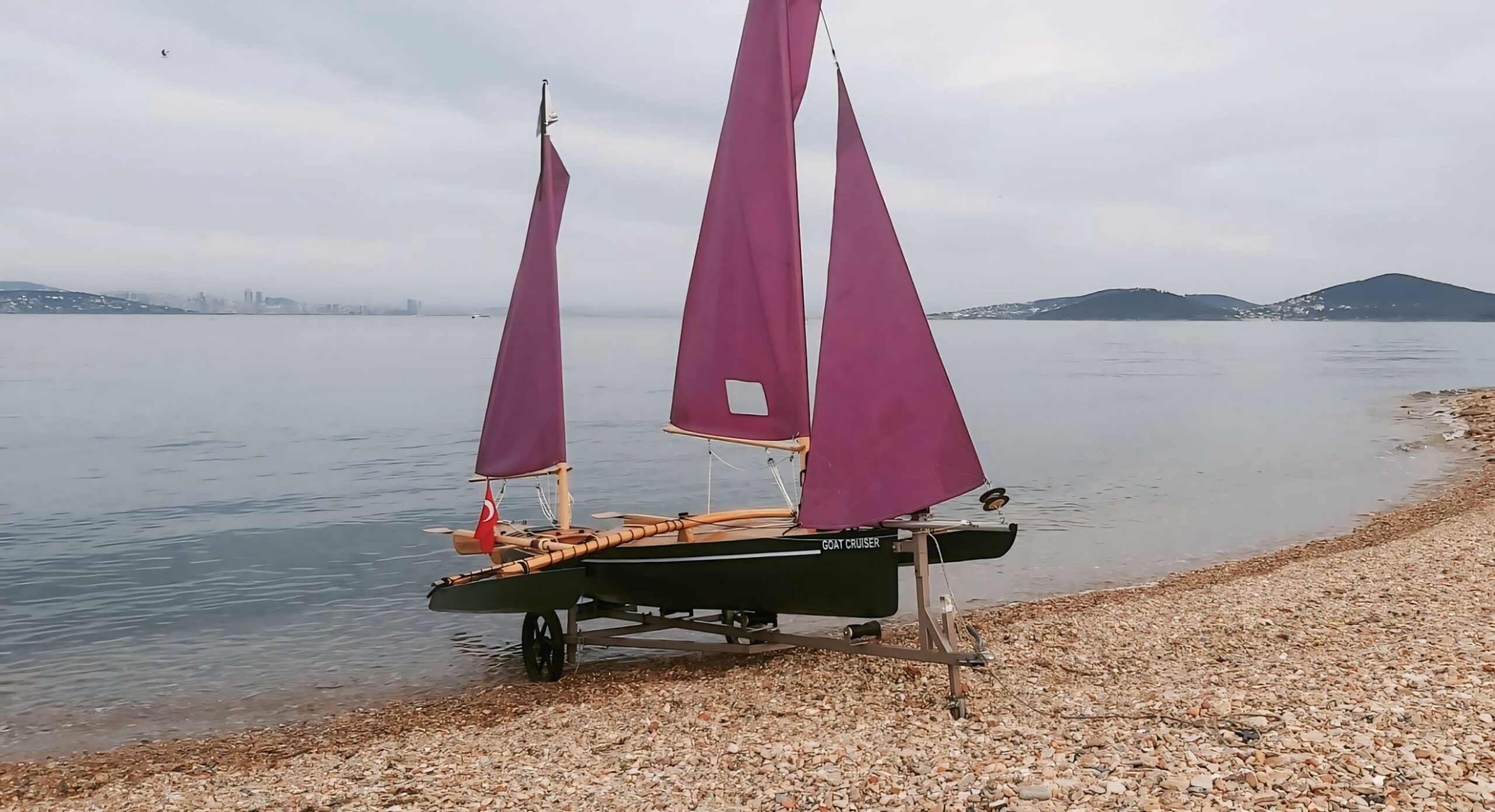
First the trimaran’s two outer hulls were completed, then the main hull. After around three months of work, the boat was launched in October 2020.
It was named Goat Cruiser. Atıl simply calls it “Keçi”.
He built the boat first, then started learning to sail
When Keçi was launched, Atıl’s sailing experience was limited.
There was what he remembered from childhood. But after that he largely taught himself to sail: he made progress by reading, by trial and error and by solving the problems he ran into at sea.
Through all of this, the person closest to him was again his father.
Atıl describes his father not only as the person he built these boats with, but as his teacher and his master. What his father wanted to pass on to him at first as a hobby grew into something bigger for Atıl. He wanted to learn the craft properly and put sailing at the centre of his life.
The changes made to the boat were part of that too.
When the mast broke, they made a wooden one. The rudder system changed. They switched to a furling system to make hoisting and dropping the sails easier.
So understanding why the boat behaves the way it does, improving it and rebuilding it when needed became as much a part of Atıl’s sailing experience as sailing it.
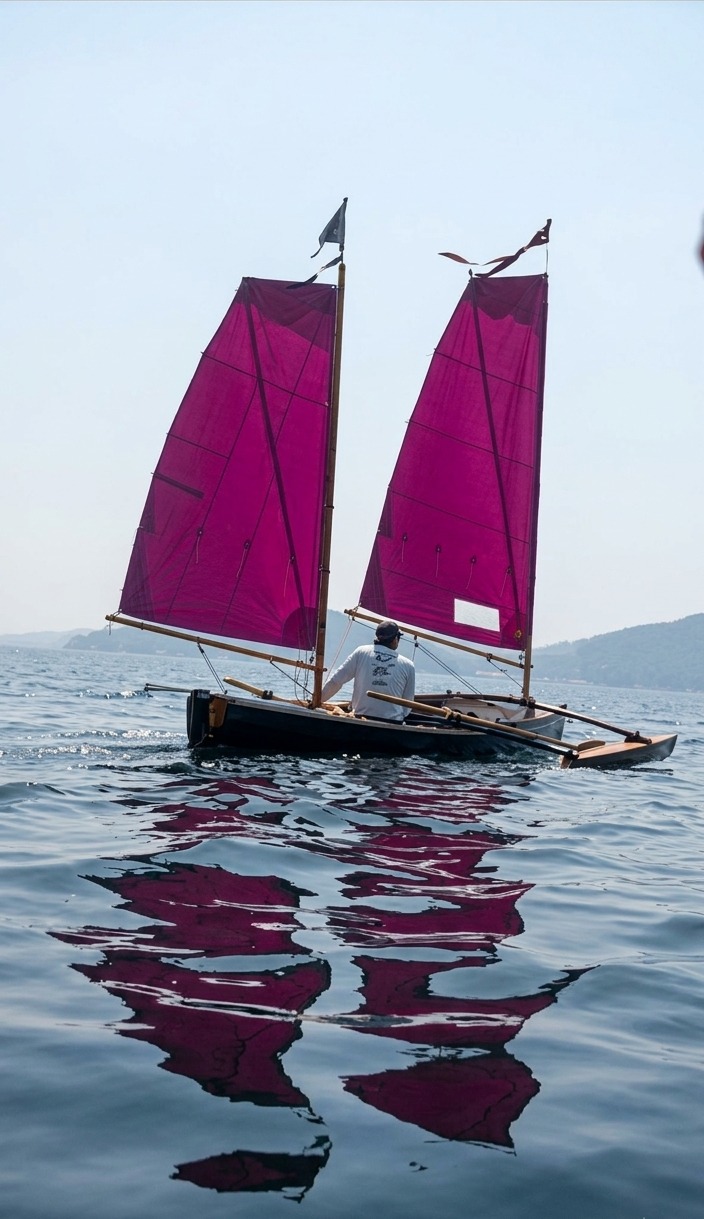
Over time, Keçi became known around the Islands for her pink sails.
From aircraft to sailing boat
Looking back, the ultralight aircraft Atıl and his father built earlier is an interesting part of this story.
On one side is a craft that creates its own airflow as it moves; on the other, a boat that moves by using the wind that is already there.
For Atıl, what does not change is the urge to build.
Getting to know the material, understanding a system and, in the end, producing a craft that works.
Only this time the wind was at the centre of the job.
The second boat: Alida
By 2025 Atıl wanted to build a different type of boat.
Keçi had a trimaran hull and a ketch rig. For the new project he wanted to work on a single-hulled boat with a sloop rig. That is why the Argie 15 design he saw on Kınalıada caught his interest.
The same shop was turned into a workshop again, and work began on the second boat.
Atıl says that in the earlier projects his father was more the master and he was the apprentice. On the Argie 15 he took on the larger part of the build himself.
In that sense Alida was not just a second boat. It was the project where the master-apprentice relationship between father and son started to change.
After around four months of work, the boat was finished.
She was named Alida.
Boatbuilding is not separate from sailing
Until last spring Atıl worked as an instructor at a sailing school in Kalamış. During that time he sailed a range of boats and taught sailing.
But he says his own interest is focused above all on small boats, boatbuilding and working on boats.
Today he maintains Keçi and Alida himself. He researches new boat projects and from time to time works on his own designs.
He describes himself as an amateur sailor and believes sailing should not be seen only through racing, big boats or one particular way of using a boat.
Videos, interviews and live moments from the racecourse, on our Instagram.
@ruzgar.ustu
Follow on InstagramPodcast
Stories from sailing in Türkiye, told in English. Listen to Windward Türkiye on Spotify.
Listen on SpotifyRüzgar Üstü on Spotify