A newspaper, a tea merchant and 175 years of sponsorship in sailing
A brand in the name of a race, on the hull of a boat or on a team’s kit is an everyday sight today. In sailing it was not always so. We trace the turning points of sponsorship from 1851 to the present.
 Yazan Rana Akkurt
A marquess donated the cup
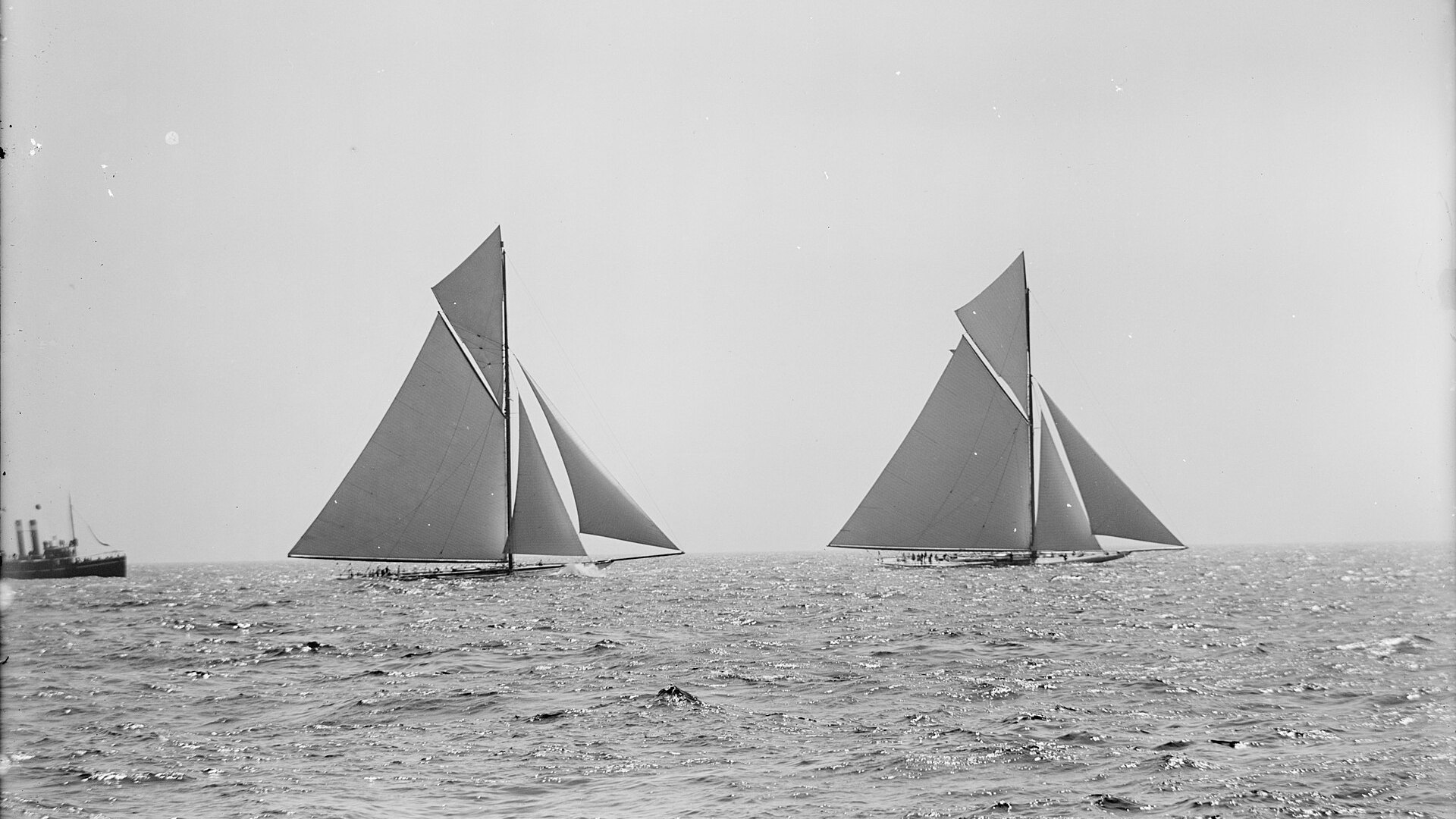
In the hundred years after 1851, the sources show no brands in yacht racing. The silver cup known today as the America’s Cup was bought in 1848 by the Marquess of Anglesey, who donated it to the Royal Yacht Squadron. A marquess holds the rank just below a duke in the British peerage. The yacht America, which won the cup in 1851, belonged to a private syndicate. In those days an owner had the boat built and raced it under his own name.
The figure who came closest to sponsorship in this period was Sir Thomas Lipton. The tea merchant challenged for the cup five times between 1899 and 1930 and lost all five. His yachts carried no logos or slogans. Even so, the campaigns made Lipton tea a well-known brand in the United States.
A newspaper backed the race for those crossing the Atlantic alone
The earliest known commercial sponsor is a newspaper. Blondie Hasler devised a race for single-handed yachts across the Atlantic in the second half of the 1950s and found no backer until 1959. In 1960 The Observer supported the race. Five boats started and all five finished. Francis Chichester won in 40 days.
The Sunday Times took a similar step in 1968. The paper announced the Golden Globe, a race for a non-stop solo voyage around the world, and promised 5,000 pounds for the fastest circumnavigation. According to the race’s own history, the paper’s aim was a story that would raise its circulation. Robin Knox-Johnston was the only sailor to finish, in 312 days.
In 1968 the fleet included boats named after brands
The earliest known examples of boats carrying brand names are in the 1968 transatlantic race. Geoffrey Williams won it in Sir Thomas Lipton, a boat that carried the name of a tea brand. The fleet also included two boats named after a whisky brand and a wine producer. The race was sponsored by a newspaper, while the boats carried the names of other companies.
Two years later a company commissioned a boat that would carry its name from the start. The state-owned British Steel Corporation had a 59-foot steel yacht built for Chay Blyth and gave it the company’s name. In 1970-71 Blyth sailed westwards around the world non-stop in 292 days.
In 1973 the first crewed round-the-world race started from Portsmouth. A brewer financed the race and gave it its name. In the first fleet of what is now The Ocean Race, at least four boats carried commercial names.
The rules prohibited advertising
In 1969 a clause was added to the international racing rules prohibiting advertising other than makers’ labels. In this period brands could appear only in a boat’s name. According to the race archive, the international federation expressly allowed boats to carry sponsors’ names in the 1977-78 round-the-world race. The general racing rules first changed in 1981, when event sponsors were permitted.
Change came later to the America’s Cup. In 1974 Alan Bond wanted the name of a property development written on the stern of his yacht and did not succeed. In 1980 a sail bearing a logo was withdrawn after the New York Yacht Club objected.
In the sources, the earliest America’s Cup in which advertising on the boats is explicitly mentioned is the 1992 edition. In 1991 the Washington Post reported that advertising would appear on the boats at the coming Cup. Dennis Conner’s three main sponsors were Cadillac, Pepsi and American Airlines, and each paid 3 million dollars.
In France, boats are known by their sponsors’ names
Boats named after their sponsors became most widespread in France. In 1976 Alain Colas entered the transatlantic race in Club Méditerranée, a 72-metre four-masted yacht. The organising club limited boat length to 56 feet for the next edition.
A new race was then founded in France. In 1978 the advertising executive Michel Etevenon launched the Route du Rhum, which had no size limit. Mike Birch won the first edition in Olympus Photo by only 98 seconds. Later winners include boats named after oil, food, insurance and banking companies.
In the Vendée Globe, founded in 1989, boats also race under their sponsors’ names. The last four editions were won by boats named after an insurer, a bank and a food brand. A campaign budget ranges from 1 to 8 million euros. In 2017 Banque Populaire said it spent 5.5 million euros a year and that its win that year had delivered visibility equivalent to 55 million euros of advertising space. The figure is the company’s own statement.
Luxury brands gave their names to events
In 1983 Louis Vuitton gave its name to the series that selects the challenger for the America’s Cup. Seven teams raced in the first Louis Vuitton Cup in Newport. The brand withdrew in 2007 and returned in later years. In 2024 it became the Cup’s title partner, and in January 2026 it renewed that partnership for Naples 2027.
Rolex also gives its name to events. The Maxi Yacht Rolex Cup has carried the brand’s name since 1985, the Fastnet since 2001 and the Sydney Hobart since 2002. The Sydney Hobart’s first naming sponsor was Hitachi, which paid 50,000 Australian dollars in 1976. These two brands prefer to name events rather than teams.
Tobacco sponsorship ended by law
Between 1977 and 1998 tobacco brands gave their names to boats in six editions of the round-the-world race. There were four tobacco boats in the 1989-90 fleet. Legislation followed. France banned tobacco sponsorship with a law passed in 1991, and the ban took effect in 1993. The European Union’s 2003 directive required member states to ban tobacco sponsorship of cross-border events by 31 July 2005.
The last known tobacco title sponsorship belonged to a match racing tour and ended at the close of 2005. There is no comparable ban on alcohol at European Union level. Countries such as France, Norway and Lithuania prohibit alcohol sponsorship under their own laws.
Today teams are bought and sold as well
From 2001 the round-the-world race was run as the Volvo Ocean Race. In that edition all eight boats carried a company or brand name. Volvo sold the race in 2018 and it was renamed The Ocean Race in 2019. In 2023 the IMOCA class was won by the team of 11th Hour Racing, an organisation that works for ocean health.
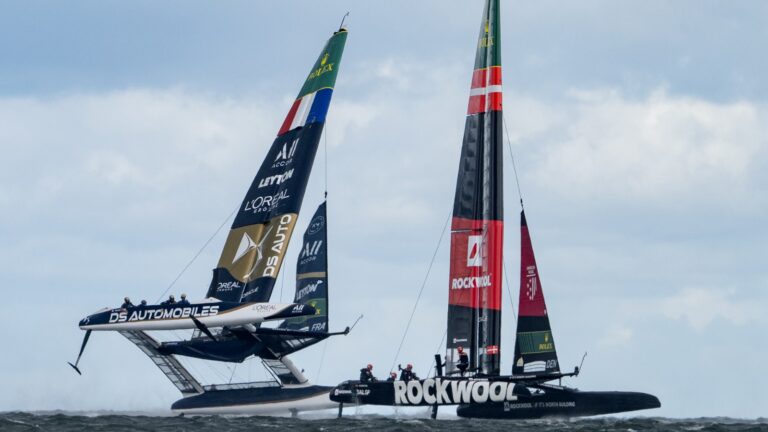
The newest example is the SailGP league. Larry Ellison and Russell Coutts founded it in 2018. In the first two seasons teams were valued at between 5 and 10 million dollars. In November 2024 Rolex became the league’s title partner under a ten-year agreement. In February 2026 the Denmark team was sold for 60 million dollars. ROCKWOOL will remain the team’s title sponsor until 2032. The team’s owner and its title sponsor are different companies.
What has changed since 1960?
Brands first gave their names to races and then to boats. Logos later appeared on hulls and sails. Today events and teams are bought and sold as well. The sectors that sponsor have changed over time too. Newspapers gave way first to drinks and tobacco producers, then to banks and insurers. Today luxury brands, investment funds and sustainability-focused foundations stand out.
Method note. This article is a compilation. We consulted the races’ and institutions’ own histories, the press of the period and secondary sources. The names of alcohol and tobacco brands have been deliberately omitted. Rüzgar Üstü has no commercial relationship with the brands named in this article.
Sources
Royal Western Yacht Club, OSTAR history · Golden Globe Race, The History · Royal Ulster Yacht Club, Sir Thomas Lipton · Yachting Monthly, Chay Blyth · The Ocean Race archive · Route du Rhum, La légende · Rushall Partnership, a history of the racing rules · Washington Post, 30 January 1991 · CYCA timeline · Boat International, Louis Vuitton and the America’s Cup · MoneyVox, Banque Populaire · Conseil constitutionnel, 1991 decision · EUR-Lex, Directive 2003/33/EC · Sportcal, sale of the Denmark SailGP team
Videos, interviews and live moments from the racecourse, on our Instagram.
@ruzgar.ustu
Follow on InstagramPodcast
Stories from sailing in Türkiye, told in English. Listen to Windward Türkiye on Spotify.
Listen on SpotifyRüzgar Üstü on Spotify
Keep reading
SailGP Nasıl Para Kazanıyor? Hong Kong ve American Express Örneği
Yelkenin uluslararası ligi SailGP, Asya'daki ilk yarışı için American Express ile anlaştı. Kart sahiplerine ayrıcalık sunan bu anlaşma, ligin nasıl para kazandığını anlamak için iyi bir örnek.
Novig’s 42 seconds, Bilyoner’s three days
Sports sponsorship follows two distinct paths: Novig borrowed the image of sports with a 42-second commercial, while Bilyoner became a sponsor and participant in the Bosphorus Cup.
When does carrying a trophy become a brand strategy?
The trophy of the 25th Bosphorus Cup is being transported in a new box this year. Misela designed the box. Louis Vuitton's history of over 40 years in trophy trunks offers a good lens through which to read this small collaboration.