Novig's 42 seconds, Bilyoner's three days
Sports sponsorship follows two distinct paths: Novig borrowed the image of sports with a 42-second commercial, while Bilyoner became a sponsor and participant in the Bosphorus Cup.
 Written by Rana Akkurt
Spot In September, two betting brands made two distinct engagements with sports. One borrowed the image of sport with a 42-second commercial, while the other entered a three-day race as both a sponsor and a participant. Sports sponsorship and advertising leave very different impressions.
In the ad Novig released on September 9, the only function of the sports equipment is to cover Sydney Sweeney’s naked body. A basketball, a golf club, an American football; none of them is in play, all of them are there to conceal. For 42 seconds Sweeney says “sports”. The campaign is called “Just Sports”.
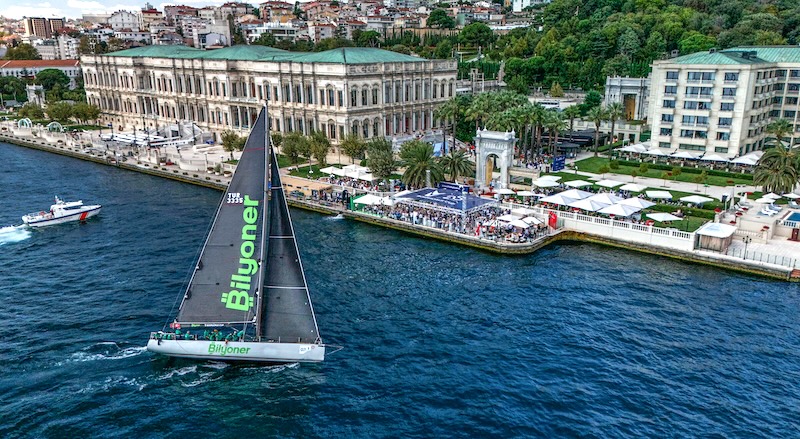
In the middle of the same month, on the Bosphorus, another betting brand was both the sponsor of the race and started with its own boat. On Bilyoner's boat, Oytun Çalışlar was at the helm, and the crew came from the Mersin Sailing Academy.
Timing provided a rare point of comparison. Two brands from the same sector, ten days apart, placed side by side two distinct types of engagement that can be built through sports. This article does not choose between them; it seeks to read what each of them did, why they did it, and what they left behind in sports.
What does Novig do?
To understand Novig, you first need to separate its model. In a traditional betting company, the player plays against the house, and the margin embedded in the odds is the house's profit. Novig operates as a prediction market: users buy and sell contracts with each other on whether an outcome will happen or not, and instead of placing a margin in between, the company charges a fee on the transaction. The brand's name is derived from this difference.
The regulatory outcome for this structure is significant. Instead of acquiring sports betting licenses state by state, Novig operates under the CFTC, which regulates commodities markets in the US. This provides the company with two advantages: the ability to operate under a single framework nationwide and the opportunity to stay outside the boundaries of state-imposed restrictions on betting advertising.
This is also where the commercial imperative of the model comes from. On a platform that operates on the logic of an exchange, every transaction must have two sides. If there is no counterparty, no price is formed; if no price is formed, the user leaves. Therefore, for Novig, the number of users is more than just a growth target; it is a condition for the product to function.
The company is currently the official prediction market partner of the New York Mets and has a valuation of around $500 million. Standing against it is Polymarket with a valuation of $20 billion.
The logic of the campaign can be read in this table. The small player has no chance of surpassing the large player in paid media, so the brand chose to generate controversy. The result came in the direction the company expected: the video gathered 1.2 million likes on Instagram, surpassing Polymarket's $15 million campaign featuring LeBron James with almost zero media budget.
What did the athletes say
The backlash came from within sports before the advertising circles, and female athletes rose up through their own accounts.
Four-time Olympic champion Australian swimmer Ariarne Titmus, after describing how infuriated she felt watching it, called the campaign “a kick in the face to every woman who has dedicated her life to perfecting her craft.”
British sprinter Amy Hunt, after the 200-metre final in Budapest, answered by sharing footage of her own race: “Sydney Sweeney, this is what women in sport look like.”
Australian water polo player who competed in the Olympics Tilly Kearns spoke bluntly and said she hated the ad. Australian swimmer Lani Pallister answered in the same way: “Don’t know what Sydney thinks sport looks like, but THIS is what sport looks like.”
Australian hockey goalkeeper Joc Bartram said she found the campaign “tasteless” and urged viewers to support female athletes instead. Former college gymnast Gracie Kramer shared footage from her own career and made the same point: “idk what Sydney Sweeney was doing, but this is what a woman in sport looks like.”
Professional surfer Felicity Palmateer described the effect on younger generations: “Just absolute utter disbelief, incredibly disappointing… very damaging, especially for young females.”
There were also those who defended the campaign. Instead of responding directly to the criticism, Sweeney shared images of athletes like Serena Williams and Megan Rapinoe from ESPN’s “The Body” issue on her Instagram Stories and wrapped things up with her own ad. WNBA player Sophie Cunningham was also among those who defended the campaign on social media.
The company's statement generated more buzz than the campaign itself. CEO Jacob Fortinsky stated that they had no intention of representing women's sports and noted that Sweeney was decisive in the visual editing. Sweeney holds a stake in the company and, according to reports in the press, was involved in the creative process from the music to the camera angles.
What does Bilyoner do?
Sports betting in Türkiye operates within a state framework; private companies work as authorized intermediaries in this system and earn their revenue through transaction volume. Bilyoner was founded in 2004 and became the country's first legal online betting platform. The company is part of Hitay Holding's investment portfolio.
The main constraint determining the brand's scope of action is on the advertising side. In Türkiye, advertising for legal betting companies is not free; it is strictly framed, and this framework narrowed even further at the beginning of 2026. With the regulation published in the Official Gazette, promotional and gift campaigns were eliminated, advertisements were allowed to be broadcast only on sports-content channels, and a requirement was introduced for the advertising message to emphasize the fight against illegal betting and the protection of those under 18.
In the same period, fixed betting visuals in stadiums also began to be removed. Sponsorship remains a channel that the sector continues to use.
Bilyoner’s sports sponsorship isn’t limited to sailing. The company’s portfolio includes agreements with clubs such as Galatasaray and Anadolu Efes. Sailing is just one part of that portfolio.
The brand took part in the Bosphorus Cup for the third time this year and was a senior partner. A second role was added alongside the sponsorship: participating in the race with its own boat. The company describes this in its own narrative as “living the passion by racing on the Bosphorus instead of just funding it from the sidelines”; this is the brand's own phrasing.
The basis for comparison: Bosphorus Cup
On one side of the comparison is a 42-second video; on the other is an organization that has been around for twenty-five years.
The Bosphorus Cup was first organized in 2002 by Orhan Gorbon; the idea was to bring sailing to the center of the city and make Istanbul visible from the sea. The Marmara and Bosphorus course is narrow, the shores are steep, and the current is strong; the race can also be watched from both shores. Marking its quarter-century this year, the event was attended by 45 boats and approximately 500 sailors from 7 countries. The races were held on September 17–19, with the closing ceremony at Çırağan. Detailed impressions of the race itself in the article where we cheered a quarter-century from Çırağan.
Both strategies have a necessity
It would be misleading to attribute the difference to brand identity. The constraints are different.
In the US, prediction markets are exempt from betting ad bans, and Novig is in a race where it needs to scale rapidly. In Türkiye, advertising channels have narrowed, and sponsorship stands out as one of the primary channels the industry can use for brand visibility.
This makes sponsorship an alternative to advertising. The presence within sports also functions as a marketing channel. That is why the impact that the two methods leave on sports is different.
How advertising and sponsorship are perceived in sport
At this point, it is necessary to look at the measurable side of the business, because “generating controversy” and “building a brand” may not be the same thing.
The evaluation by industry experts discussing the Novig campaign clearly demonstrates this distinction. Brand and customer experience strategist Darshana Shah says that visibility alone does not equate to effective brand building. Venkat Mallik, founder of J7, acknowledges that the campaign worked on the awareness side; app rankings rose, and media coverage increased ninefold. But he adds a critical data point: less than 4 percent of the total conversation was about what Novig actually did. Shakir Jamil from CREX offers a harsher comment, saying that the execution completely overshadowed the brand proposition. The brand became known, but its business did not.
On the academic side, there is an established literature on how the athlete's image is processed by the audience. Elizabeth A. Daniels' Journal of Applied Developmental Psychology‘His published work in (2012) was conducted with 258 girls aged 13-18 and 171 women aged 18-22. Looking at images of athletes in performance, participants evaluated the body based on “what it can do” and described the athletes as role models. Sexualized images of athletes, on the other hand, produced an appearance-oriented evaluation and led participants to critique women's position in society. The two types of images trigger different mental processes in the viewer; one talks about sports, while the other talks about the female body.
The trace of sponsorship, however, operates through a quieter and different mechanism. According to Kevin Gwinner and John Eaton, Journal of Advertising‘published in (1999) with 360 participants, revealed that there is image transfer between the event and the sponsor brand: the audience attributes the qualities they assign to the event to the sponsor brand over time. The transfer increases as the perceived fit between the brand and the event strengthens.
That is where the difference comes from. Advertising makes a brand visible and opens it up for discussion. Sponsorship, on the other hand, associates a brand with the qualities of an event and is not up for discussion, because it already stands as a part of that place. Bilyoner taking on the dual role of both sponsor and competitor is a choice that strengthens this perception of harmony. In Novig’s film, however, there is no event to transfer meaning from, there is only the imagery of sport.
This mechanism also explains how the sponsorship area was established. In Bilyoner's activation area at the Bosphorus Cup, there was no element related to a betting product; at the center of the area stood a regatta-themed sailing game developed specifically for the brand. The visitor encountered the brand not as a betting platform, but through sailing.
This is a pattern that applies to the entire industry. In an industry where the advertising channel is narrowed down, sponsorship is the only area where the brand can explain itself not through its product, but through the sport it is involved in. The question to be asked in terms of sailing becomes clear right here: who decides what the sponsoring brand will display in the event area, and is this scope defined in the contract?
Crisis management: where the brand stands determines how much damage it will take
The Novig case also deserves to be read in terms of crisis management, because the post-campaign management was discussed much more than the campaign itself.
The company's initial reflex was to back down. The CEO stated that they had no intention of representing women's sports and noted that Sweeney was the one who determined the visual editing. Sweeney, in turn, gave an indirect response by sharing athletic photos from ESPN’s “The Body” issue. Two different voices emerged from two different places; the brand did not have a unified position. The most fundamental rule of crisis communication failed here.
The second issue was the choice of interlocutors. The critics were Olympic medalists and were responding with footage of their own performances. The brand's counterpart, however, was a statement of intent. A response given in the language of marketing to a criticism made in the language of sports only magnified the debate instead of ending it.
The core issue, however, was where the brand stood in sports. A brand with a long-standing presence in sports has a foundation to rely on during a crisis: past contributions, witnesses, and established relationships. Novig had none of this foundation. Its only contact with sports was the criticized campaign itself, so the criticism directed at the campaign was aimed directly at the entire brand. Having no history to defend its relationship with sports, the brand remained vulnerable.
The durability of the gain is a separate question. Sweeney’s 2025 campaign for American Eagle created a similar spike in attention, which did not translate into lasting sales growth about a year later. Attention comes and goes quickly; association stays.
There is a lesson here for sponsor brands as well. When a brand enters the world of sports, it inherits the crises of sports, and sports inherits the crisis of the brand. Therefore, sponsorship agreements should not be built solely on logo and visibility rights; communication principles, approval mechanisms, and how both parties will act in a crisis situation must also be defined. In Türkiye, the weakness of these clauses in the contracts of sports clubs and organizations leads to the cost of the crisis being mostly pinned on sports.
Every advertisement is a confession of the brand's assumption about its customer.
When you put the two campaigns side by side, it also reveals how the brands describe their users.
Novig's recipe is direct: young male, low attention span, shares what he sees. It worked in the short term. In the medium term, it contradicts the brand's own growth logic, because a prediction market lives on liquidity, liquidity comes with scale, and scale requires female users and institutional partnerships.
Sponsor brands have a different assumption; In the Brisa example as it is: the user is also a sports enthusiast, they will remember the brand along with the sport. This model operates slower and more quietly, but the touchpoints are lasting: the race track, the contact established with the audience, social media visuals, the press release, the race result.
Why sailing reacted more strongly
Novig's film was met with backlash in sailing circles as well. The reason is different from what it seems at first glance.
Sailing is one of the few sports where women and men can compete in the same boat, in the same class, on the same results list. The structure is open to this.
However, sailing is not yet a sport with complete equality. Women still struggle to find places in certain roles and races. When crews are formed, positions such as helm, tactics, and foredeck mostly go to men; the justification is sometimes physical strength, sometimes experience, and most of the time the self-repetition of invitation networks. In offshore and long-leg races, issues such as night watch schedules and accommodation arrangements present an additional threshold for female sailors. In Türkiye, the number of female helmsmen and female-dominated crews is increasing, but the fact that this still makes news tells the story in itself.
This is why an ad that uses the female body as an image of sport met with such a strong reaction in sailing. It lands on top of a struggle the community is still waging. In the same week, the effort a female sailor makes to earn a place on the boat sat alongside a composition in which a woman’s body is covered with sports equipment.
The question sailing needs to ask
Sailing is a sport that needs sponsor support, and that need does not mean every sponsorship belongs in the same basket. We looked at how the sponsorship model has changed in an earlier piece asking whether sailing still sells visibility .
In practice, there are two separate topics, and usually only one of them is discussed at the table. The first is what the brand leaves for the sport: the boat, the athlete, the infrastructure, access, visibility. This topic is already written into the contracts. The second is where the brand will appear within the sport: which areas, which materials, which touchpoints. This topic is mostly unwritten and in practice is left to the preference of the moment.
The Novig example shows how the image of sport can be borrowed from outside the sport, and how quickly that can rebound on the brand. The Bosphorus Cup example shows how sponsorship occupies a place inside the sport, and who draws the boundary of that place.
Adding the second heading to the contract doesn't mean restricting the sponsor. It creates predictability for both parties: the brand invests knowing where it will appear, and the organization knows what to rely on when a dispute arises.
Rüzgar Üstü has no commercial relationship with the brands mentioned in this article. The article contains no links, referrals, or promotions for any betting platform.
Legal framework: Individuals under the age of 18 cannot participate in betting and games of chance in Türkiye. Advertising and promotional activities of legal betting companies were restricted by a regulation published in the Official Gazette at the beginning of 2026. With the regulation, promotions and gift campaigns were abolished, advertisements were permitted to be broadcast only on sports-related media, and it was made mandatory to emphasize the fight against illegal betting and the protection of those under 18 in advertising messages. Playing games on illegal betting sites is a crime.
Yahoo Sports · Olympic athletes' reaction
CNN · Athlete backlash to advertisement
Fortune · The new fault line in sports marketing
Fortune: Sweeney's role in the campaign
Northeastern · Causes of the reaction
Daniels, 2012 · Sexy versus strong
Gwinner & Eaton, 1999 · Journal of Advertising
Videos, interviews and live moments from the racecourse, on our Instagram.
@ruzgar.ustu
Follow on InstagramPodcast
Stories from sailing in Türkiye, told in English. Listen to Windward Türkiye on Spotify.
Listen on SpotifyRüzgar Üstü on Spotify
Keep reading
SailGP Nasıl Para Kazanıyor? Hong Kong ve American Express Örneği
Yelkenin uluslararası ligi SailGP, Asya'daki ilk yarışı için American Express ile anlaştı. Kart sahiplerine ayrıcalık sunan bu anlaşma, ligin nasıl para kazandığını anlamak için iyi bir örnek.
A newspaper, a tea merchant and 175 years of sponsorship in sailing
Bir yarışın adında, bir teknenin gövdesinde ya da bir takımın formasında marka görmek bugün olağan. Yelkende bu her zaman böyle olmadı. 1851'den bugüne sponsorluğun dönüm noktalarını anlatıyoruz.
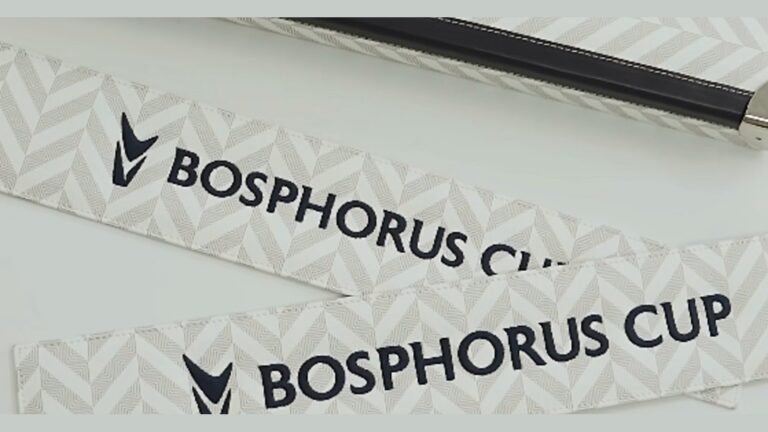
When does carrying a trophy become a brand strategy?
The trophy of the 25th Bosphorus Cup is being transported in a new box this year. Misela designed the box. Louis Vuitton's history of over 40 years in trophy trunks offers a good lens through which to read this small collaboration.