Eyes on Cascais: J/70 World Championship, 4–12 September 2026
Palma de Mallorca in 2024, Buenos Aires in 2025. In 2026 it is Portugal’s turn. The J/70 class world championship takes place in Cascais on 4–12 September: more than 100 crews from over 30 countries meet in the same fleet.
 Written by Rana Akkurt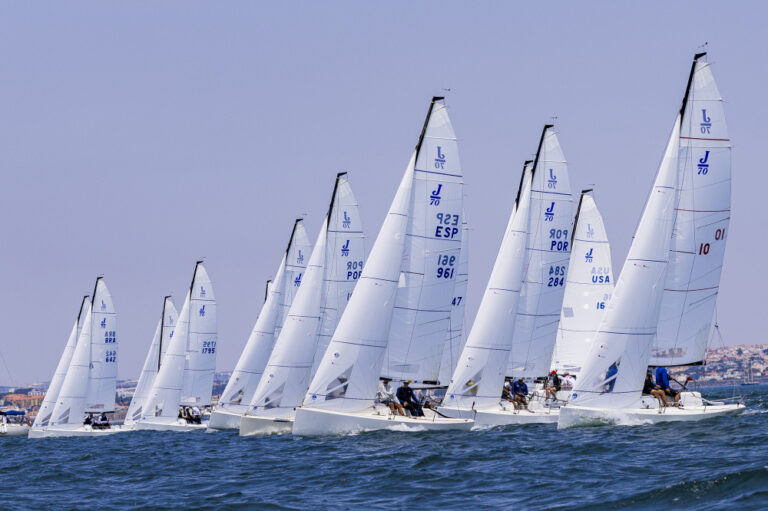
This time on Rüzgar Üstü we get to know a regatta. One-design boats, a tight fleet and the Atlantic. What makes this event more than just “a regatta abroad” and worth following?
From 4 to 12 September our eyes are on Cascais. This year the championship is run by Clube Naval de Cascais, and more than 100 crews from over 30 countries are expected to meet in the same fleet.
Cascais is no easy stop, with its wind, its swell and its racing culture. The class’s last two world championships were sailed in the Mediterranean and in South America; this year the race area moves straight onto the Atlantic.
One-design boats, no excuses
The J/70 is a roughly 7-metre, sprit-rigged, one-design racing boat. One-design means this: every boat on the course is identical. Same hull, same mast, same sail dimensions, same crew weight limit. No handicap calculation, no correction factor, no “their boat was faster”.
That is why in the J/70 the result is decided by decisions rather than equipment. Which side you chose at the start, whether you stayed in clean air in the first 30 seconds, how many seconds earlier you saw the shift on the upwind leg, how many degrees you lost coming out of a tack. Because the fleet is so tight, those differences show up in the standings immediately. In a single race, the gap between the top ten and thirtieth place is often just a few boat lengths.
The championship is also sailed with different categories inside the class: Corinthian crews with no professional sailor on board, and the One-Pro format that allows a single professional, produce their own standings within the same fleet. So a boat can finish 40th overall and still make the podium in its own category. That structure is what makes it meaningful for an amateur crew to go to a world championship.
Why Cascais is a hard stop
Cascais sits west of Lisbon, just outside the mouth of the Tejo, facing straight onto the Atlantic. It is a different place from the measured, usually predictable weather of the Mediterranean.
The real character here is the northerly known as the nortada. It starts calm in the morning, builds with the thermal effect in the afternoon and usually hardens in the second half of the day. Add the Atlantic swell to that, the long wave that is always there. Even in 8 knots of wind, the swell does not go away. In a boat as light and short as the J/70 this combination punishes boat handling directly: as the bow buries into the wave the boat slows, and trim and weight distribution demand constant work.
Then there is the shore effect. The pressure coming in from the Guincho side and the inside of the bay do not get the same wind: the right and the left of the course can sometimes be two completely different races. A tactical mistake in Cascais is more expensive than it is in the Mediterranean.
On the club side, there is no shortage of experience. Clube Naval de Cascais has hosted international championships for years, from Olympic classes to big one-design fleets, and in recent years Cascais has become a regular stop on the J/70 calendar. The Cascais Vela regatta held on 28–30 August, just before the championship, served as a warm-up for crews to learn the race area.
What the last two championships tell us
The 2024 championship, hosted by Real Club Náutico Palma in Palma de Mallorca, was won by a US crew. In 2025 the event moved outside Europe, to Buenos Aires: at the championship hosted by Yacht Club Argentino the top spot went to the USA again, and this time the result made history — the J/70 world title was won for the first time with a woman on the helm. The rest of the podium was shared by crews from host nation Argentina and from Brazil.
What these two results have in common is this: the centre of the class is no longer a single geography. The US, European and South American fleets have moved closer together, and the title can come from any continent. Cascais brings the championship back to Europe, but this time not in Mediterranean conditions.
The Turkish side
In Türkiye, the J/70 has become a class with a structure of its own in recent years. The winter series, the legs of the Türkiye Tour and the J/70 fleets within the big regattas make up a regular calendar: because the same crews race each other all season, the level keeps rising.
That shows on the international side too. This season more than one crew from Türkiye started at the European Championship, and at the J/70 Mixed Plus World Championship in Copenhagen a women’s crew from Türkiye came home with first place in both Women Team and Women Helm. The crews heading to Cascais also have plenty of international racing experience.
Expectations need to be set properly here. In a fleet of more than 100 boats, the goal is not to make the headlines from the first race: it is to manage mistakes for nine days. A start that does not ruin your position in the queue, boat handling that holds together in the swell, and finishing your bad race 35th instead of 60th. At these championships, what lifts your overall result is not your best race but how few points your worst race costs you.
What to watch
The championship starts on 4 September and ends on 12 September. There are three things to watch while following it: the number of races per day (two or three starts a day if the wind allows), the standings in the Corinthian and One-Pro categories, and the consistency of the crews from Türkiye. If the wind is expected to build in the afternoon, it is normal for the leaderboard to change completely between the first and last race of the day.
Nine days, one fleet, one-design boats. A place where excuses are hard to come by.
Good luck to all the crews racing from Türkiye. From 4 to 12 September, our eyes are on Cascais.
Videos, interviews and live moments from the racecourse, on our Instagram.
@ruzgar.ustu
Follow on InstagramPodcast
Stories from sailing in Türkiye, told in English. Listen to Windward Türkiye on Spotify.
Listen on SpotifyRüzgar Üstü on Spotify
Keep reading
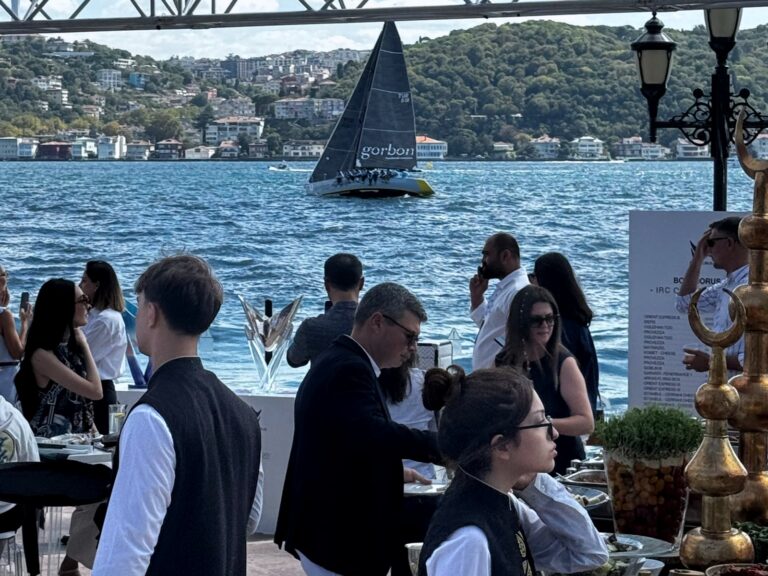
The Bosphorus Cup at 25, seen from Çırağan
The Bosphorus Cup celebrated its quarter-century on the Bosphorus, and the trophy went to Orient Express VI. We watched the final from Çırağan Palace Kempinski: the battle on the water, highlights of the celebration, comparisons with its global counterparts, and suggestions for the next quarter-century.
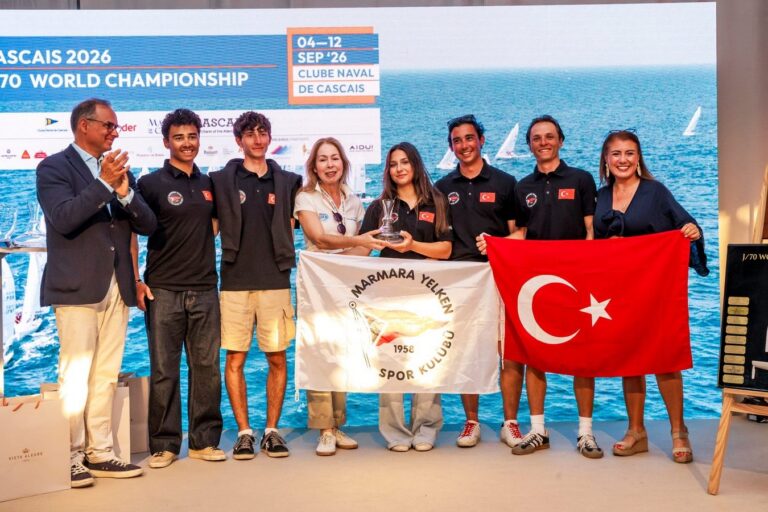
Cascais 2026: a 100-boat World Championship seen from the chase boat
At the Cascais 2026 J/70 World Championship, Marmara Sailing’s young team became the world runner-up in the Young Crew category. Alongside the team for five days was Açelya İdikut, the Sports Director of Marmara Sailing Sports Club and TYF Provincial Judge as well...
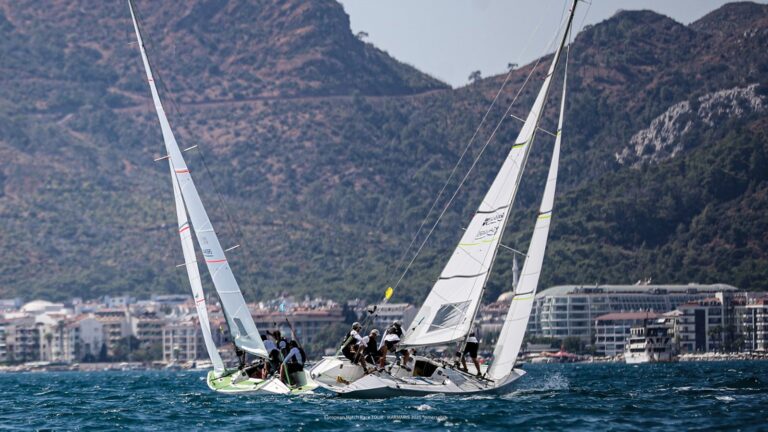
Invited skippers will race 11MODs for the 2026 Türkiye Match Race title
The 2026 Turkish Match Race Championship will be held on October 15–16 at Marmaris Albatros Marina. Marmaris is hosting two separate match race events within a month; for both, the organizing club is the same, and the fleet is the same: 11MOD.