Cascais 2026: a 100-boat World Championship seen from the chase boat
At the Cascais 2026 J/70 World Championship, the young crew from Marmara Yelken Spor Kulübü finished second in the world in the Young Crew category.
 Written by Rana Akkurt
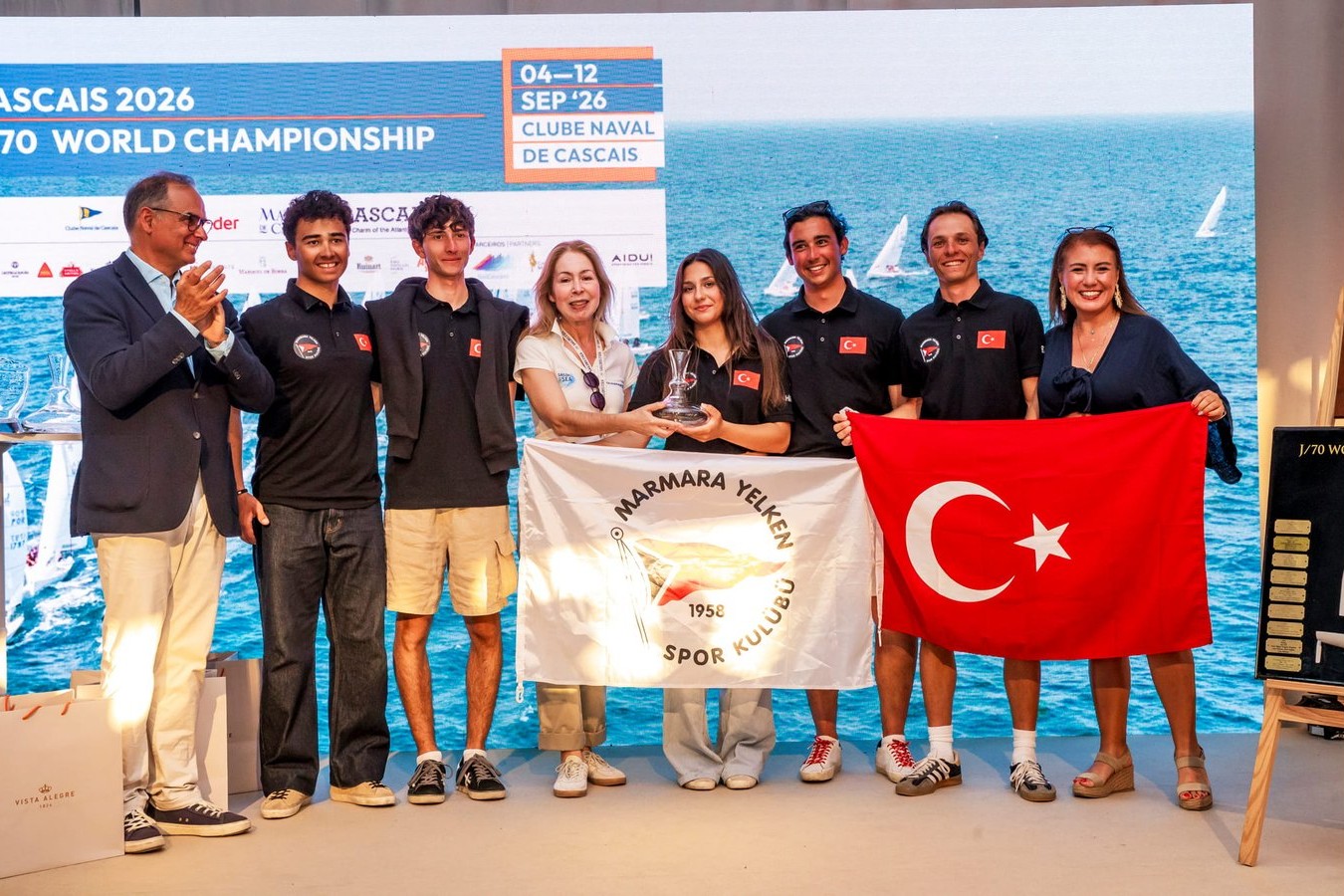
Takımın yanında beş gün boyunca Marmara Yelken Spor Kulübü Sportif Direktörü ve TYF İl Hakemi Açelya İdikut da vardı. Yarışları takip botundan izledi, genç ekibin hafta içindeki değişimini gördü, yarış komitesinin kararlarını yakından takip etti ve şampiyona boyunca kurulan uluslararası temasların içinde yer aldı.
We asked her about Cascais: how hard the course is, what sets it apart from racing in Türkiye, how a fleet of 100 boats is run, and what a week at this level does to a young crew. This is her account.
From this point on, it is written by Açelya İdikut.
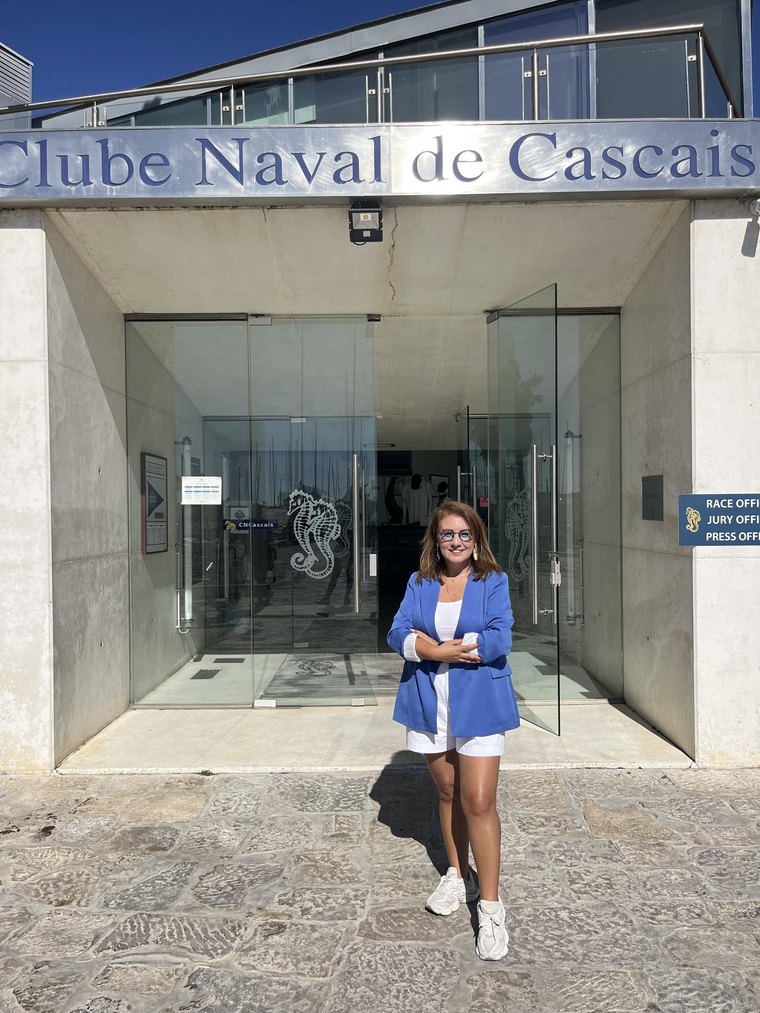
Sporting director, Marmara Yelken Spor Kulübü · Turkish Sailing Federation judge
The Cascais 2026 J/70 World Championship, which brought together more than 100 boats from 26 countries along with some of the leading names in world sailing, was held on 4–12 September and finished with 10 races sailed over five racing days.
Şampiyona boyunca Clube Naval de Cascais ev sahipliğinde organize edilen takip botunda yer alarak yarışları en yakından gözlemleme fırsatı buldum. Bir yandan Marmara Yelken Spor Kulübü Sportif Direktörü olarak 19 yaş ortalamasıyla filonun en genç ekibi olan takımımızı takip ediyor, diğer yandan kulüp yöneticisi olarak uluslararası ilişkileri gözetiyor, aynı zamanda bir hakem gözüyle parkur içindeki dinamikleri izliyordum.
These three different angles gave me the opportunity to see both our team's performance and in what aspects a World Championship at this scale differs from the races we are accustomed to in Türkiye much more clearly.
Why is the Cascais course difficult?
There is a reason Cascais is spoken of as a proving ground. The northerly winds of over 25 knots and the Atlantic swell of up to 2.5 metres that dominated the first two days demanded very fine boat handling on the helm and real physical endurance, particularly on the downwind legs.
On a start line of 100 boats with world and Olympic champions on the helm, a small mistake costs far more. A few seconds or a few metres can put you behind dozens of boats at once.
Running a young crew in a fleet like that goes well beyond technical knowledge. In those first days, facing the harsher side of the ocean, what our coach Batu Özonur and I concentrated on most was the crew’s mental resilience and keeping the communication on board intact.
In a championship of this scale, recovering quickly after a poor race and being ready again for the next start becomes just as important as the race itself.
On day three the course moved inshore
On the third day of the championship, as the race committee moved the course closer to the shore, the character of the race also changed. The harsh open-sea winds and Atlantic waves were replaced by lighter, trickier conditions where shifts in wind direction were felt much more strongly.
While one day physical endurance and boat handling came to the fore, the next day reading the wind, tracking pressure, and choosing the right side became more decisive. Exactly at this point, we felt the contribution of the experience we gained in variable wind conditions in Türkiye even more.
As the racing went on, the recovery and discipline our young crew showed let them put their heavy-air endurance together with better strategic calls in light air. By the end of the week Marmara Yelken Spor Kulübü had finished second in the world in the Young Crew category.
The truly valuable part of this result for me was the team's ability to adapt to different conditions over the course of five days and constantly regroup during the race.
Clubs get to know each other here
Throughout the championship, numerous contacts were also established with club executives, federation representatives, and athletes from different countries.
Türkiye’s Ambassador to Lisbon, Haldun Koç, received us at the embassy, which mattered a great deal to the team. The official club pennant exchange with the President and board of Clube Naval de Cascais built a direct link between the two clubs.
In addition, we had the opportunity to meet with the Commodore of the Chicago Yacht Club, the President of the International Council of Yacht Clubs (ICOYC), and the President of the Portuguese Sailing Federation.
The most valuable aspect of these meetings for me was not the protocol itself, but being able to talk directly about how clubs operate in different countries and how they establish international connections for young athletes. New contacts have been established for the upcoming period in terms of inter-club collaborations and youth exchange projects.
A World Championship also serves as a meeting point where clubs get to know each other, see different models, and establish new relationships.
Managing 100 boats at the same time
Watching a regatta of this size from the chase boat, as a judge, what stood out most for me was the race committee’s ability to pick the right course for the conditions and to act quickly when it had to.
The scale of race management in a 100-boat fleet is quite different from many races we are used to in Türkiye. Setting up the start line, tracking the positions of the boats on the line, and maintaining the flow of the race in a fleet where a hundred boats move simultaneously require a much higher operational precision.
Şampiyonada kullanılan Vakaros RaceSense sistemi de bu yapının önemli bir parçasıydı. Türkiye’de J/70 trofelerinde ve son dönemde bazı TAYK yat yarışlarında da kullanılmaya başlanan sistem, özellikle start hattının ve OCS durumlarının takibini çok daha hassas hale getiriyor.
The result was also seen on the racecourse: in a race where 100 boats rounded the same buoys within seconds, there was no serious collision, heavy damage, or conflict leading to a protest.
For the right-of-way rules, protests and start flags, see our Media Hub.
Another issue as important as technology was the experience of the race committee. The fleet racing in harsh open-sea conditions in the early days and later moving to the coastal course, with the races continuing in different wind characteristics, showed how quickly the committee adapted to the conditions.
In the last race, a match race within the fleet
The final race of the championship showed how rule knowledge can directly turn into a tactical tool in top-level sailing.
A very different kind of struggle took place in the final race between the Brazilian OceanPact–Viking, which fought for the championship until the last day, and the American Empeiria. OceanPact didn't need to win the race. Its main need was to prevent its rival from getting far enough ahead of it.
Therefore, the Brazilian team chose to directly control their rival, creating almost a separate match race within the 100-boat fleet race. OceanPact finished the race in 21st place, while Empeiria came in 48th. This result secured the World Championship for the Brazilian team.
As a judge, that final was one of the most instructive things I saw all week. At this level the rulebook is read as a tactical tool. The better you know your own rights, your opponent’s options and the room you have on the course, the more tactics you can build.
What the five days leave behind
The Cascais 2026 J/70 World Championship was an important experience for us, both in terms of our young team achieving second place in the world and seeing a very different racing scale from the inside.
One of the most important takeaways of this week was the ability of our athletes, who have an average age of 19, to adapt to varying conditions, ranging from the harsh Atlantic conditions to the milder and more changeable coastal course.
From my perspective, Cascais was a week where I was able to observe athlete management, club relations, and race management all at once. I had the opportunity to closely witness how a fleet of 100 boats is managed, how the world's most experienced teams turn rules into part of their tactics, and how a World Championship creates a broader sphere of relations for clubs.
The results table says Young Crew world runner-up. The five days behind that line say a good deal more.
Açelya İdikut
Sporting director, Marmara Yelken Spor Kulübü · Turkish Sailing Federation judge
Cascais 2026 J/70 World Championship · Clube Naval de Cascais, September 4–12, 2026
Invited skippers will race 11MODs for the 2026 Türkiye Match Race title
Videos, interviews and live moments from the racecourse, on our Instagram.
@ruzgar.ustu
Follow on InstagramPodcast
Stories from sailing in Türkiye, told in English. Listen to Windward Türkiye on Spotify.
Listen on SpotifyRüzgar Üstü on Spotify
Keep reading
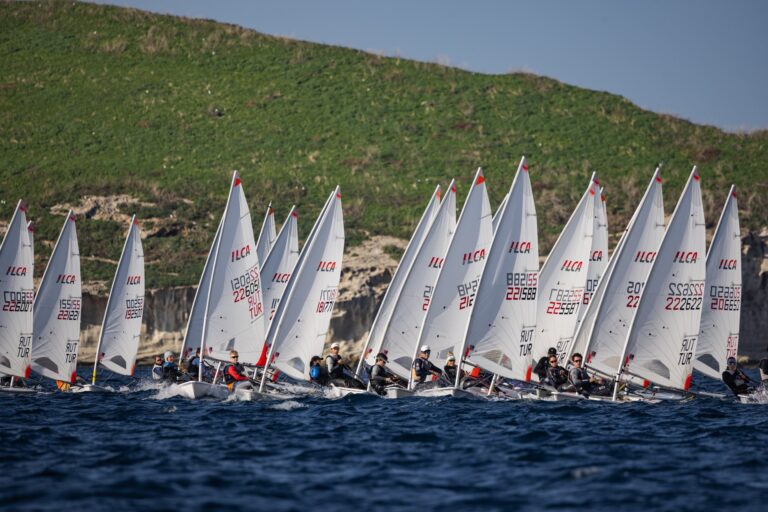
The second ILCA leg of the 2026-2027 TYF Sailing League concludes in Foça
Türkiye Yelken Federasyonu'nun MW Phokaia Beach Resort Kupası ILCA yarışları 18-22 Kasım 2026 tarihlerinde Foça'da yapıldı. 30 kulüpten 120 sporcu ILCA 4, ILCA 6 ve ILCA 7 sınıflarında yedişer yarış tamamladı.
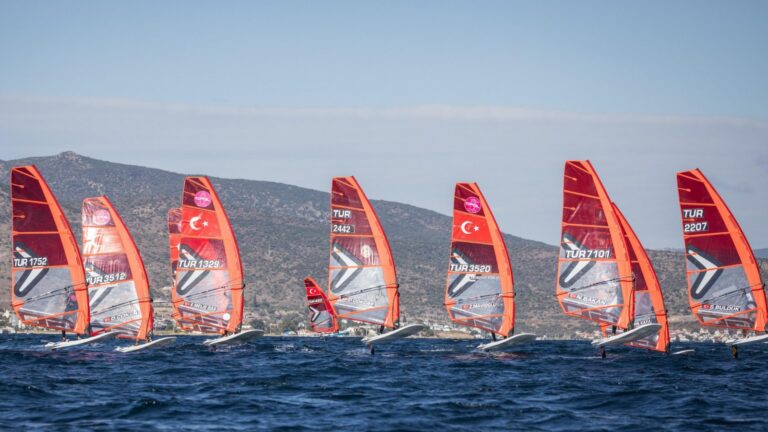
Sailing’s first start at the European Games will come at Istanbul 2027, on Türkiye’s initiative
Sailing will feature at the European Games for the first time in Istanbul. Added to the programme on the initiative of the Turkish Sailing Federation, the sport will also offer quota places for the Los Angeles 2028 Olympic Games.
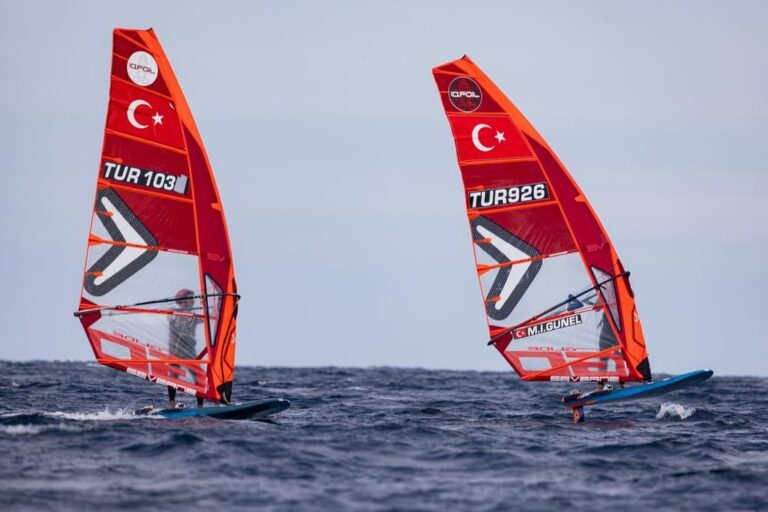
The first iQFoil leg of the 2026-2027 TYF Sailing League concluded in Foça
Milli takım seçme statüsündeki yarışlar 13-17 Kasım 2026 tarihlerinde Mark Warner Phokaia Beach Resort ev sahipliğinde yapıldı. 19 kulüpten 94 sporcu, U14'ten büyüklere kadar yedi filoda dört gün yarıştı.