World Sailing Made 56 Commitments by 2030. Where Does Türkiye Stand in These Commitments?
World Sailing's Sustainability Agenda 2030 contains 56 targets under six headings, and most of them have a date next to them. Most of the timeline is now behind us. It is now possible to put the promises made side by side with today's results, and to ask where Türkiye stands in this picture.
 Written by Rana Akkurt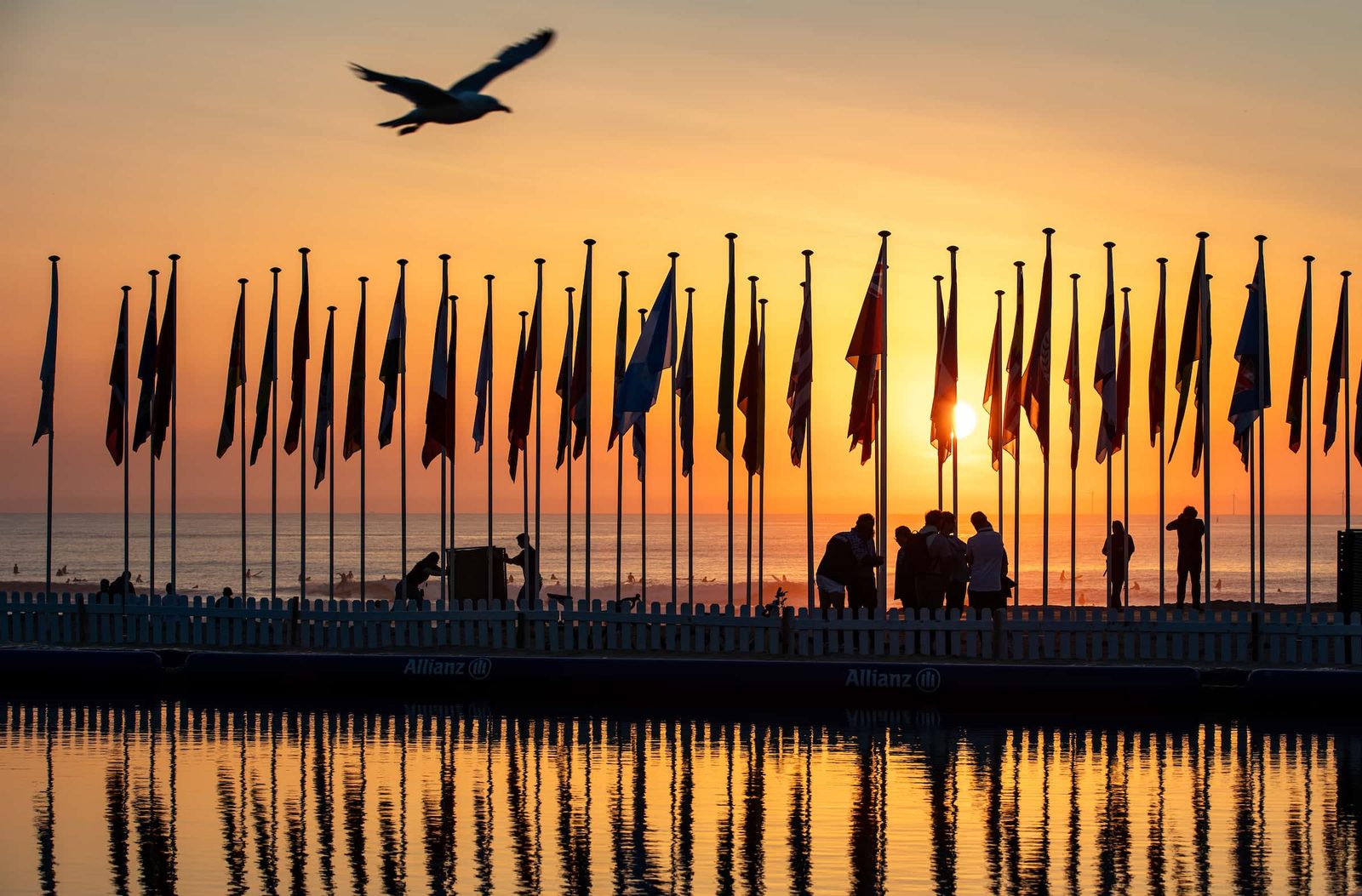
Presented by World Sailing in November 2017 and taking effect in May 2018, the Sustainability Agenda 2030 contains 56 targets across six headings, with a date next to most of them. Most of the timeline is now behind us; it is now possible to put words and results side by side.
World Sailing, the international governing body for the sport of sailing, Sustainability Agenda 2030’He presented it at the annual conference in November 2017. The document was opened for consultation for a period; 305 individuals from 75 countries provided feedback. It entered into force after being unanimously approved by the Council in May 2018.
The scope of the document is broad: 56 commitments ranging from boat manufacturing to racing organizations, from clubs to marinas, from coach training to national federations, and from access to sports to gender equality.
There is a date next to many of them as well.
2019. 2020. 2021. 2022. 2024. 2025. 2028. 2030.
This detail is important because the Sustainability Agenda 2030 does not only describe the kind of sailing world that is desired; it sets measurable targets for specific dates.
A significant part of the calendar is now behind us.
Therefore, today it is not enough to look at the document merely with the question, “What did World Sailing aim for?” It is also possible to compare the promises given with today's results.
As for Türkiye, there is a second question:
Where do we stand in these words?
Rüzgar Üstü will examine sustainable sailing in the coming period through this comparison. World Sailing’s goals and outcomes, global practices, civil society organizations working in this field, and their counterparts in Türkiye will all be part of this report.
Let's set up the framework first.
Who is World Sailing?
World Sailing is recognized by the International Olympic Committee as the world governing body for the sport of sailing.
It assumes a central role in the sport's global system, from the management of sailing events at the Olympic Games and the development of the Racing Rules of Sailing to the training of international race officials and the framework of world championships.
Today, the national sailing authorities of 140 countries are represented under the umbrella of World Sailing. Approximately 120 international class associations are also among the organization's members. (World Sailing)
The history of the organization dates back to 1907. The structure, which began under the name International Yacht Racing Union, later transformed into the International Sailing Federation, and in 2015 into World Sailing.
The Sustainability Agenda 2030 was also prepared by this structure to make sustainability not a separate project of sports, but a management issue extending from technical rules to event management.
The document outlines World Sailing's objectives in nine points: establishing a shared sustainability approach and standard across the entire sport, reducing the carbon footprint and increasing resource efficiency, contributing to ecosystem health and biodiversity, fostering diversity and accessibility while ensuring gender equality in events, integrating sustainability into sailing education and coaching frameworks, raising awareness by sharing best practices, setting technical standards to reduce the industry's environmental impact by 2030, adopting a science-based approach to understand impact, and establishing transparency based on monitoring and reporting.World Sailing)
Six headings, 56 targets
The Sustainability Agenda 2030 does not address sustainability solely under the heading of environment.
It splits into 56 sub-targets:
| Title | Target count | Scope |
|---|---|---|
| Technical standards | 10 | Boat production, material, recycling and end-of-life |
| Events | 17 | Race organization, waste, water quality, emissions and equity |
| Training | 7 | Coach and trainer programs, equipment usage |
| Venues and facilities | 4 | Clubs, marinas and accessibility |
| Members | 11 | National federations and class associations |
| Participation | 7 | Access to sailing, social inclusion and the role of women in sports |
This table shows how broadly sustainability is interpreted in sailing.
Different parts of the same system are monitored, from the composite material the boat is made of to the support boat's engine, from the plastic used in the race to physical access to a marina, and from coach training to federation management.
The boat is not evaluated solely during the time it is used
The first 10 targets dedicated to technical standards address the environmental impact of the boat even before it hits the water.
This section covers material selection, production waste, recyclability, energy use, and what happens to the boat at the end of its life cycle.
This approach is now turning into measurement systems.
World Sailing launched a joint life cycle assessment project in January 2026 covering all six Olympic classes. The study aims to measure the environmental impact of the boats, including production, use, and end-of-life.
Starting in 2032, independently verified life cycle assessments will be required for classes applying for the Olympic program. The data obtained is planned to be used in future equipment rules and Olympic class selection.World Sailing)
Thus, the issue written eight years ago as a sustainability target begins to become part of the technical decision-making mechanism.
The environmental footprint of the race is also being calculated.
The 17 goals in the agenda are broken down into activities.
Single-use plastic, water quality, carbon emissions, support boats, energy use, and event management are among them.
Here, data is beginning to emerge that allows us to compare targets and results side by side.
According to World Sailing's 2025 Impact Report, the organization's own carbon footprint has decreased by 50 percent compared to the 2019 baseline.
The number of Clean Regattas certified events increased by 43 percent compared to its 2024 level, reaching 219. World Sailing also reports that efforts to reduce single-use plastics and emissions from support boats are ongoing. (World Sailing)
The significance of these figures does not lie in their magnitude alone.
The approach initially set out by the 2030 Sustainability Agenda is now transforming into data that can be compared across years.
Sustainability is not just carbon
In addition to environmental goals, the document also tracks who participates in sports, who is involved in decision-making processes, and how accessible sailing is.
Gender equality, education, social participation, and governance are therefore within the same agenda.
World Sailing's latest report states that a 50-50 gender balance has been achieved on the board of directors, and 30 percent of those attending technical coaching courses are women. The organization also continues its programs aiming for women to take on greater roles not only as athletes, but also as coaches, race officials, and administrators.World Sailing)
Türkiye is not outside of this heading.
The Istanbul Sailing Club was also included in the 2025 calendar of the Steering the Course program, run by World Sailing to improve women's participation in the sport. It is stated that the program is implemented in more than 56 countries worldwide.World Sailing)
Such examples are important in terms of showing how an international agenda can find a response at the national and club levels.
Not every goal progressed at the same speed
The fact that dates have been provided does not mean that all of the goals were achieved on those dates.
Some headings progressed as planned. Some were delayed. Others evolved into new applications beyond their originally defined scope.
Studies regarding the conservation of marine life are one of these.
The Marine Megafauna in Sailing guide, prepared by World Sailing and the Marine Mammal Advisory Group, was published in December 2025. The guide provides a common framework for race organizers and sailors to reduce the risk of collisions with whales, dolphins, turtles, and other large marine life.
Recommendations include relocating parkour areas away from sensitive zones, marine mammal observers, reporting networks, detection technologies such as drones, and the preparation of a Nature Action Plan for events.World Sailing)
This topic is also a good example of how civil society, science, and sports management can come together in sustainable sailing.
World Sailing did not prepare the guide alone. Marine scientists, racing organizations, classes, and the Marine Mammal Advisory Group were involved in the same study.
What do the results say?
World Sailing’s 2025 Impact Report, published in August 2026, presents the most up-to-date official picture of the agenda's current status.
The institution reports that it has completed 17 of the 32 core Sustainability Agenda 2030 targets it has been pursuing since 2018.World Sailing)
A 50 percent reduction in carbon footprint, 219 Clean Regattas events, and life cycle assessments initiated for Olympic equipment are among the advancing topics.
On the other hand, the 17/32 result also shows that the program is not complete.
There are four years until 2030.
Where does Türkiye fit in this picture?
Turkish Sailing Federation is one of the 140 member national authorities of World Sailing.
Therefore, some topics in the Sustainability Agenda 2030 are directly linked to Türkiye through the federation, while others extend to race organizers, clubs, marinas, class associations, and the maritime industry.
In Türkiye, the counterparts of different titles are not at the same level either.
In some areas, there are applications connected to international systems. In others, examples are seen on a club or organization basis. In some, however, it is not yet clear whether there is a public, common, and measurable framework.
Therefore, the assessment of Türkiye cannot be reduced to the performance of a single institution.
The standard of a sustainable race is one thing, what happens to an end-of-life boat is another, the protection of seagrasses is another, and the barriers to accessing the sport concern a different structure.
In Rüzgar Üstü, we will examine these areas separately.
We will compare the promises made by World Sailing with the results it has achieved today; we will look at examples of clubs, federations, and races around the world, expert non-governmental organizations on the subject, and practices in Türkiye.
We will try to demonstrate why an application works, whether there is an equivalent in Türkiye, and which institutions need to act together.
Because as we approach 2030, it is not possible to evaluate sustainable sailing solely through its target texts.
Where Türkiye is located will be shown by realities on the ground.
This is the first article in the sustainable sailing dossier. In the upcoming issues, we will break down World Sailing’s six headings one by one, looking at practices around the world and their counterparts in Türkiye. All stories →
Videos, interviews and live moments from the racecourse, on our Instagram.
@ruzgar.ustu
Follow on InstagramPodcast
Stories from sailing in Türkiye, told in English. Listen to Windward Türkiye on Spotify.
Listen on SpotifyRüzgar Üstü on Spotify