Teo Samma: “I can divide my life into before and after racing on the Bosphorus”
Teo Samma, an Italian-American sailor based in Milan, explains why racing in Istanbul is unlike anywhere else: a racecourse in the middle of the city, a racing culture where rivals become friends, and a stage that is already set.
 Written by Rana Akkurt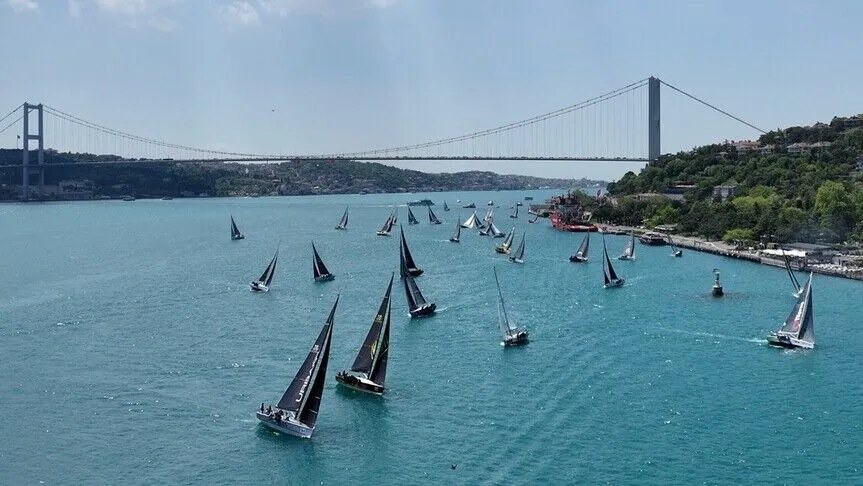
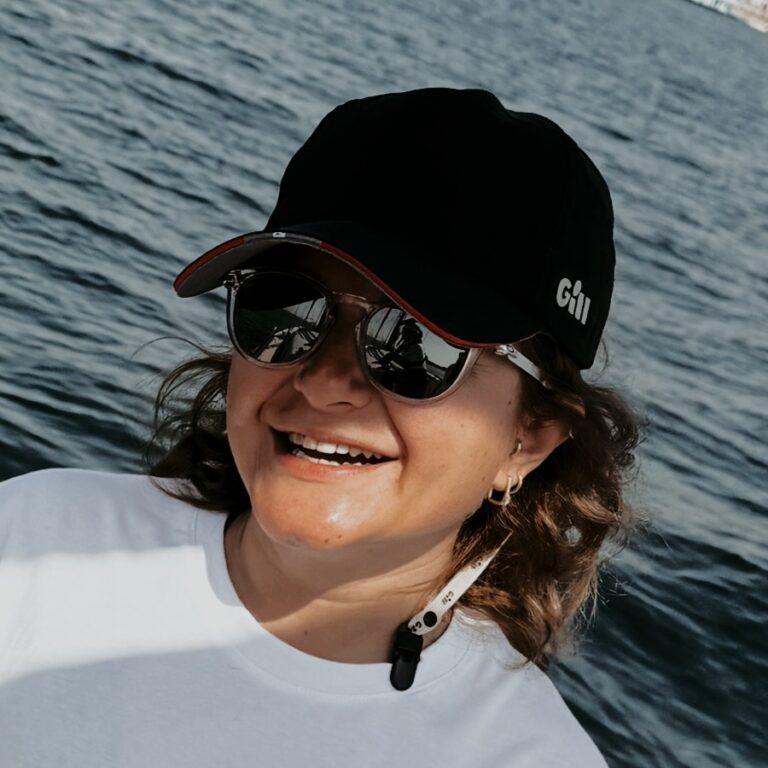
Teo Samma describes himself as a “storyteller from the water.” He has been sailing since 2004, spending his time sailing, surfing and racing in different waters, and for a while now he has been turning it all into short videos on Instagram.
In this episode of Windward Türkiye, we talked with him about racing on the Bosphorus, Turkish crews and why sailing is still a hard sport to explain.
Why a storyteller?
The answer goes back to his childhood. Between the ages of 12 and 16, Samma spent every weekend on a boat, yet on Monday neither his friends at school nor his family at home could understand what he had experienced on the water. Football, by contrast, was something everyone in class could talk about.
He later found the reason in the sport itself: “Anyone who knows the basics of football knows the ball has to go into the net. When you watch sailing, a lot is hard to understand: the course, the physics of how boats move, why one boat can’t simply go faster than another. In running, you speed up and overtake the person in front of you. In sailing, you can’t just speed up.”
Today he describes his work as an effort to help his “younger self”: making sailing understandable to someone watching from the outside.
A racecourse in the middle of the city
What surprised him most in Istanbul was the relationship between sailing and the city. In most places, sailing happens far from cities: beaches lie outside the big cities, and harbours are cut off from everyday life. In Istanbul, the picture is reversed.
“Everything happens inside the city. The whole shoreline is full of buildings and people. When you race on the Bosphorus, you are literally in the middle of this huge city. I haven’t seen that anywhere else.”
The city may not be able to follow the race from start to finish, but everyone in the race can feel the city: the people, the traffic, everything happening around them.
Guest crew, familiar welcome
Samma does not live in Istanbul, but he visits often and sees himself as a guest here. He has raced four or five times so far: on one boat in several races in 2024, and on another at the end of August. He says the crews made him feel at home from the first moment, and he puts that down to Turkish hospitality.
The one thing he finds difficult is the language. He learned to sail in Italian and admits that even English terms sometimes trip him up, so hearing commands in Turkish on board makes it twice as hard. Still, he has picked up a few words: the countdown before the start, and one of his favourites, “poyraz”, the north-easterly wind.
Rivals and friends
Samma is a dinghy sailor at heart. He raced in the Laser class before it was renamed ILCA, and he also has racing experience on bigger boats and in Italy. He draws the comparison from that background:
“Italian crews are a little more distant, a little less social. That must have to do with the way sailing is lived in Istanbul. Most racers here race often, maybe once a week. Your rivals become your friends. Between the start and the finish you are competitors, but at the end of the day you are all in the same sport. When we cross another boat, we wave and chat.”
For him, having a drink with rivals after racing is one of the best parts of sailing in Istanbul.
Before and after
Will he come back? “I’ll come every year. A few times a year.” Then he adds: “I can divide my life into before and after racing on the Bosphorus. I couldn’t believe people could sail like this, that you could race in a place like this.”
He has raced on the Bosphorus twice and does not think racing there could ever be boring, because the conditions are different every time. The first time brought heavy rain and strong currents he had never faced before. The second time was sunny; it was Victory Day, a national holiday, and people along the shore were waving flags. Once the start gun goes, though, the scenery fades into the background and the race becomes a game of strategy.
In one word: stadium or stage?
Asked to describe racing in Istanbul in one word, he first says “stadium”. “I think of people watching and celebrating. That is what we want to reach as well: people watching. The Bosphorus is like a natural stadium. The two shores come close together, people can watch from the land, and in the middle there is water and boats.”
Then he corrects himself: “Like a perfect stage. Maybe ‘stage’ is a better word than stadium.”
We agree. The Bosphorus has already set the stage for sailing to become a spectator sport; our job is to tell the story of what happens on it. We look forward to seeing Teo on the Bosphorus again. Post-race drinks are on us.
Windward Türkiye · Teo Samma episode · Spotify, 9 min
Teo Samma’s videos: YouTube
The interview was conducted in English. Quotes have been condensed and edited for clarity.
Videos, interviews and live moments from the racecourse, on our Instagram.
@ruzgar.ustu
Follow on InstagramPodcast
Stories from sailing in Türkiye, told in English. Listen to Windward Türkiye on Spotify.
Listen on SpotifyRüzgar Üstü on Spotify
Keep reading
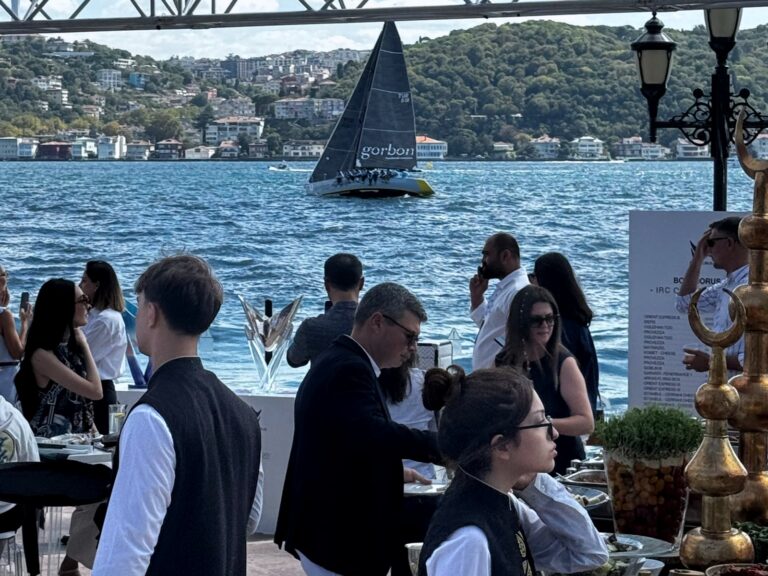
The Bosphorus Cup at 25, seen from Çırağan
The Bosphorus Cup celebrated its quarter-century on the Bosphorus, and the trophy went to Orient Express VI. We watched the final from Çırağan Palace Kempinski: the battle on the water, highlights of the celebration, comparisons with its global counterparts, and suggestions for the next quarter-century.
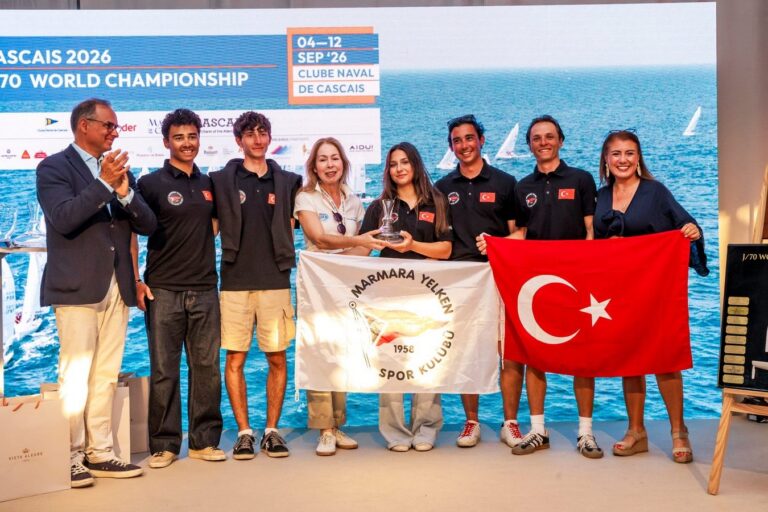
Cascais 2026: a 100-boat World Championship seen from the chase boat
At the Cascais 2026 J/70 World Championship, Marmara Sailing’s young team became the world runner-up in the Young Crew category. Alongside the team for five days was Açelya İdikut, the Sports Director of Marmara Sailing Sports Club and TYF Provincial Judge as well...
Invited skippers will race 11MODs for the 2026 Türkiye Match Race title
The 2026 Turkish Match Race Championship will be held on October 15–16 at Marmaris Albatros Marina. Marmaris is hosting two separate match race events within a month; for both, the organizing club is the same, and the fleet is the same: 11MOD.