Sailors take their own logbooks to COP31
Warming seas are changing the pattern of the wind, and sailors feel it on their passages. The Turkish Sailing Federation’s “Sailing to COP31” project aims to record these observations and carry them to Antalya. From shifting winds to carbon footprint, from hull cleaning to the water used after sailing, the climate crisis affects sailing in many ways.
 Written by Rana Akkurt
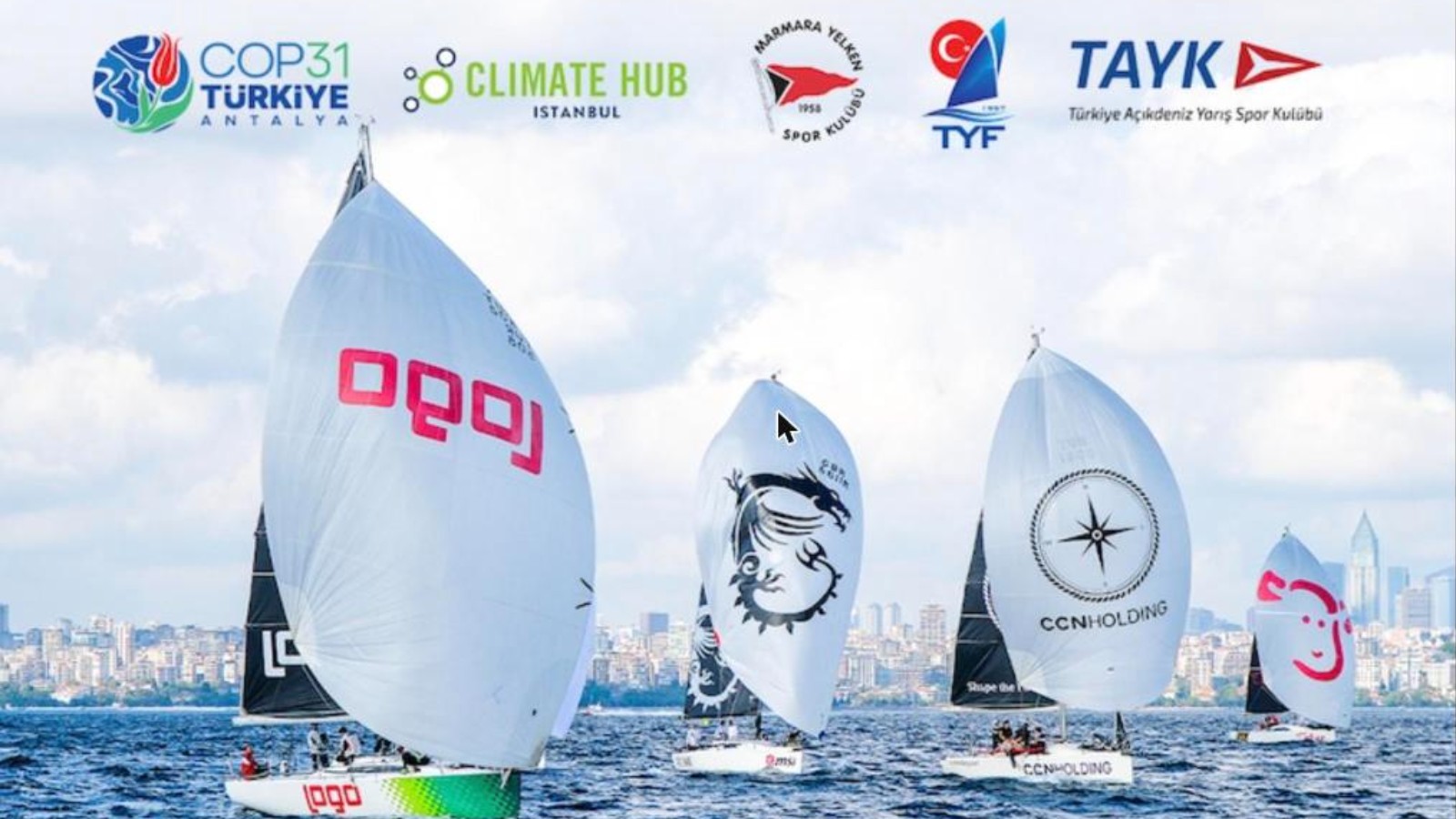
Climate change is usually told through charts, degrees and tonnes of emissions. Sailors hold a different kind of record, the memory of passages made on the same routes for years. National sailor, TAYK member and Alize Yelken’s founder Sinan Sümer, recalling what he has lived through in the Atlantic and the Sea of Marmara, often says “It was never like this before.”
Sailing sets its own course to Antalya
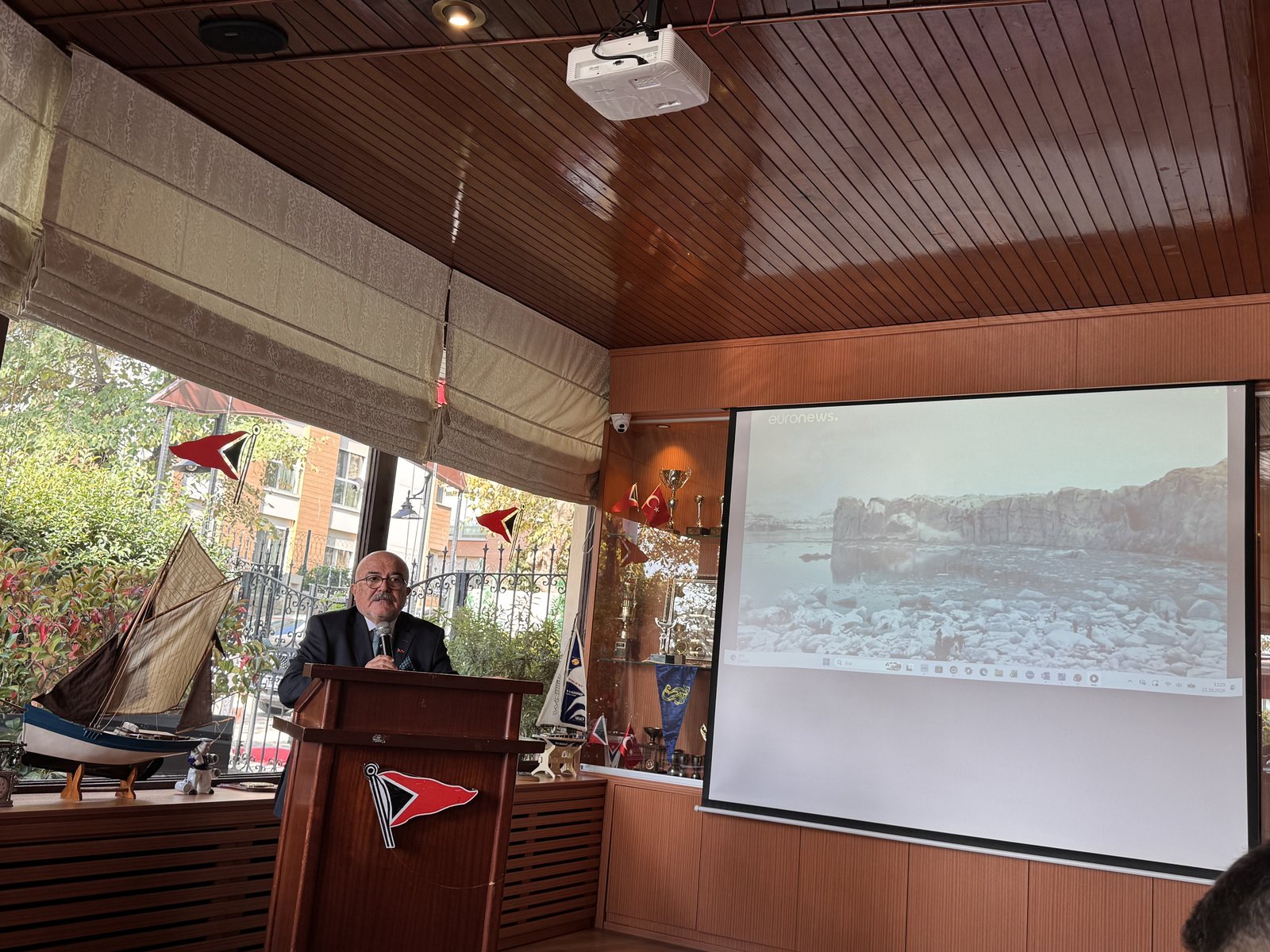
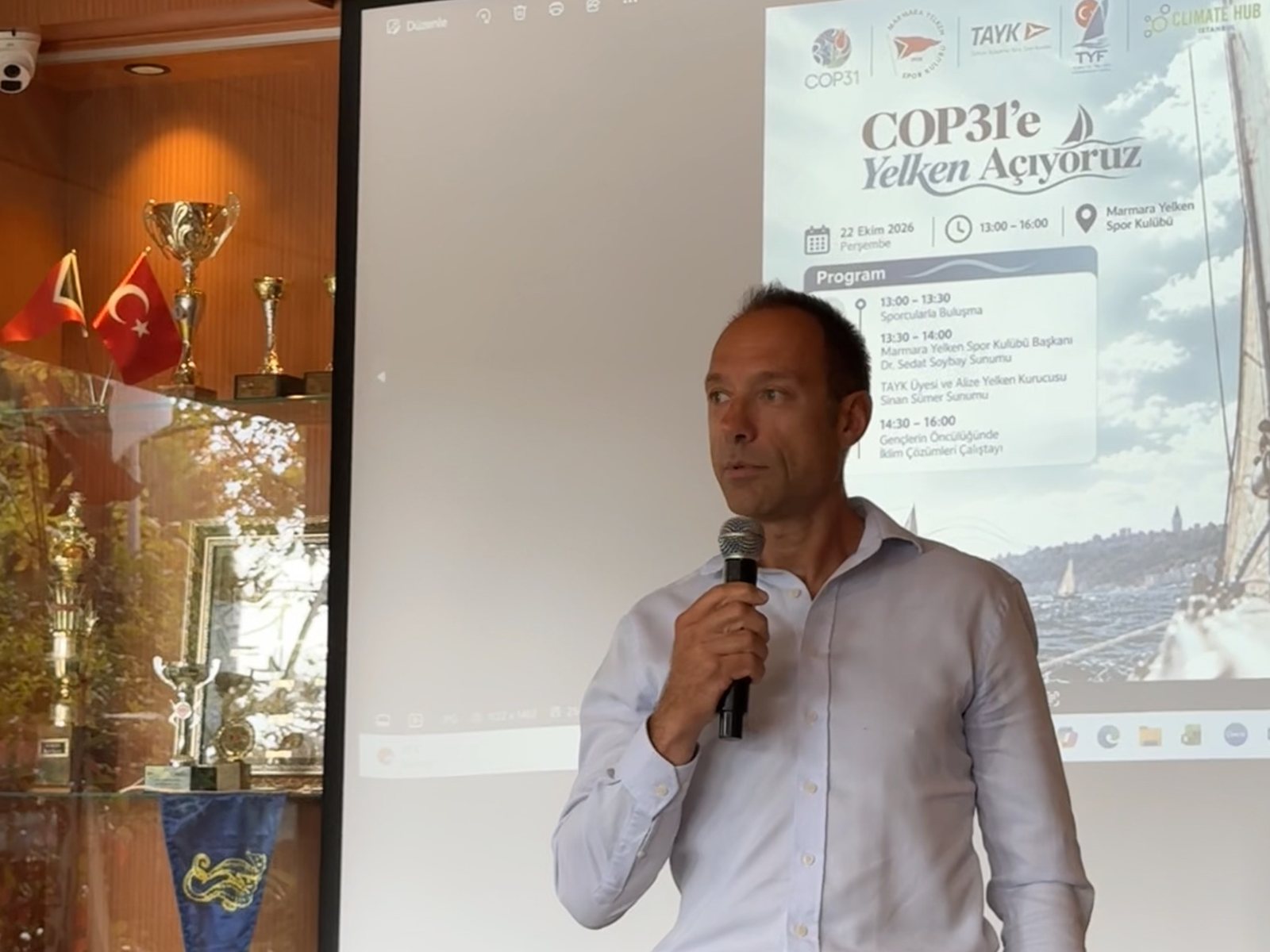
TYF’s “Sailing to COP31” project aims to carry local observations from Türkiye’s coasts onto the international climate agenda. Its first step is for sailors to record what they see at sea in workshops. The first workshop in Istanbul took place on 22 October, organised by Turkish Offshore Racing Club (TAYK), and hosted by Marmara Yelken Spor Kulübü. Climate Hub İstanbul is also among the project’s stakeholders. A meeting planned at Bahçeşehir University was postponed and will be held at a later date. After that, a passage led by TYF will begin. The route passes through the Climate Action Festival in İzmir, Çeşme and Urla and ends with the Climate Impact Sailing Rally from Bozburun to Antalya. The records will be brought together in a Youth Climate Declaration, the rally’s climate impact report, a documentary and the COP31 final report.
COP31’s agenda also looks to the sea. In the Action Agenda that COP31 President-Designate Murat Kurum presented in Bonn in June, oceans and seas form a separate theme, and 17 November is set aside for them in the conference programme. In Trabzon on 10 September, Kurum said, “Our course is clean seas, our course is resilient coasts.” Sailing has a commitment on this agenda too. World Sailing was among the first signatories of the UN Sports for Climate Action Framework, launched at COP24 in 2018. The framework aims for sports organisations to be climate neutral by 2050.
Müzakere masası ise otuz yılı aşan bir gerilim taşıyor. Marmara Yelken Spor Kulübü Başkanı Dr. Sedat Soybay, iklim müzakerelerinin ilk yıllarında gelişmekte olan ülkelerin yükümlülüklerin dışında tutulduğunu hatırlatıyor. 1997’deki Kyoto Protokolü bağlayıcı azaltım hedeflerini yalnızca sanayileşmiş ülkelere getirdi. Türkiye protokole 2009’da katıldı ama sayısal bir hedef üstlenmedi. Soybay’a göre sorunun özü ekonomik. Çevre tedbirinin maliyetini tek başına taşıyan ülke ya da şirket rekabette geri kalıyor. Türkiye de Antalya’da gelişmiş ve gelişmekte olan ülkeler arasında köprü olmayı hedefliyor.
Why is the pattern of the wind changing?
Soybay says that understanding the climate starts with its natural cycles. The Milankovitch cycles describe the Earth’s movement around the Sun. Over roughly 100,000 years the orbit shifts from a near circle to a flatter ellipse and back, while the tilt of the axis varies between 22.1 and 24.5 degrees over about 41,000 years. Together these movements set the rhythm of ice ages and warm periods. By this cycle, the Earth was in a slow cooling phase. The greenhouse gases released by industrialisation over the past 150 years have reversed that trend.
The seas where sailors race are among the places where warming is felt fastest. According to the UN Environment Programme, the Mediterranean basin is warming about 20 per cent faster than the global average. According to Prof Dr Lokman Hakan Tecer of Tekirdağ Namık Kemal University, the average sea temperature of the Sea of Marmara was about 15.3°C in the 1970s and has now reached 17.8°C. A warmer sea passes more energy and moisture into the atmosphere. For sailors, this means sudden squalls, winds from unexpected directions and weather that turns rough in an instant. According to Soybay, some areas are left without wind while others see excessive wind.
The sun, the ozone layer and worn sails
Another issue Soybay highlights is the sun. Solar radiation leaves its mark on boats, sails and athletes. The ozone layer, which filters out most of the sun’s harmful ultraviolet (UV) rays, thinned markedly in the 1980s because of chlorofluorocarbons used in refrigerants and sprays. The Montreal Protocol, signed in 1987, phased out the production of these gases and the layer began to recover. According to the 2022 report of the UN-backed Scientific Assessment Panel, the ozone layer will return to 1980 levels by 2040 globally, by 2045 over the Arctic and by 2066 over the Antarctic.
Exposure at sea is higher than on land. Sailors spend hours without shade, and light reflected off the water adds to direct sunlight. The US National Weather Service notes that reflective surfaces such as water raise the UV index. An index of 8–10 is classed as “very high” and 11 or above as “extreme”, a level at which unprotected skin can burn within minutes.
Sails and boat materials take their share of this radiation too. According to Practical Sailor, the independent US gear-testing magazine, polyester sailcloth left in the sun for two or three years can become almost as weak as a cotton bedsheet, depending on latitude. For laminate sails, even a few months of accumulated UV exposure is significant. This is why UV strips are sewn onto the exposed edges of furled genoas. Epoxy and carbon composite surfaces also degrade in the sun unless protected with paint or varnish. Soybay says materials should now be chosen with these conditions in mind.
The same applies to what athletes wear. In a study by the University of Cádiz with 56 athletes from 19 countries at the 2019 Para Sailing World Championships, 76.8 per cent said they had been sunburnt at least once in the previous season. Only 28.6 per cent avoided the midday sun. The researchers recommend UV-protective sportswear, hats, sunglasses and sunscreen reapplied at least every two hours. Soybay also stresses that protective clothing should be treated as part of a sailor’s equipment.
An Atlantic where the trade winds did not keep their promise
Yelkenli ticaret gemileri yüzyıllar boyunca Atlantik’i aynı rüzgara güvenerek geçti. Sümer’in anlattığı rota bu mantığa dayanıyor. Cebelitarık’tan sonra Avrupa kıyısı boyunca güneye inilir, ardından doğudan esen alize rüzgarları tekneyi pupa Karayipler’e taşır. Sümer ile Tolga Ekrem Pamir, OMM Alize Ocean Racing takımıyla 40 yaş üstü amatörlerin okyanus yarışı Transquadra’ya katılan ilk Türk ekibi oldu. 2021’deki Marsilya–Madeira etabını ikinci tamamlayan ekip, Ocak 2022’de Martinik’e uzanan ikinci etapta 9,5 metrelik teknesiyle balonu basıp iki hafta pupa gitmeyi planlıyordu.
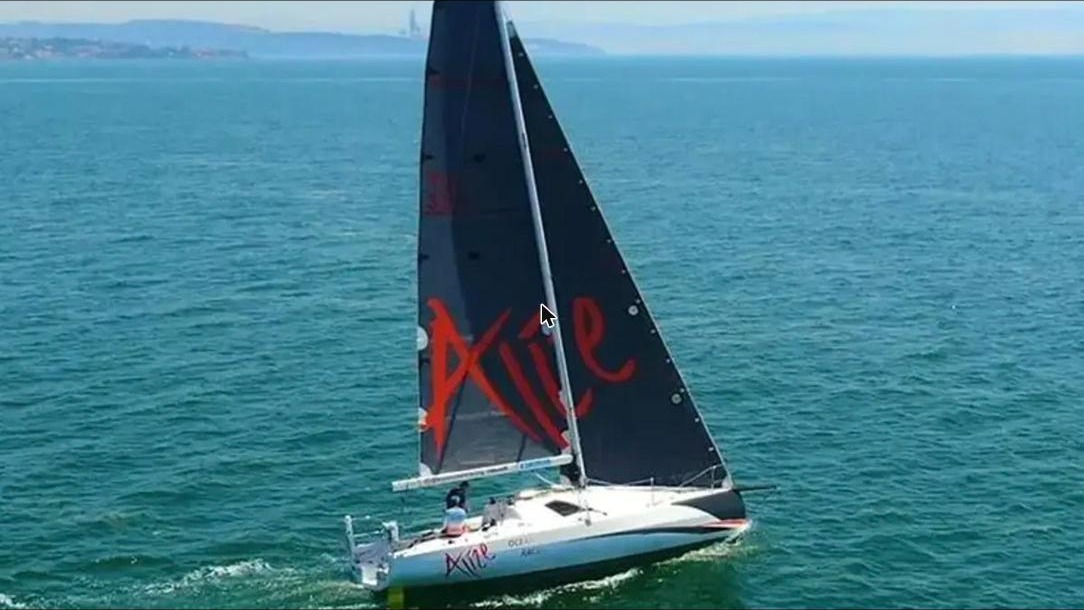
According to Sümer, the weather did not arrive as expected. There was no wind to the south, and to the north the breeze was irregular and came from unexpected angles. The team saw the trade winds on only four or five days of the whole crossing. Choosing the northern route, it finished the 17-day second leg fifth in the Mediterranean group. Sümer says that if the wind had always blown like this, trade along those routes would never have been possible for centuries. The logbook of the French Team Poussone on the same leg also notes that the racers had been promised trade winds and warm weather that never came. At the 2025 Transquadra, crews likewise found trade winds that looked like 15–20 knots on paper to be shifty and exhausting.
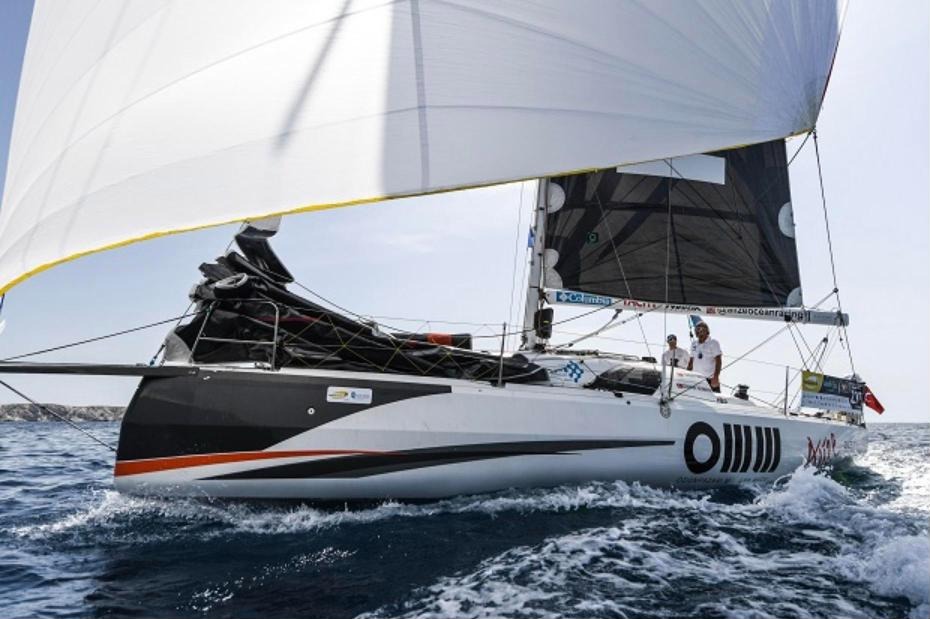
One moment from the first leg has stayed with Sümer. The fleet left Marseille on 13 August 2021. On the third night, sailing in light air, he was hit in the face by a very hot mass of air. “It was like opening an oven door. I shut my eyes, turned my back and thought the world was ending,” he says. Right after, the wind rose to 40 knots. In those days Spain was going through one of the most severe heatwaves on record. According to the Spanish meteorological agency AEMET, the 47.4°C measured in Montoro on 14 August became the country’s all-time record, and 46.2°C was recorded the next day on the coast of Murcia, along the route. What Sümer describes matches a phenomenon meteorologists call a heat burst. Rain falling from a storm cloud evaporates in a layer of hot, dry air, the cooled air sinks fast, warms as it is compressed and reaches the surface as a scorching wind. Temperatures can rise by 5 to 15 degrees within minutes.
Summer storms in the Marmara, a sudden sinking off Sicily
The change is felt right off Istanbul too. Sümer, who lives on Büyükada, says no serious weather used to be expected around the islands in summer. In recent years, summer southwesterlies and westerly storms have torn boats from their moorings and driven them ashore. About ten years ago, sailing to the island with his family, they were caught halfway by rough weather even though the forecast carried no warning. When they tied up at Kalpazankaya behind Burgazada, the analogue gauge read 50 knots and lightning struck right over them. “It was never like this before,” he says.
The most discussed example in the Mediterranean came in August 2024. The 56-metre yacht Bayesian sank within minutes in a sudden storm while at anchor off Sicily. Luca Mercalli, President of the Italian Meteorological Society, said the sea that night was around 30°C, about 3 degrees above the seasonal norm. Scientists are cautious about linking individual waterspouts to climate change, but there is agreement that a warming sea creates conditions favourable to severe weather.
For Sümer, the way sailors read the sea has to change with it. Beyond wind apps, reading the barometer, tracking water temperature and watching for sudden weather should now be part of every sailor’s routine. Soybay believes clubs can play a role here. By taking and announcing their own measurements, clubs can provide data to athletes and to the city alike. The city is changing the wind as well. According to Soybay, new buildings on the shore are blocking the clubs’ wind, and gusts funnelled between buildings cause sudden and dangerous shifts. Clubs may eventually have to look for space in more natural settings.
A boat moved by the wind still has a carbon footprint
Sailing is often seen as a zero-emission sport. The picture changes once the count starts with boatbuilding. The 11th Hour Racing team calculated that building Mālama, the 60-foot IMOCA it launched in 2021, produced about 550 tonnes of greenhouse gas emissions, the equivalent of an average car driving 2.2 million kilometres. An analysis of the same class in 2010 put the figure at 340 tonnes. Carbon fibre and composites improve a boat’s performance while enlarging its footprint. On top of this come the fuel used by race committee and support boats and the transport of crews and boats from race to race.
There are steps clubs can take too. Marmara Yelken Spor Kulübü’s sea facilities in Kadıköy draw their electricity from rooftop solar panels and their water from seawater treated by reverse osmosis. According to Soybay, an engineer working in water treatment and environmental technologies, the club can offset around 45–50 tonnes of carbon emissions a year by using solar power and water from the sea instead of grid electricity and delivered water. That is worth about 2,000 dollars a year on the carbon market. Soybay notes that the facility is small and that its value lies in being a workable example.
Warmer water, hulls that need cleaning more often
A warming sea leaves its mark under the boat as well. Sümer says he sees the change clearly when cleaning hulls. This winter the water stayed this warm for the first time, while the previous summer it was colder than expected. Mussels, weed and other organisms settle on a hull much faster in warm water. A fouled hull increases drag, costs speed in a race and raises fuel consumption on motorboats, so cleaning is needed more often.
Cleaning has an environmental cost of its own. Waste scraped off a hull can be loaded with metals from antifouling paints. A study in the Stockholm archipelago in Sweden measured up to 28,000 milligrams of copper and up to 171,000 milligrams of zinc per kilogram in waste cleaned from leisure boats. This waste usually stays in boatyard soil at the end of the season. Fouling also carries living organisms. A 2022 guide published by the International Maritime Organization (IMO), World Sailing and the international marine industry association ICOMIA recommends the principle “Check, Clean, Dry” to stop species clinging to hulls from spreading between waters. One of the invasive species it cites is the “killer shrimp”, native to the Black Sea and Caspian regions, which is thought to have reached England with boats, windsurfing kit or angling gear.
The fresh water used after sailing
After sailing, the boat, sails and equipment need to be rinsed with fresh water. Salt wears out sailcloth and rigging, so rinsing cannot be skipped. With dozens of boats and the equipment of hundreds of athletes at a club, this adds up to a significant demand for water in summer. Marmara Yelken Spor Kulübü meets it by treating seawater. The facility produces about 20 cubic metres of water a day. Soybay says this covers the club’s needs at its busiest times, although in summer the air conditioning and treatment system stretch its electricity capacity. The club therefore plans to add more solar panels in the coming months.
For Soybay, it matters that these habits are formed young. The club’s young athletes collect plastic bottle caps from the shore to support wheelchair campaigns.
Logbooks bound for Antalya
COP31’de 198 tarafın temsilcileri denizi rakamlarla konuşacak. TYF önderliğindeki seyir Antalya’ya ulaştığında masaya başka bir kayıt da gelecek. Bu kayıt, yelkencilerin atölyelerde ve seyir boyunca tuttuğu, aynı rotalarda yıllar boyunca biriken gözlemlerden oluşuyor. Sinan Sümer’in “eskiden böyle değildi” cümlesi bu defterin ilk satırlarından biri. Rüzgar Üstü, sürdürülebilir yelken dosyasında bu kayıtları ve kulüplerin değişime nasıl hazırlandığını takip etmeye devam edecek.
| Title | Details |
|---|---|
| Project | Sailing to COP31, Turkish Sailing Federation |
| First workshop | 22 Ekim 2026, Marmara Yelken Spor Kulübü (organizasyon TAYK) |
| Stakeholders | Turkish Sailing Federation, TAYK, Marmara Yelken Spor Kulübü, Climate Hub İstanbul |
| Route | Istanbul, İzmir–Çeşme–Urla Climate Action Festival, Bozburun–Antalya Climate Impact Sailing Rally |
| Outputs | Youth Climate Declaration, climate impact report, documentary, COP31 final report |
| COP31 | 9–20 November 2026, Antalya (oceans and seas day on 17 November) |
Transparency note: Dr Sedat Soybay is Chairman of the Board of MASS Arıtma Sistemleri, the main sponsor of the Kardeşlik Kupası. Rüzgar Üstü received no payment for this article.
Articles in the sustainable sailing series
Part one, World Sailing Made 56 Promises for 2030. Where Does Türkiye Stand?
Part two, Looking for Türkiye on the World’s Clean Regatta Map
Kardeşlik Kupası and the COP31 sailing workshop
Climate Change Presidency of Türkiye, COP31 Action Agenda
Green Sports Alliance, Sports for Climate Action Framework
Cumhuriyet, sea temperature in the Sea of Marmara
Team Poussone, Transquadra 2021–2022 logbook
Denizcilik Dergisi, OMM Alize Ocean Racing finishes fifth
AEMET, August 2021 climate summary
Xataka, how a heat burst forms
CNN, Bayesian and the warming Mediterranean
Down To Earth, WMO ozone bulletin and recovery timeline
US National Weather Service, UV index
Practical Sailor, UV damage to sailcloth
University of Cádiz, study on sun exposure among sailors
11th Hour Racing, carbon footprint of building an IMOCA
Bighiu et al. (2017), biofouling of leisure boats and metal pollution
Videos, interviews and live moments from the racecourse, on our Instagram.
@ruzgar.ustu
Follow on InstagramPodcast
Stories from sailing in Türkiye, told in English. Listen to Windward Türkiye on Spotify.
Listen on SpotifyRüzgar Üstü on Spotify
Keep reading
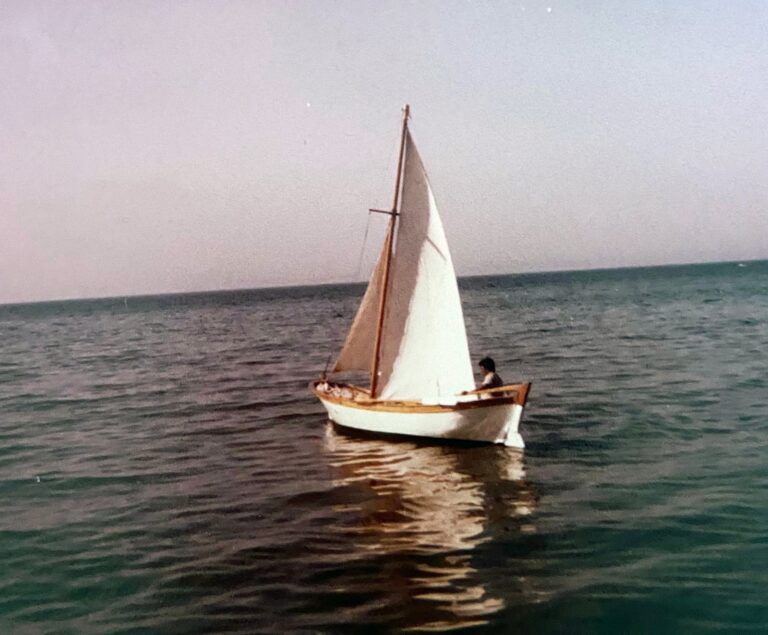
“Being the wind in each other's sails”, Hulusi Gürbüz's half-century from a wooden yole to a newspaper
B. Hulusi Gürbüz, editor-in-chief of Yelkencinin Gazetesi, talks about how he took up sailing, the stories he is glad to have put on record, and why sailing publications should produce together.
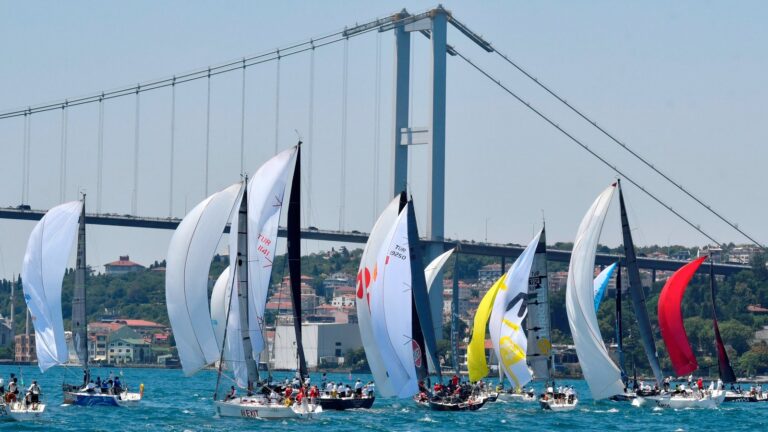
Looking for Türkiye on the World’s Clean Regatta Map
Of the 56 targets in World Sailing’s Agenda 2030, 17 are about events. Their most visible result on the water is the Clean Regattas certification, which reached 219 events in 44 countries in 2025. We looked at how the certification works, what it measures and where Türkiye sits on its map.
World Sailing Made 56 Commitments by 2030. Where Does Türkiye Stand in These Commitments?
World Sailing's Sustainability Agenda 2030 includes 56 targets and specific deadlines under six headings. According to the 2025 Impact Report, 17 of the 32 monitored core targets have been achieved. So, where does Türkiye stand in fulfilling these commitments?