How Spite Sailing’s founders learned to trust each other on a boat built for one
Emma Rosenbaum and Marianna Fleischman are the founders of Spite Sailing, Baltimore’s own double-handed female offshore racing team. They are preparing for the 2027 Bermuda 1-2 on their Mini 650. Speaking to Windward Türkiye, they talked about partnership, fear and what needs to change to see more women racing offshore.
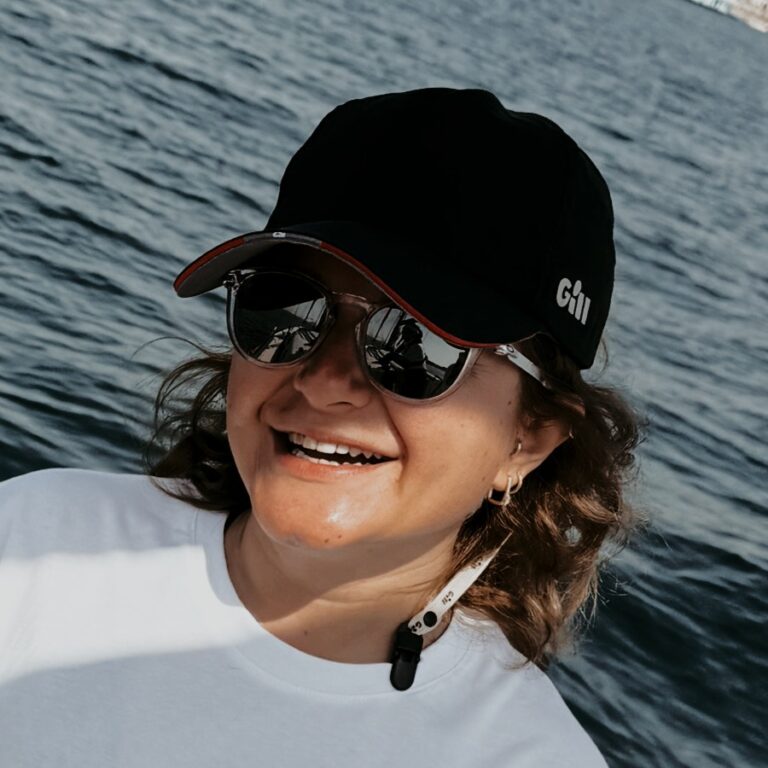 Written by Rana Akkurt
Listen to the episode
Spite Sailing at a glance
Team. Baltimore’s own double-handed female offshore racing team, founded and crewed by Marianna Fleischman and Emma Rosenbaum.
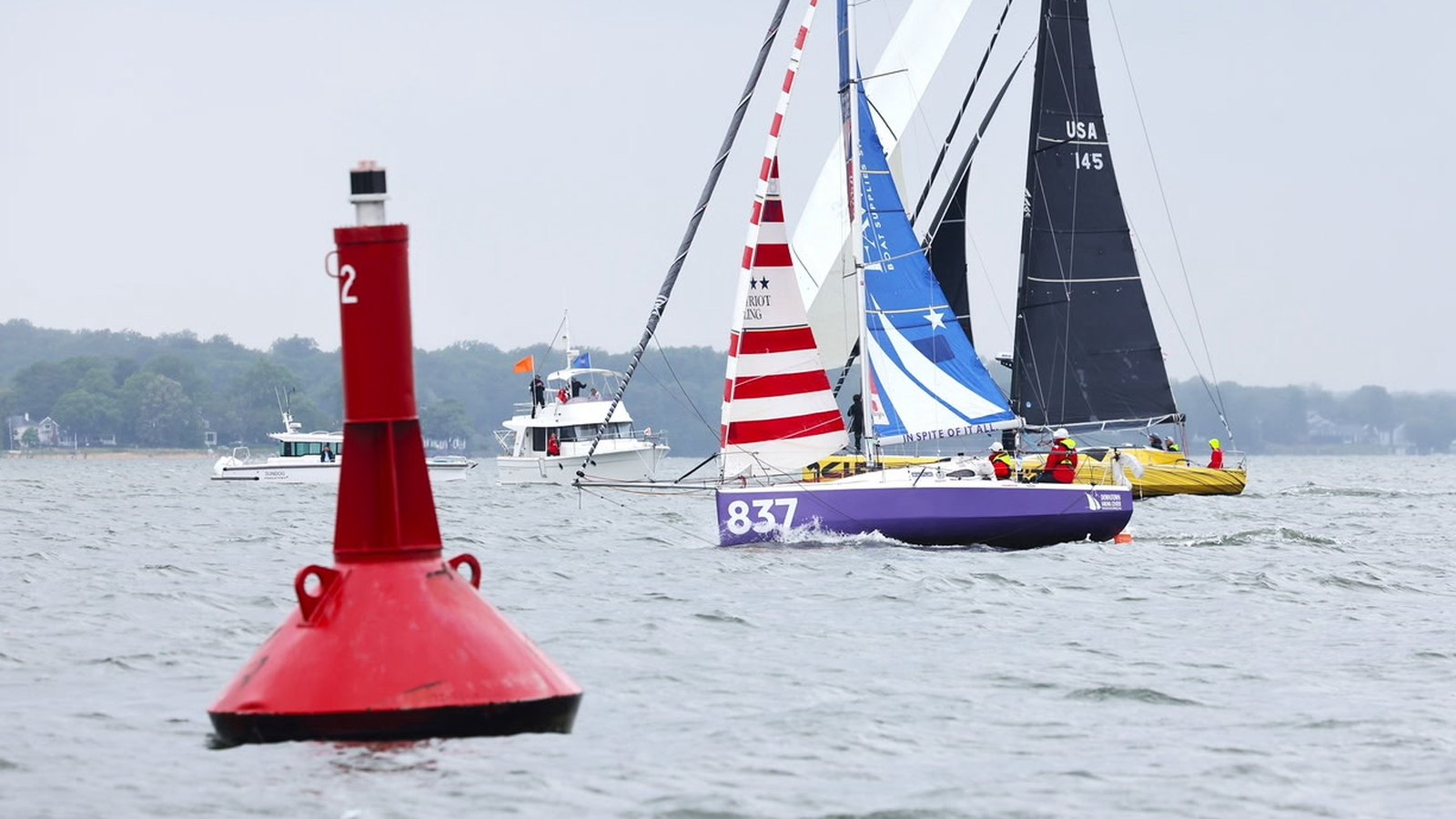
Boat. Classe Mini RG 650, sail number 837, previously raced in the Mini Transat by Peter Gibbons-Neff.
Goal. The 2027 Bermuda 1-2, sailed solo from Newport to Bermuda and double-handed on the return.
Community. Runs performance pathways for women with the Downtown Sailing Center and presents the Spite Spirit Award.
The team’s name comes from “in spite of”
The word “spite” gets a reaction out of people, and Marianna knows it. Everyone has their own theory about the name, she says, and most guesses are at least part of the reason. The meaning the team gives it lies in the phrase “in spite of”.
For Marianna, the name is a nod to the barriers women face in a male-dominated sport. Wind, weather, gear failures and seasickness belong on the same list. She sums it up as pushing on “in spite of all of these things that can get in your way, and doing it anyway”.
The founders first sailed together in the 2025 Annapolis to Newport Race
Emma and Marianna met when they were paired up for the 2025 Annapolis to Newport Race on a fully crewed J/42. The crew set out to become the first all-women team to complete the race. It was Emma’s first offshore race, and Marianna was a watch captain.
Emma remembers it this way: “With every offshore race, a bunch of things break. Marianna would just trot on up to whatever was broken, fix it, go back and make a call about pushing the boat. I think subconsciously at the time I thought she would be a great shorthanded offshore partner.”
On the Mini 650, the bow belongs to Emma and the tactical calls to Marianna
The Mini 650 is a small offshore racing boat designed to be sailed by one person. With two on board, the first question is who works where. Marianna says they are still learning how to divide the roles, which shift with the conditions and with how each of them feels on the day.
A clear pattern has emerged all the same. Everything forward of the mast is Emma’s domain, and she is ready to go up to the bow and rig the spinnaker in any conditions. Marianna has a little more experience with tactics and navigation, so when they debate when to tack, she usually makes the call. “Someone has to be in charge. If you are arguing too much, at some point someone just has to make a decision,” she says.
Emma recently delivered the boat from Annapolis to Baltimore with other people on board and noticed something. She and Marianna do almost everything on the Mini in silence, because both of them already know what comes next.
The hardest conversations came from the business side of the campaign
Asked what has tested the partnership most, Emma points to running the campaign. It is the first time either of them has built a campaign or taken responsibility for a boat. Questions about which boat work to do and how to handle each bill come up constantly.
Here too the roles settled naturally. Marianna leans towards marketing and boat work, Emma towards operations, administration and project management. Emma says they have regularly stopped to ground themselves and set guidelines and an operating agreement.
Marianna adds that she sees Emma more than almost anyone else in her life. That closeness lets them deal with issues before they become arguments.
On long passages, the watch system runs on looking after each other
Sleep in shorthanded sailing is irregular, often an hour at a time at night. Marianna recalls a delivery back from a boat show in the spring. Emma came up after twenty minutes below, and the tiredness was clear on her face. Marianna was feeling good and told her to go back and lie down.
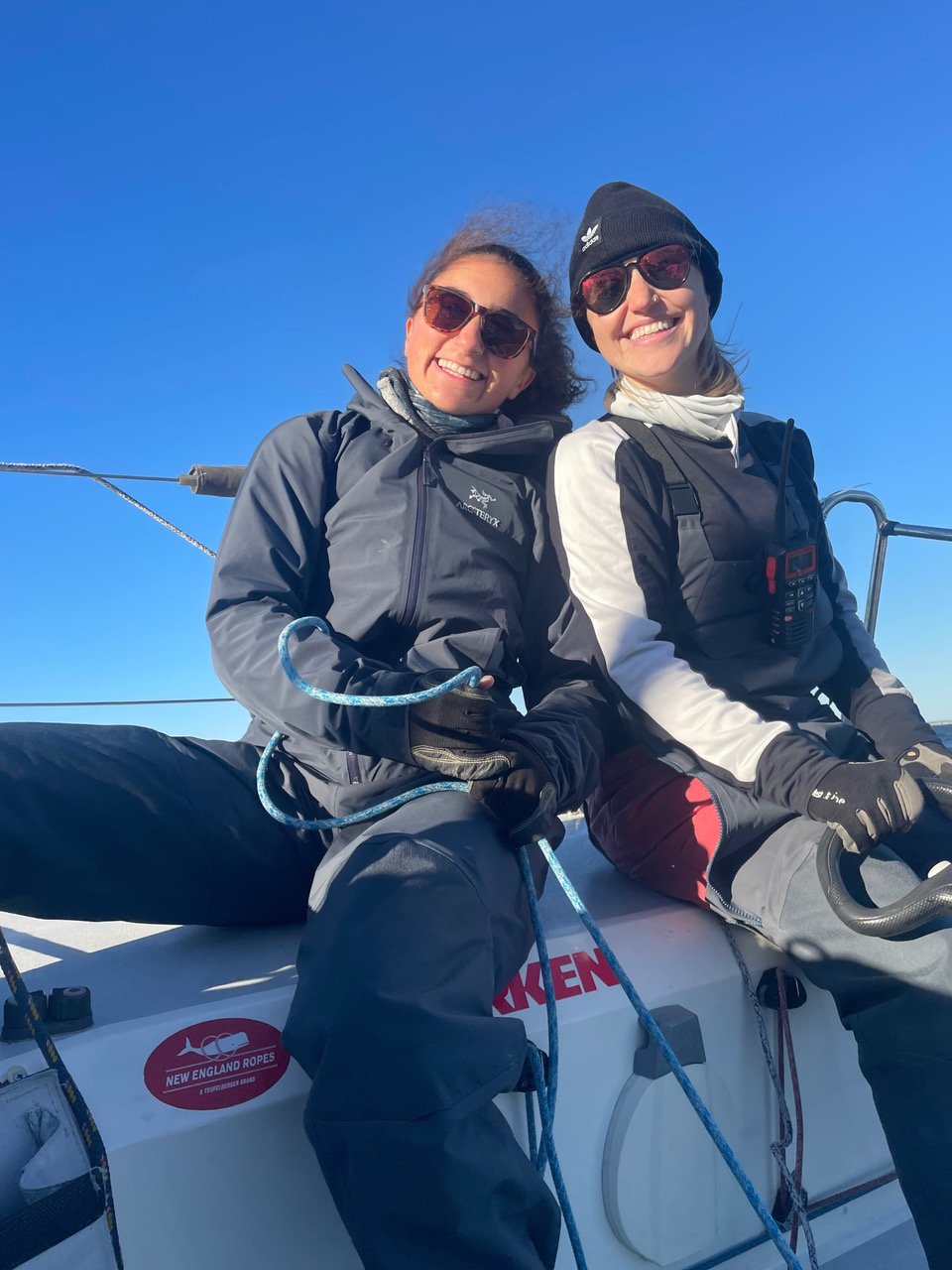
They do disagree at times, mostly about the campaign, such as the tone of an email or where to haul the boat out. “At the end of the day you are still a team, and I think we are very good at reframing that every time,” Marianna says.
Preparation reduces fear, and respect for the ocean remains
Emma started sailing five years ago. In her first race, being the least experienced person on board took the pressure off, because it was clear who did what and what was expected of whom. The campaign, she says, has changed her relationship with her emotions: “One day I feel amazing on our boat, the next day I feel like I am not finding my flow. I have stopped waiting for a consistent feeling of security. After all the miles we have done on the boat, my baseline is that I will figure it out and at some point feel good again.”
Marianna recalls a talk by Cole Brauer, who sailed solo around the world. Brauer described preparedness as the opposite of fear, and said she did not feel scared because she knew she had the training and the mindset to handle whatever went wrong. Marianna disagreed at the time, as she felt scared every time she went offshore.
Today she accepts that the more she prepares, the better she feels. Taking responsibility for the boat, especially with guest crew aboard, can still feel heavy. “I still have a very healthy fear of the ocean, and I think that is wise,” she says. What develops over time, in her view, is the ability to make friends with that fear and keep it from holding you back.
More women offshore starts with open crew spots
For Marianna, the core issue is access. There are very capable women sailors in Türkiye, in the United States and everywhere else. Some lack a boat or the budget, others have never had the chance to take a crew spot offshore and build those skills. The realistic answer, she says, is for boat owners to give spots to new crew, especially women: “They might be the least experienced person on the boat, but if you invest in them, they will not be the least experienced on the next boat. They will be able to mentor new people.”
The Ocean Race rule could serve as a model for smaller races
Emma accepts there is no perfect solution, yet she finds The Ocean Race requirement that half of each team be women compelling. In the interviews she has watched, nobody described it as a disadvantage. Smaller offshore races in the United States offer awards for mixed crews, and Emma believes rules requiring women on board would push teams to think more strategically.
Most boats were not designed around women’s stature, so extra blocks or added mechanical advantage may be needed. In Emma’s view, those changes often make manoeuvres faster and more efficient. “That diversity of perspective will probably make your boat go faster,” she says.
Share the dream first, then get the safety training
Marianna’s first advice to anyone dreaming of offshore racing is to tell people. Spite Sailing started that way. Emma raised the idea without expecting Marianna to say yes, and Marianna agreed. When you share a goal with your sailing community, Marianna says, the people who want to help come forward with introductions, knowledge and crew spots.
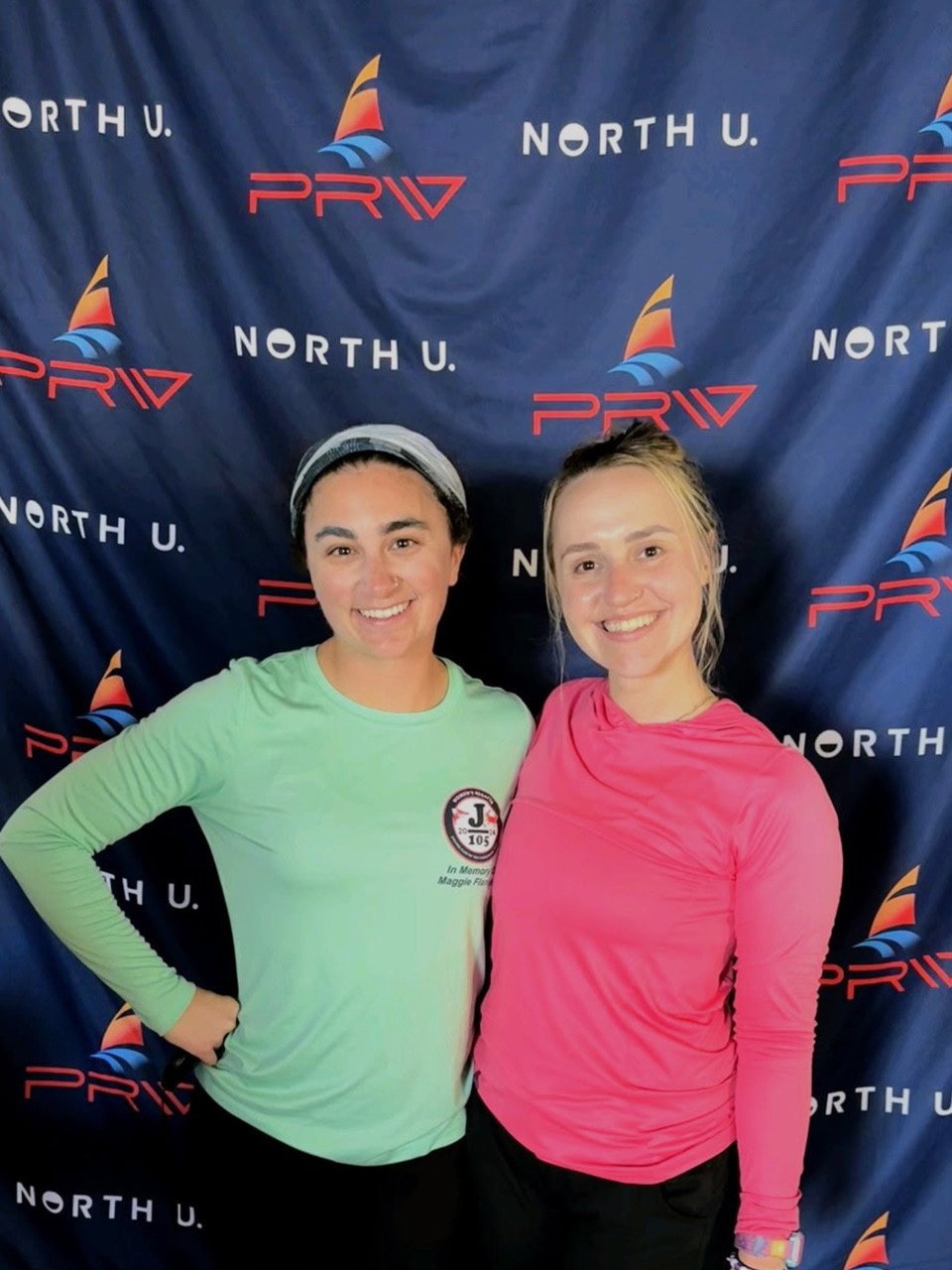
Emma adds practical steps, such as taking an International Safety at Sea course, buying or borrowing offshore safety gear and learning the boat’s systems. In her experience, a large part of sailing is networking.
Two notes for women sailors in Türkiye
For Emma, the only limits that exist are the ones you put on yourself. She and Marianna started with a dream and no clear idea of how it would happen, and they kept showing up, talking to people and relying on each other.
Marianna’s note is about the offshore community. Offshore sailing is unlike any other kind of sailing, she says, and it is a club worth joining. “Don’t give up, keep growing your skills. More women offshore would make the whole sport better.”
This story is based on an interview with Emma Rosenbaum and Marianna Fleischman on the Windward Türkiye podcast.
Videos, interviews and live moments from the racecourse, on our Instagram.
@ruzgar.ustu
Follow on InstagramPodcast
Stories from sailing in Türkiye, told in English. Listen to Windward Türkiye on Spotify.
Listen on SpotifyRüzgar Üstü on Spotify
Keep reading
"Napan?" Arkın Karpaz Gate Marina's TP52 is the 2026 Türkiye Yacht Champion
Arkın Karpaz Gate Marina'nın TP52'si Napan, 19–23 Ekim tarihlerinde Marmaris'te yapılan 2026 TYF Türkiye Yat Şampiyonası'nda Deniz Fıçı'nın skipper'lığında ORC 0 grubunu ve 18 teknelik genel sıralamayı kazandı.
All in One Racing takes the rise of Turkish sailors in the ClubSwan 50 to Naples
All in One Racing, which represents Türkiye in the ClubSwan 50 fleet, will close its second season at the ClubSwan 50 World Championship in Naples on 27-31 October.
Raised on the Black Sea and the Mediterranean, racing in the Atlantic for the first time
Türkiye U18 Dalga Sörfü Milli Takımı, İrlanda'da düzenlenen EuroSurf Junior 2026'ya ilk kez katıldı ve 20 ülke arasında 13. oldu.