Is sailing passed down from father to daughter? The 2026 Bülent Atabay Cup and the sailors’ “Gentleman of Istanbul”
The Bosphorus leg of the TAYK Trophy was sailed as the Bülent Atabay Cup for the first time. The prize-giving told the story of six Orient Express boats, the sailors who gained experience on them and the second generation that has taken ownership of the race.
 Written by Rana Akkurt
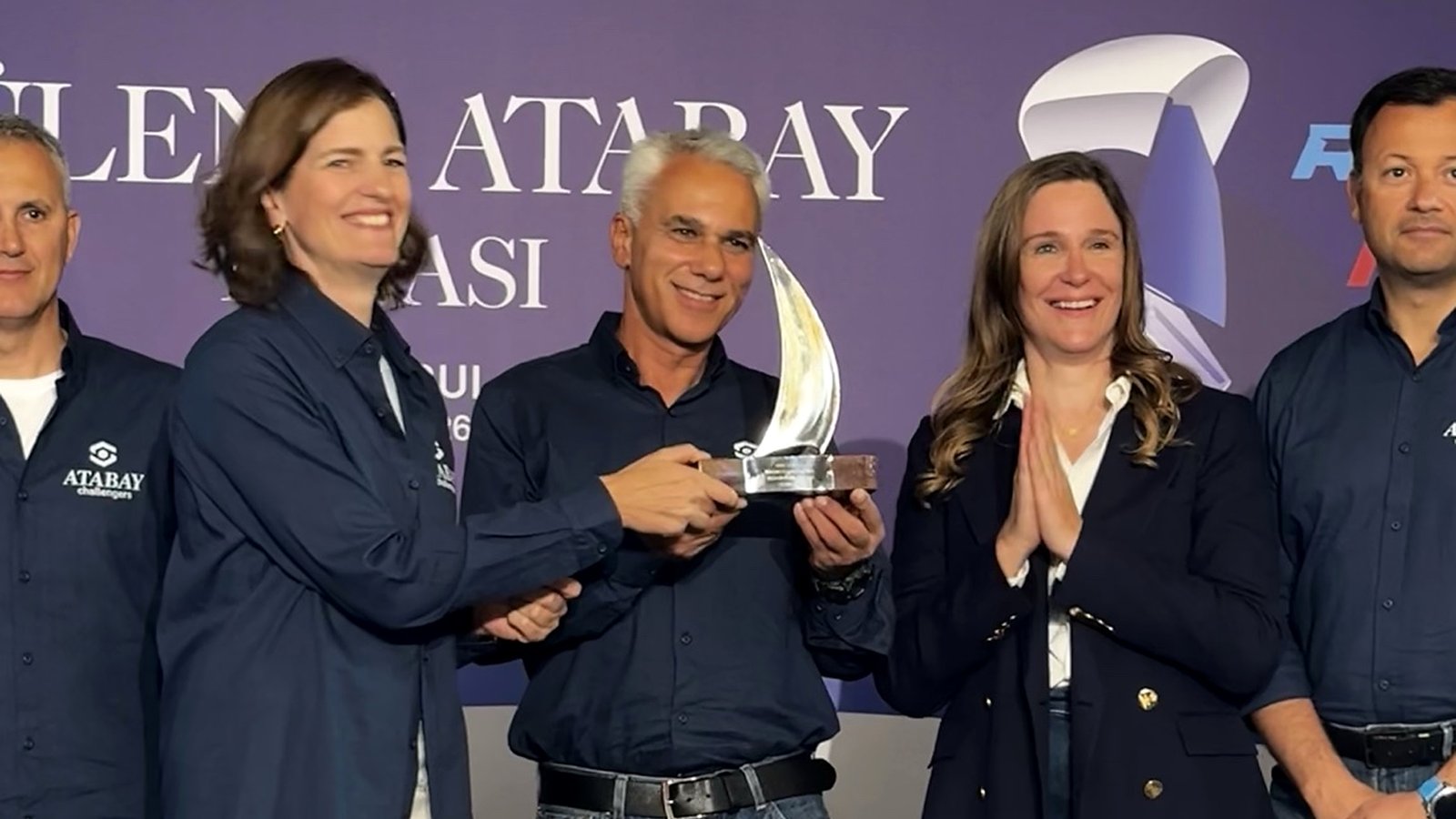
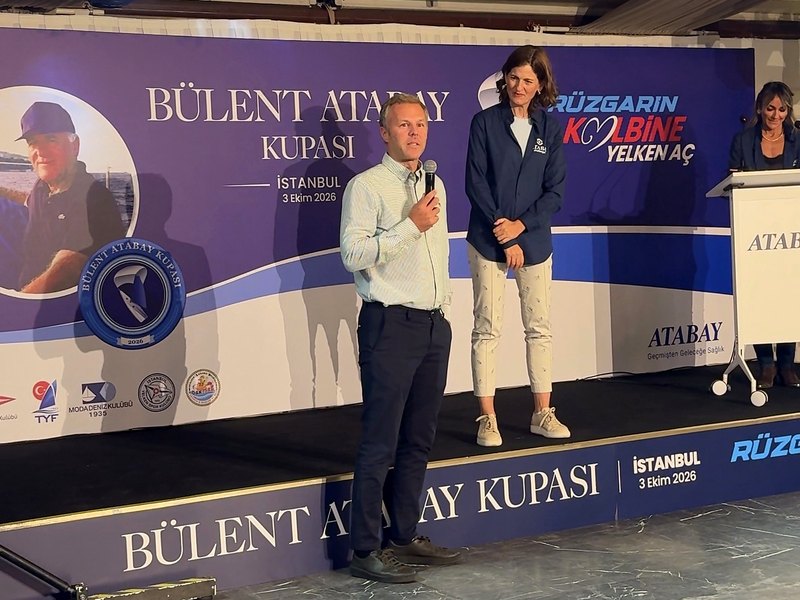
The ninth leg of the TAYK Trophy, raced on the Bosphorus, was sailed on 3 October 2026 under a new name for the first time, the Bülent Atabay Cup. The race was held at Istanbul Sailing Club under the auspices of the Turkish Sailing Federation, organised by TAYK and sponsored by Atabay. With a northeasterly that at times reached 25 knots and the Bosphorus current, the fleet faced a demanding test. The prize-giving that evening became a gathering of sailors from different generations around a figure who has left his mark on the history of yachting in Türkiye. Every sailor who took the stage used the same words for Bülent Atabay. The Gentleman of Istanbul.
A curiosity that began in 1955
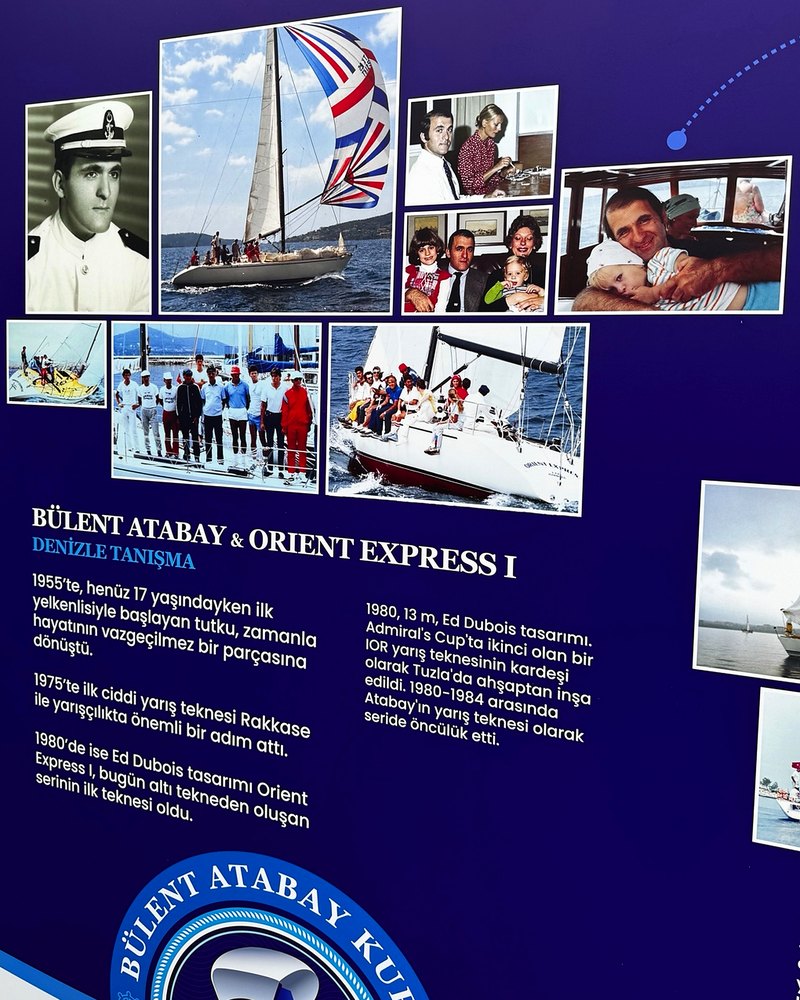
Bülent Atabay discovered sailing in 1955, at the age of 17, with his first sailboat. In 1975 he moved into racing with Rakkase, his first serious race boat. What has not changed since then is his curiosity, his will to learn and his passion for improvement. Having devoted his life to pharmaceuticals and active pharmaceutical ingredients, Atabay carried his interest in chemical synthesis and manufacturing into his hobby and began building his own race boats. At 88, he is one of the figures who have left a mark on the history of yachting in Türkiye and the owner of one of its longest-running boat development stories.
From wood to carbon, from IOR to IRC in six boats
The Orient Express series began in 1980 and reached six boats by 2008. Those 28 years coincide with a period that changed race boats in two ways. The rating rules that determine how boats race against each other moved from IOR to IMS, and from there to IRC. Hull materials moved from wood to fibreglass, to foam-cored sandwich structures and to carbon fibre. Atabay’s six boats follow both changes step by step.
Orient Express I, 1980. The first boat of the series was a 13-metre wooden boat designed by Ed Dubois. She was built in Tuzla as the sister ship of an IOR race boat that had finished second in the Admiral’s Cup, and was Atabay’s race boat between 1980 and 1984. She was drawn to the IOR rating rule, which came into force in 1969 and had its best years in the 1970s with international series such as the Admiral’s Cup. Wood was still the traditional material for race boats in those years, while fibreglass had been spreading in series production since the 1950s.
Orient Express II, 1985. In the 12-metre second boat, again by Dubois, wood gave way to PVC foam and fibreglass. This sandwich structure places a light foam core between two fibreglass skins, keeping the hull thick and stiff while reducing weight. In the same year, the IMS rule was introduced as an alternative to IOR.
Orient Express III, 1991. The 12-metre third boat, designed by Dubois, was built entirely of carbon fibre in Southampton and finished third in the Admiral’s Cup, racing for Britain under the name Port Pendennis. She was brought to Istanbul in 1992 and renamed Orient Express III, then raced in the Admiral’s Cup again in 1993 with a British crew. She won the Naval Forces Cup in 1992, 1996 and 1997, and the first Bosphorus Cup in 2002. Carbon had begun to be used in race boats in the 1980s, first as reinforcement in load-bearing areas. It is lighter and stiffer than fibreglass. The boat belongs to the final years of IOR. The rule was frozen in 1989 and fully replaced by IMS in 1993. Today Orient Express III races as Game Changer, skippered by Oğuz Ayan, and is still winning races in 2026.
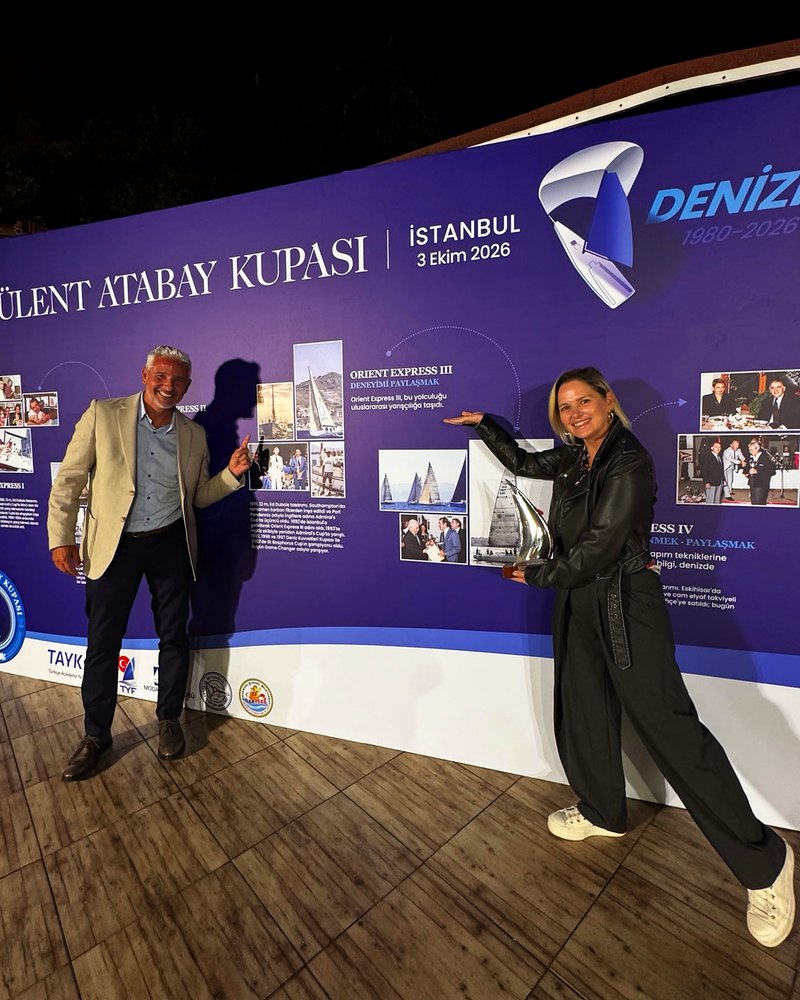
Orient Express IV, 2000. The 14-metre fourth boat, designed by Christian Stimson, was built at the Club Atabay facility in Eskihisar using the cold moulding method. In this method, thin wood veneers are laid over a mould in diagonal layers and bonded with epoxy, then sheathed in epoxy and fibreglass. This technique, which came to the fore again with the development of epoxy, turns wood into a strong and stiff composite. In the year the boat was built, the Channel Handicap system, developed in the early 1980s in England and France for club racers, was renamed IRC. Sold to Fenerbahçe in 2005, Orient Express IV took a podium place in her class at the Bülent Atabay Cup.
Orient Express V, 2005. IRC was recognised as an international rating rule in 2003. The formula of the rule is not published and it is reviewed every year. With the change in IRC standards, the focus of the fifth boat shifted to speed and balance. The 11.50-metre boat drawn by Ed Dubois was built with carbon cloth, carbon spars and special epoxy adhesives. Today she races as Matrak 2, skippered by Orhan Özdaş.
Orient Express VI, 2008. The last and largest boat of the series is a Farr 55 by Farr Yacht Design. She was built in a year and a half at the dedicated facility at Club Atabay. Her hull is entirely carbon fibre, and she has a hydraulic system and twin rudders. A series that began with wood in 1980 was completed 28 years later with a full-carbon boat built in Türkiye. Orient Express VI continues to race, skippered by Saruhan Çinay and Zeynep Atabay Taşkent.
The youngest member of the series today is Orient Express Jr., which races in the J/70 class. Behind the six boats lie a wish to understand the sea, a passion for building the optimum race boat and the idea of sharing this experience with new generations. Atabay’s interest in synthesis and manufacturing in chemistry took the material one step further with each new boat.
Coach Oğuz Ayan, who has sailed more than 300 races with the national team, said at the ceremony that Atabay’s older boats still winning races today is proof of that vision. Four boats of the series race in the same fleet today with different skippers, as each other’s rivals. A sailing culture that grows stronger with its rivals is one of the things this series has left behind.
Sailors remember Bülent Atabay
What the stories told at the ceremony had in common was Atabay’s trust in young people. Examples of that trust go back to the early 1990s.
One of the sailors who shared his memories that evening was Levent Peynirci, the second-generation representative of the Peynirci family. The Peynirci family has been part of the sailing community since the 1970s. Levent Peynirci spent the summer of 1993 with his father Uğur Peynirci and Orhan Gorbon, and still describes those days as a wonderful summer. Having raced for the national team more than 200 times, Peynirci now teaches sailing and builds race teams at Cheese Sailing, which he founded.
Orhan Gorbon describes the same summer in his own writing. Gorbon joined the Orient Express III crew in 1992, and in 1993, when the boat went to the Admiral’s Cup again with a British crew, he was on board at Atabay’s request. In his own words, his international racing career began with Bülent Atabay’s gesture.
The same trust continued ten years later. National team sailor Sinan Sümer said he was trusted by Bülent Bey with the helm in a southern race in the early 2000s. Sümer, who started sailing at Galatasaray Sailing Club in 1990 at the age of 15, became national champion three times in the Laser and Finn classes and sailed 60 races with the national team between 1994 and 2002. The trust Atabay showed that day brought Sinan Sümer into yacht racing. Sümer passes on the same approach today. At Alize Yelken, which he founded in 2004, he gives adults who never took up the sport when they were young a way into sailing, and introduces university students to sailing.
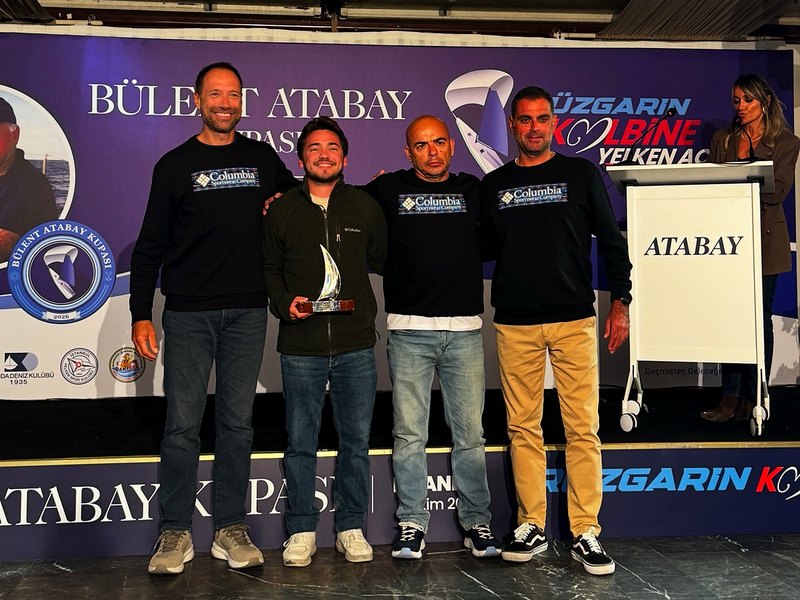
Arif Gürdenli, who raced alongside Atabay for many years and represented Türkiye at the 1988 and 1992 Olympic Games, recalled that Bülent Bey never missed a race despite being a very busy businessman. Yıldırım Kaymaz, manager of the Club Atabay facility, was also honoured with an award that evening. Kaymaz, who personally worked on the build of Orient Express VI, has been racing with Atabay for 46 years.
Another of the speakers that evening was Şükrü Sanus. Sanus, who represented Türkiye in the 470 class at the 1996 Atlanta Olympic Games, still races with the Orient Express VI crew. He was also the one who received the trophy on stage together with Zeynep Atabay Taşkent and Ayşe Atabay.
Is sailing passed down from father to daughter?
In the history of seafaring, the answer to this question has often been yes. Before the 1900s, the most common way for a woman to be on board a ship was to be the captain’s daughter or wife, and some captains’ daughters learned seamanship and navigation from their fathers. In 1838 Grace Darling, the daughter of a lighthouse keeper, was awarded a medal in England for her part in rescuing nine people from a ship wrecked in a storm. Grace O’Malley of Ireland, the daughter of a seafaring family, is said to have disguised herself as a boy to go to sea with her father, and later commanded her own fleet.
Today Bülent Atabay’s legacy is carried by his daughters, Zeynep Atabay Taşkent and Ayşe Atabay. That legacy continues in two fields at once. Atabay İlaç ve Kimya, founded in 1939 by Ömer Kemalettin Atabay, is now run by them as the third generation. Zeynep Atabay Taşkent is Chair of the Board and Ayşe Atabay is Vice Chair. They lead a company that exports to 67 countries, with production ranging from active pharmaceutical ingredients to vaccines.
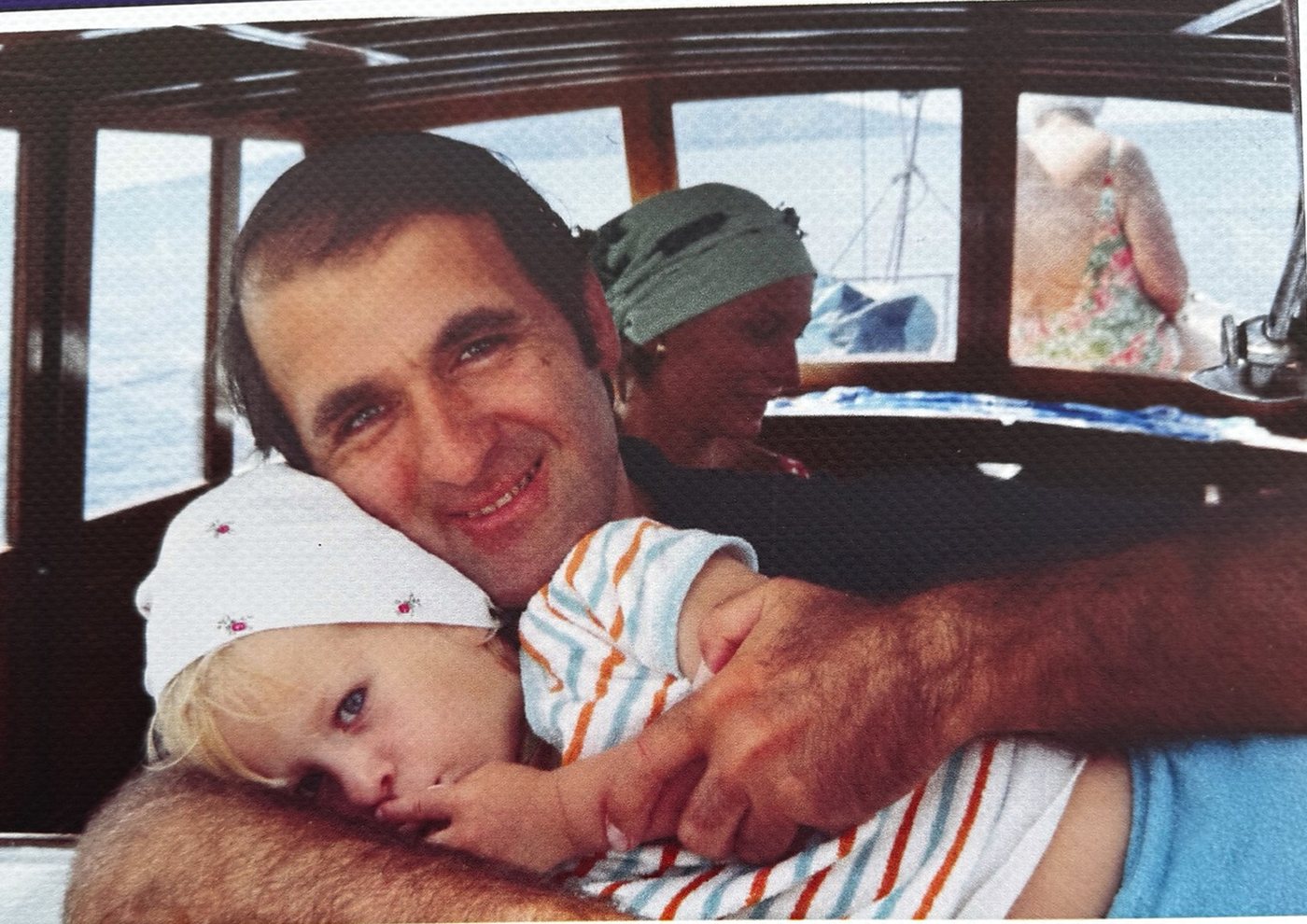
Both also carry the legacy at sea. Zeynep Atabay Taşkent is a board member of TAYK, the club that organises the race. The two sisters brought this cup to the sailing community by sponsoring the race that bears their father’s name, and raced the same day on Orient Express VI. The boat finished the race second in her class. With Zeynep Atabay Taşkent’s daughter, another generation is on its way in sailing.
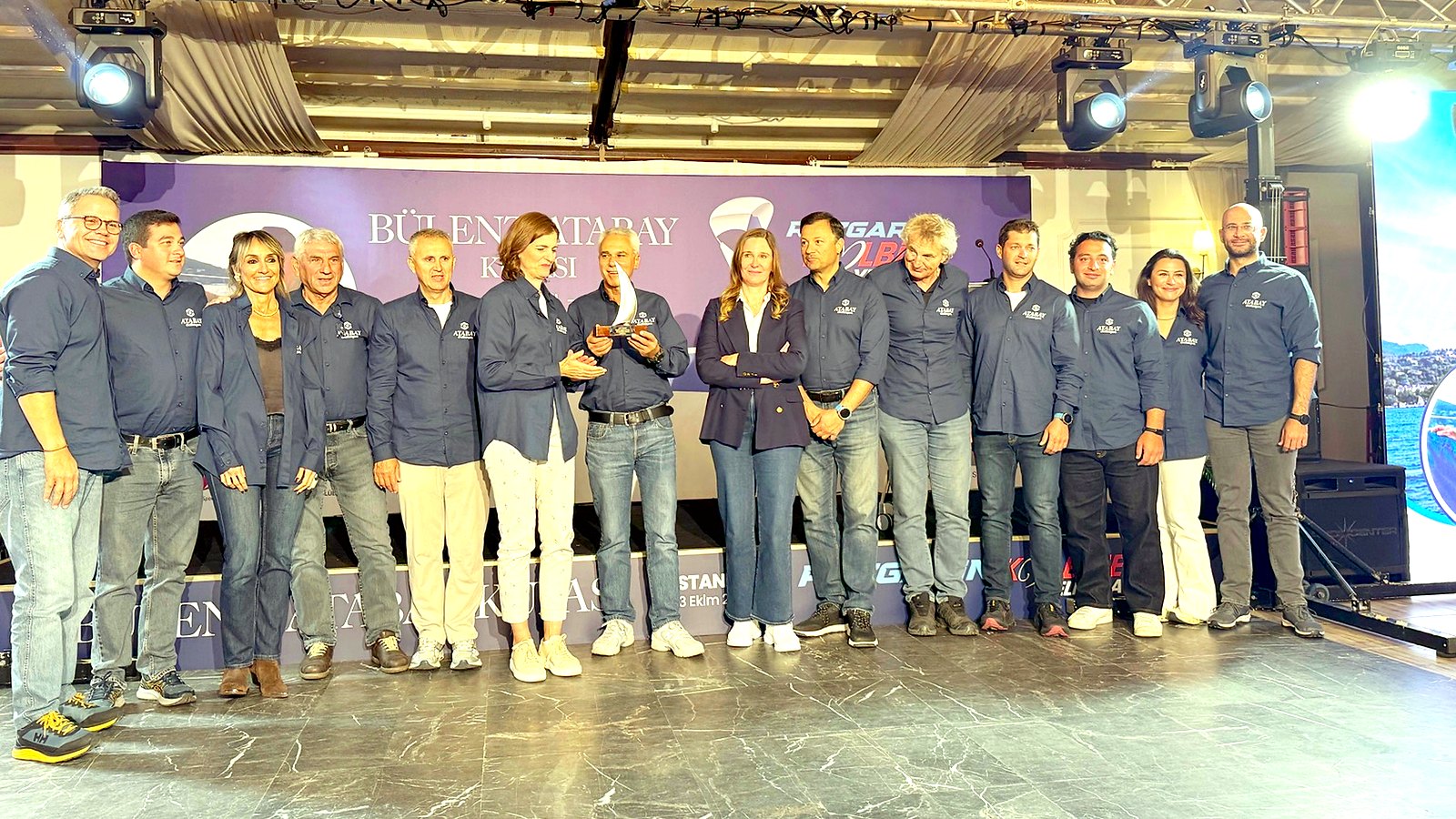
Zeynep Atabay Taşkent sees the race as a gathering of sailing culture. In a community their father built by trusting young people and leading by example, the fact that his daughters carry this legacy in management, in sponsorship and on the boat is an example for the business world. It shows there are many ways to be part of the sport, from building boats to developing athletes and supporting a race.

TAYK General Manager
TAYK General Manager Ceren Veziroğlu said that Bülent Atabay is someone who gives young people trust and courage and who has touched the lives of many sailors. Thanks to this, some of the accomplished athletes racing in the fleet today also gained yacht racing experience on the Orient Express boats. These sailors, shaped by Atabay’s passion for the sea, are now accomplished helms and crew, and they expressed their affection and respect for him on the racecourse and at the ceremony. Veziroğlu said they were proud to hold this race and wished for more people like Bülent Atabay. Atabay’s story is an example for others who want to create opportunities for young people and serve sailing.
This year Bülent Atabay gave sailors a Bosphorus race that bears his own name for the first time. The Bülent Atabay Cup will now be sailed as a tradition and will open a new route where experience is shared with new generations. We thank the family, the crews who raced in a 25-knot northeasterly, the experienced race committee who ran the race in these conditions, and TAYK.
Videos, interviews and live moments from the racecourse, on our Instagram.
@ruzgar.ustu
Follow on InstagramPodcast
Stories from sailing in Türkiye, told in English. Listen to Windward Türkiye on Spotify.
Listen on SpotifyRüzgar Üstü on Spotify
Keep reading
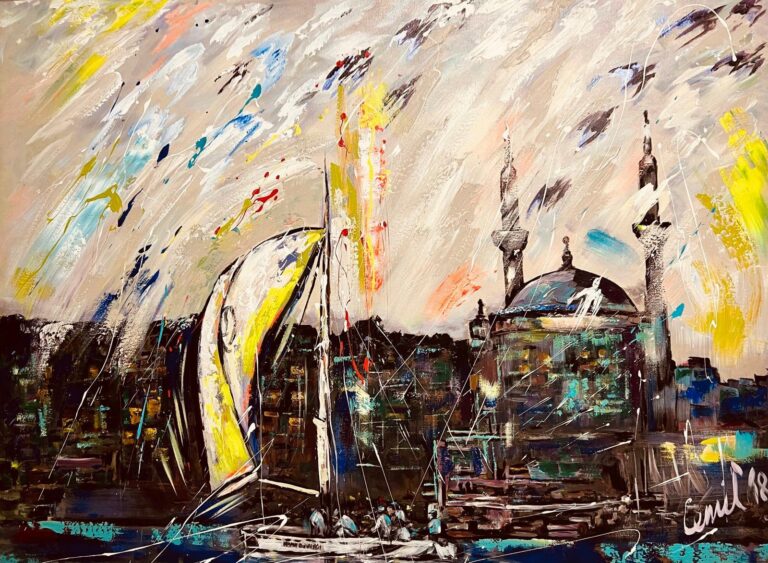
Boğaz’ın yarış teknelerini resmeden Cemil Tamay, yelkenden spor ressamlığına uzanan yirmi yılını anlatıyor
Cemil Tamay keman eğitimi aldı, fotoğrafla ilgilendi, yıllarca yelken eğitmenliği yaptı. Caddebostan açıklarında izlediği bir yarış onu resme yöneltti. O günden bu yana tabloları MotoGP pistinden WTA şampiyonasına, Universiade'dan dünya şampiyonalarına kadar Türkiye'deki büyük spor organizasyonlarında sergilendi.
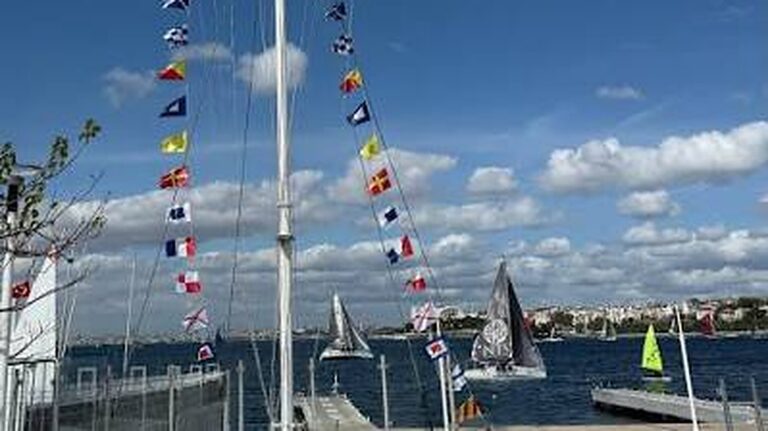
The Navy Cup, which once finished in Gölcük, brought 35 boats together on the Tuzla course in its 66th year
Türkiye Yelken Federasyonu himayesinde İstanbul Yelken Kulübü tarafından gerçekleştirilen Donanma Kupası 66 yaşında. 35 tekne bu tarihi yarış için Fenerbahçe, Adalar ve Tuzla arasında yeniden bir araya geldi.