When does carrying a trophy become a brand strategy?
The trophy of the 25th Bosphorus Cup is being transported in a new box this year. Misela designed the box. Louis Vuitton's history of over 40 years in trophy trunks offers a good lens through which to read this small collaboration.
 Written by Rana Akkurt
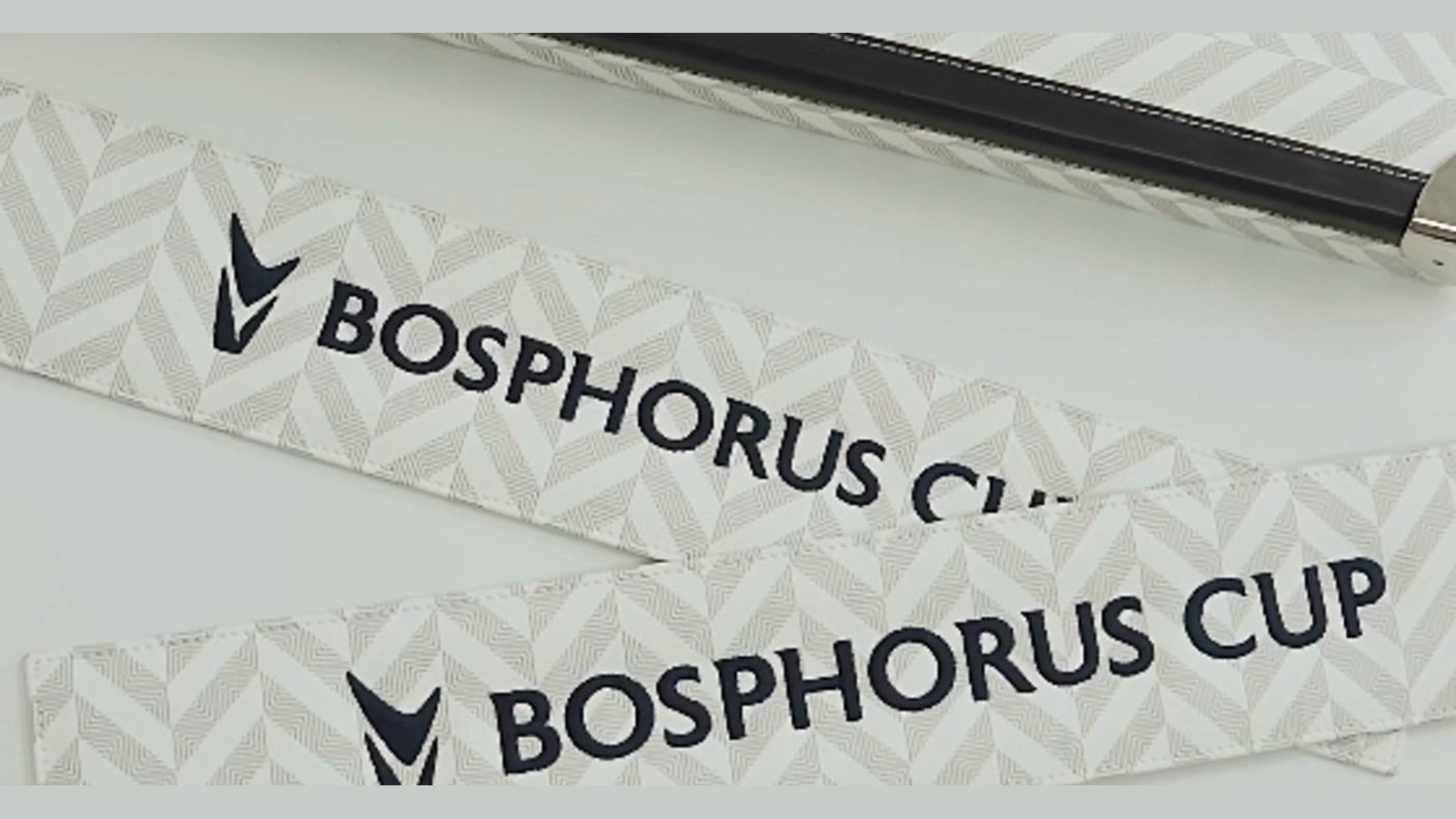
At first glance, it might seem like a small collaboration. There is a race, a trophy, and a design brand has made a special carrying case for that trophy.
There is a much larger example of this idea in the world. Louis Vuitton’s relationship with the America’s Cup, which began in 1983, has today evolved into a brand platform stretching from the FIFA World Cup to Formula 1, and from the NBA to Roland-Garros. The brand owns the moment of how the world's most important trophies are transported, protected, and brought to the stage. It even gave this idea a name: Victory Travels in Louis Vuitton.
Therefore, looking at Misela and the Bosphorus Cup coming together, it is possible to ask an even more interesting question: Where does a brand's own work intersect with the most valuable symbol of a sports organization?
For Louis Vuitton, the story began with sailing
The paths of Louis Vuitton and the America’s Cup crossed in 1983. That year, the brand hosted the elimination races for the challenger teams; the series was named the Louis Vuitton Cup, and a special trunk was crafted for the trophy. Louis Vuitton describes this relationship in its history as its first major sports partnership.
The power of the match went deeper than both parties belonging to the premium world. The America’s Cup has been held since 1851, and Louis Vuitton was founded in 1854. One is among the world's oldest international sporting competitions. The other is a Maison born from producing travel trunks; the protection of valuable items during the journey is at the heart of its founding story.
Louis Vuitton has brought the work it has been doing since the 19th century into the world of sports.
The relationship deepened over time. In 1988, Louis Vuitton designed its first Trophy Trunk for the America’s Cup in blue Epi leather, followed in 1992 by a red Epi leather trunk for the Louis Vuitton Cup. When it returned as the title sponsor of the 37th America’s Cup in Barcelona in 2024, it produced two trunks: one for the Louis Vuitton Cup and the other for the original trophy dating back to 1851, the Auld Mug.
Today, the relationship is 43 years old. Louis Vuitton is also the title partner of the 38th America’s Cup, to be held in Naples in July 2027. This duration is important because here we see a shared culture built over time.
An idea born in sailing moved into other sports
Louis Vuitton's true success is transforming the idea that gained meaning in the America's Cup into a repeatable platform.
Today, Louis Vuitton trunks carry the FIFA World Cup (since 2010), the Rugby World Cup (2015), the Roland-Garros trophies (2017), the League of Legends World Championship trophy (2019), the NBA's Larry O'Brien Trophy (2020), the Davis Cup (2022), and Formula 1 trophies. All of them are handcrafted in the Asnières workshop near Paris.
Sports, audiences, and geographies are changing. The brand’s role remains the same: If victory is going from one place to another, Louis Vuitton carries it. That is why “Victory Travels in Louis Vuitton” tells more than a slogan; it connects the brand's heritage of travel spanning over 170 years to today's world of sports and culture.
The FIFA World Cup is the most visible example. Since 2010, the trophy has arrived at the final inside its trunk and become part of a moment of victory watched by millions.
In Formula 1, the model has gone a step further. The 2026 trunks combine Louis Vuitton’s identity with the colours and symbols of each host city. For Monaco, the Monogram canvas was reinterpreted in Monaco red, and the winner’s initials are added to the trunk.
This detail is important. Louis Vuitton is producing a new object that combines its own brand codes with the local culture of the sport. Every collaboration looks like it belongs to the same family and yet tells its own story.
Why are luxury brands so involved in sports?
Formula 1, football, tennis, and sailing are transforming into global platforms where fashion, design, travel, and entertainment intertwine. For luxury brands, sport has become a cultural space that goes beyond reaching the high-income demographic.
LVMH's structure in Formula 1 is one of the most comprehensive examples of this. TAG Heuer keeps the time, Louis Vuitton carries the trophy, and Moët & Chandon is part of the celebration. Brands of the same group enter different moments of the race with their own product categories.
There is a direct connection here between the product and the sponsorship. The watch brand is matched with time, the champagne brand with celebration, and the trunk maker with the journey of the trophy.
This model is stronger than the classic “our values align” sponsorship. The brand takes on a real role in how the event takes place. Mario Nicoliello’s (University of Brescia) 2025 study examining the Louis Vuitton–America’s Cup relationship also interprets the value of the partnership through long-term brand image, access to new markets, and the balance between heritage and contemporary marketing.
What do the Bosphorus Cup and Misela have in common?
Let's return to Türkiye.
The Bosphorus Cup is being held for the 25th time this year, with racing on 17–19 September across the Sea of Marmara, the Princes’ Islands and the Bosphorus. According to the organisers, more than half of the participants in a fleet of nearly 70 boats come from abroad. The race describes itself as the “Theatre of the Wind”.
The race’s most important physical symbol is its perpetual trophy. Designed by Can Yalman, the crystal and silver trophy weighs around 7 kilograms and was made in 2004 by artisans of the Grand Bazaar. The winning team keeps it for a year, then returns it to the organisers in Istanbul at the traditional handover ceremony. The trophy then passes to its next holder.
This trophy was designed in Istanbul, produced in Istanbul, and has been passing from hand to hand since 2004, carrying the memory of the race.
This is where Misela making a case for this object begins to make sense. Misela, too, builds its identity on Istanbul, pattern, craftsmanship and contemporary design.
The brand was founded in 2008 by Serra Türker Bayır. Born and raised in Istanbul, Bayır studied at the Rhode Island School of Design and then at Parsons School of Design; building on a background in painting, she focused on textile design before specialising in accessories. Misela builds its design philosophy on “pattern and form”. The cintemani motif in its logo comes from Eastern and Ottoman tradition. In an interview, Bayır explains that the herringbone pattern, the signature of the Made to Order collection, draws on the geometric patterns of tilework and architecture.
Travel objects are also no stranger to the brand's world. Misela previously prepared a special travel collection for Annabel's in London. In its Made to Order collection, many products ranging from travel bags to vanity cases can be personalized featuring the brand's herringbone pattern.
So the interesting thing about the box, even before the pattern on it, is this: The work Misela does and the object the Bosphorus Cup needs to carry truly intersect.
Two Istanbul brands, two sides of the same story
Orhan Gorbon describes this collaboration as “two global brands of Türkiye.” When we put the claim of being “global” aside and look at brand logic, the match also has a strong foundation.
What the Bosphorus Cup offers to the world is not limited to sailing races: Istanbul, the Bosphorus, local design, local production, international racers, and a sports experience where these all come together.
In Misela's story, too, Istanbul represents more than just a headquarters address. The brand defines itself as one inspired by Istanbul's culture and contemporary design environment, combining traditional Turkish craftsmanship with a modern aesthetic; alongside its stores in Istanbul and Bodrum, it carries this language beyond Türkiye with its store in London's Mayfair.
The box is therefore a small but meaningful joint product between the two sides:
The Bosphorus Cup carries Istanbul to the international sailing world. Misela carries a design language originating from Istanbul to the international fashion world. The trophy, in the literal sense of the word, journeys between the two.
This is a brand partnership above the “we are reaching the same target audience” level.
The lesson of the Louis Vuitton example for Türkiye
Looking at the Louis Vuitton example, it is easy to conclude, “Brands in Türkiye should also have trophy cases made.” The real lesson lies in a different question: In a sports partnership, how central of a role can the brand's core business play?
Louis Vuitton's value stems from its ability to bring together trunk-making craftsmanship dating back to 1854 with the heritage of the America's Cup dating back to 1851. Then, it comes from preserving and developing this same idea for over forty years, transforming the Trophy Trunk from a single sponsorship application into a global brand asset of its own.
This may be where the potential for sailing in Türkiye lies. Beyond asking where it will be seen during a race, a brand can also ask which part of the race it could improve with its own expertise:
- A design brand can rethink an award or a ceremony.
- A technology company could change the way the race is followed.
- A mobility brand can undertake the ground travel of the teams.
- A hotel brand can make the Istanbul experience of international teams part of the race.
- A textile or material brand can develop a product that is actually used in equipment.
- A financial brand can establish a system for young teams to access international competitions.
The common point in all of them is the same. The brand brings its own product, competency, or culture to the race, and the race gives the brand something it cannot buy: a real context.
Can this partnership have a name?
Louis Vuitton captured its idea in a single line: Victory Travels in Louis Vuitton. The Bosphorus Cup also has a strong asset of its own: the name it gives itself, “Theatre of the Wind”.
Bringing the two ideas together, we can suggest a name for the trophy’s journey:
“The victory from the Theatre of the Wind, carried in Misela.”
(In Turkish: Rüzgârın Sahnesi’nin zaferi, Misela ile taşınıyor.)
Each year the trophy is won on the stage of the wind, spends a year with its winner and returns to Istanbul. Giving this journey a name could be the first step in turning the collaboration from a one-off piece into a ritual repeated over the years.
What does the box tell us?
The case Misela made for the Bosphorus Cup trophy is not yet a brand idea on the scale of Louis Vuitton’s forty-year Trophy Trunk platform. Still, it points to an interesting possibility: an Istanbul design brand and a race that tells the world about Istanbul through sailing, held this year for the 25th time, can enter the same story through a shared object.
The real question is where this relationship is heading: Will Misela and Bosphorus Cup be able to establish their own shared ritual over the years?
The Louis Vuitton-America's Cup story makes one thing clear: The strongest sports partnerships turn into tradition over time.
Videos, interviews and live moments from the racecourse, on our Instagram.
@ruzgar.ustu
Follow on InstagramPodcast
Stories from sailing in Türkiye, told in English. Listen to Windward Türkiye on Spotify.
Listen on SpotifyRüzgar Üstü on Spotify
Keep reading
Bir yelken yarışının pazarlama anatomisi, Bodrum Cup 2026
38. The Bodrum Cup bu yıl OPET'in ana sponsorluğunda, beş etap sponsoru ve elliyi aşkın kurumun desteğiyle düzenleniyor. Sponsor yapısı önceki yıllarla birlikte incelendiğinde, yarışı ayakta tutan en önemli unsurun markaların sürekliliği olduğu görülüyor.
SailGP Nasıl Para Kazanıyor? Hong Kong ve American Express Örneği
Yelkenin uluslararası ligi SailGP, Asya'daki ilk yarışı için American Express ile anlaştı. Kart sahiplerine ayrıcalık sunan bu anlaşma, ligin nasıl para kazandığını anlamak için iyi bir örnek.
A newspaper, a tea merchant and 175 years of sponsorship in sailing
Bir yarışın adında, bir teknenin gövdesinde ya da bir takımın formasında marka görmek bugün olağan. Yelkende bu her zaman böyle olmadı. 1851'den bugüne sponsorluğun dönüm noktalarını anlatıyoruz.