Sportsboat for Beginners
From friendly races in Kalamış Bay to an official Turkish Sailing Federation class: what Sportsboat is about, how the groups are set, and why the winner is not the first boat across the line.
 Written by Rana Akkurt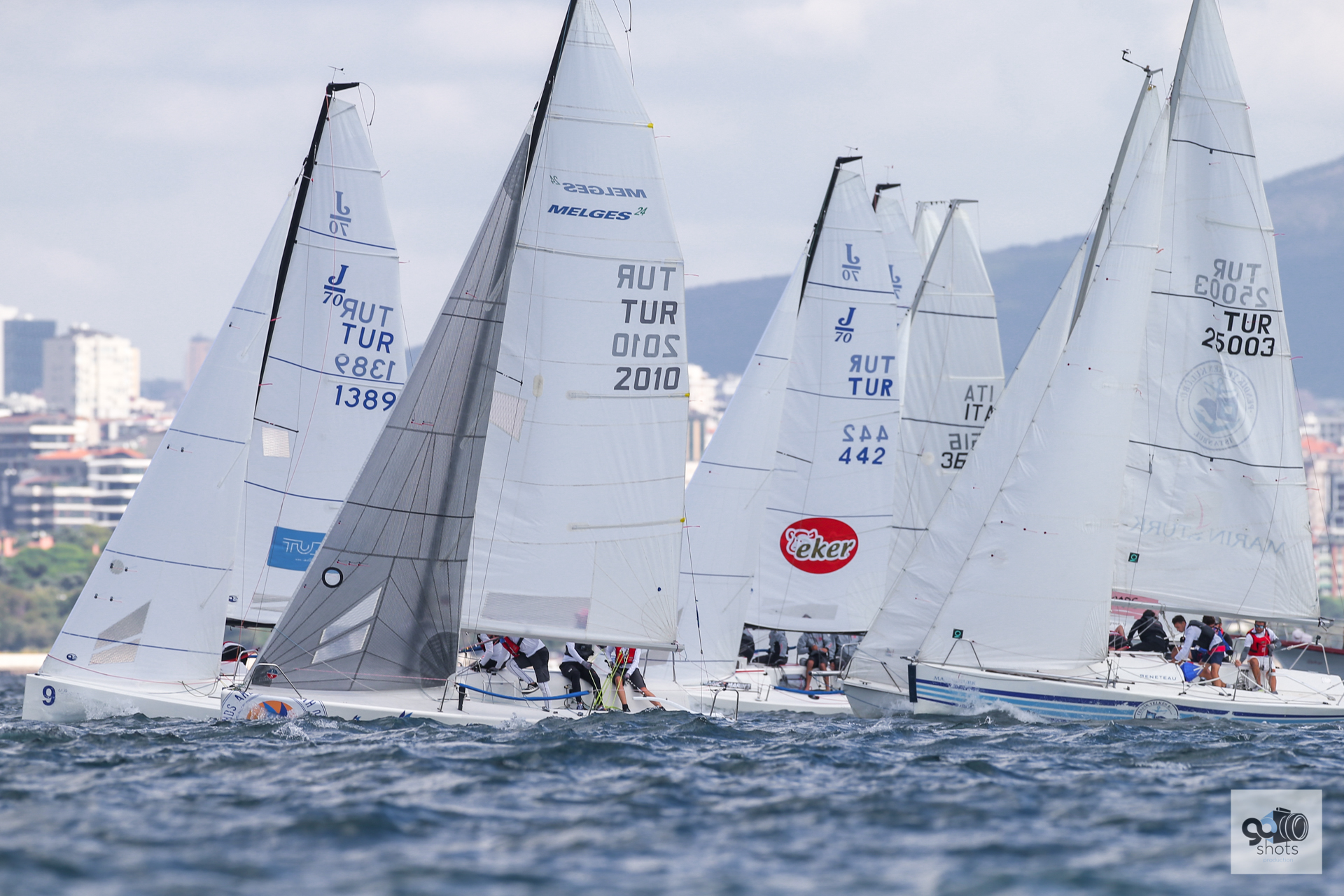

The last three legs of the 2026 TYF Türkiye Süperpar Sportsboat Trophy will be sailed on 6, 12 and 13 September as the Istanbul Sailing Club Cup. Boats as different as the J/70, Farr 25, SB20 and Platu 25 will share one start line. One race, one ranking.
In most of the yacht races we follow in Türkiye, the fleet is either made up of identical boats or split into separate classes by size.
The Sportsboat Trophy looks a little different.
On the start line, a 6-metre SB20 sits next to an 8-metre J/80. They wait for the same wind, round the same course and appear in the same ranking.
What looks unfair at first glance is in fact the whole point of the class.
Sportsboat is not a boat model. It is a class of boats.
What does Sportsboat mean?
Sportsboat is a class definition covering small, fast racing boats between 6 and 9.15 metres in length and under 2 tonnes in weight. Sportsboat Türkiye puts it this way: it is not a class built around a single boat type, but one that covers every boat type within a set of limits.
Any boat that fits these limits and holds a valid ORC certificate can race in the class.
What they share is character more than measurement: a light hull, a deep keel, a large sail area and a small crew. These boats accelerate on short courses, respond quickly to manoeuvres, and as the wind builds, both the fun and the difficulty rise fast.
That is exactly why the class has become a place where the most experienced sailors and people new to the sport race side by side around the world.
Why isn’t the winner the first boat to finish?
There has to be a way of comparing different boats in the same race.
In the Sportsboat Trophy, that way is ORC.
ORC is the most widely used rating system in the world. Each boat’s hull shape, sail area and crew weight are processed in a single piece of software, producing a speed profile that shows how fast the boat should be going in different wind strengths and at different wind angles.
At the end of the race, the question is: how close did each boat get to its own target speed?
That is why the first boat across the finish line and the winner of the race may not be the same boat. A slower boat that sailed closer to its own potential can come out ahead in the ranking.
Sportsboat Türkiye also tells the story of the move to ORC on its site. When racing began in 2011, the Australian SMS (Sportsboat Measurement System) handicap was used; in 2015 the class was introduced to ORC and has raced under ORC calculations ever since.
ORC has one more thing going for it in this class: instead of a single rating number, a boat carries several values that change with the conditions. So looking at the wind on race morning and saying “that boat wins today” is no longer as easy as it used to be.
In Sportsboat the question is not “whose boat is faster?” but “who sailed their own boat better?”
Groups: A, B1 and B2
The fleet starts together, but results are scored in three groups. Boats are split into groups A, B1 and B2 according to the speed value on their certificate.
According to the committee’s category briefing the split of category B into B1 and B2 depends on the number of entries; it is made on the APH value on each boat’s certificate. APH 625 and below is B1, 625.1 and above is B2.
University teams also race in their own category. The Inter-University Sportsboat Trophy has been part of the series since the 2018 season.
One more detail: crew weight is part of the calculation. Every ORC certificate states a maximum crew weight for that boat, and the limit can be checked during racing.
Boats from the fleet
Six of the boats you might see sharing the start line at the Sportsboat Trophy:
| Group | Boat | Highlights |
|---|---|---|
| A | Farr 25 OD | Farr Yacht Design, 2008. Built in Istanbul by OD Yachting. Lead-bulb T-keel with a carbon fin; a 50% ballast ratio and low displacement make it a sportboat that accelerates even in light air. |
| A | J/70 | Alan Johnstone design, J/Boats, 2012. The lifting keel makes it trailerable; four-person crew, asymmetric spinnaker. With more than 1,400 boats it is the most widespread sportboat class in the world. |
| A | RS 21 | RS Sailing, 2018. A modern, easy-to-sail one-design with a fleet that is growing fast worldwide. |
| B1 | J/80 | Rod Johnstone design, J/Boats, 1992. Fixed fin keel, retractable bowsprit and asymmetric spinnaker. More than 1,700 boats, 30 fleets in 12 countries. |
| B1 | Platu 25 | Bruce Farr design from the early 1990s, built under licence by Beneteau. Minimum crew of four (maximum 400 kg). An international one-design class recognised by World Sailing since 2006. |
| B2 | SB20 | Tony Castro design, 2002; sold as the “Laser SB3” until 2012. Class rules forbid hiking, so tactics and boat handling count more than physical strength. Over 800 boats in more than 20 countries. |
Looking at the list, the logic of the class becomes clearer. Most of these boats are one-design classes in their own right, with their own world championships. The Sportsboat Trophy brings those separate worlds onto one start line under a single ORC calculation.
From Kalamış Bay to a federation class
The story of Sportsboat Türkiye begins in a club bay.
In 2011, hosted by Kalamış Sailing Club, owners of sportsboat-type boats started racing among themselves inside Kalamış Bay. Word spread that very different boats were racing neck and neck, interest grew, and crews from outside Istanbul began joining by chartering boats or bringing their own.
Before long the races were being sailed under the name Türkiye Sportsboat Trophy, and the country’s leading sailors joined the crews.
In 2018 an official Sportsboat Committee was set up within the Turkish Sailing Federation. That same year, crews from Ankara, Bursa, Muğla and İzmir took part in the trophy and the National Championship, and Bursa Sailing Club opened a Sportsboat ORC class at the Eker – Bursa Sailing Club Trophy, becoming the first club to run the class outside Istanbul.
A team from Russia also entered the 2018 National Championship, and the Inter-University Sportsboat Trophy, added to the series that season, finished with eight university teams.
The founding committee was chaired by Dr. Şükrü Sanus, with Mahmut Saral, Mehmet Özçetin and Emre Özgen; Saruhan Çınay and Aysu Peksağ joined before 2019. In the committee’s own words, its members are also sailors racing in the trophy. The people who write the rules race under them.
Today the class races at three levels: the eight-leg Türkiye Trophy spread across the season, the annual National Championship and the European Championship. In 2021 the ORC Sportsboat European Championship was held in Istanbul.
2026 season: the last three legs at Istanbul Sailing Club
The 2026 TYF Türkiye Süperpar Sportsboat Trophy began in April. The fifth leg was sailed as the National Championship from 31 July to 2 August.
The structure of the trophy has stayed the same for years: each leg is sailed as the cup of an Istanbul club. In the 2025 season Kalamış Sailing Club, Suadiye Sailing Club, Heybeliada Water Sports Club, Marmara Sailing Club and Istanbul Sailing Club each hosted a leg, and the National Championship counted towards the trophy as one of its legs.
Three legs remain in 2026, and all three will be sailed as the Istanbul Sailing Club Cup:
| Leg | Date | Racing |
|---|---|---|
| Leg 6 | Sunday, 6 September 2026 | Istanbul Sailing Club Cup · İYK 1 |
| Leg 7 | Saturday, 12 September 2026 | Istanbul Sailing Club Cup · İYK 2 |
| Leg 8 | Sunday, 13 September 2026 | Istanbul Sailing Club Cup · İYK 3 |
For notices of race, sailing instructions and results, follow the committee’s 2026 trophy page and notice board for updates.
Why is it a good place to start?
The Sportsboat class has a particular place in the growth of sailing in Türkiye.
The boats are small and the crews are four or five people. One on the helm, one on the mainsheet, one on the jib; everyone’s job is clear and everyone’s job is visible. Instead of doing a single task all weekend on a big yacht, here the crew feels the whole boat in every manoeuvre.
That is why the class has become the choice of people new to sailing, first-time boat owners and sailing schools. University teams racing in their own category is part of the same picture.
The ORC calculation opens another door. A new crew can find its place in the results without owning the fastest boat in the fleet. The measure is how well you sail the boat you have.
And because trophy legs are mostly sailed in a single day, usually a Sunday, it is possible to follow the season without missing it.
What will we be watching this weekend?
On 6 September, in the first leg of the Istanbul Sailing Club Cup, the fleet will start together. When reading the results, look not at who finished first but at the groups and the corrected times.
In group A the J/70s, Farr 25s and RS 21s; in the B groups the J/80, Platu 25 and SB20s will be ranked among themselves. But all of them in the same wind, rounding the same marks.
That is what the Sportsboat Trophy is about: different boats, one race.
Fair winds.
Videos, interviews and live moments from the racecourse, on our Instagram.
@ruzgar.ustu
Follow on InstagramPodcast
Stories from sailing in Türkiye, told in English. Listen to Windward Türkiye on Spotify.
Listen on SpotifyRüzgar Üstü on Spotify
Keep reading
The Bosphorus Cup at 25, seen from Çırağan
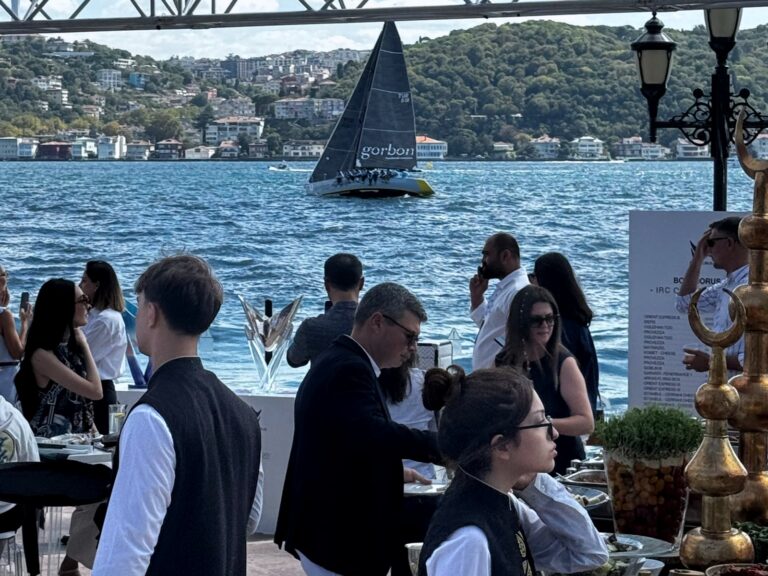
The Bosphorus Cup celebrated its quarter-century on the Bosphorus, and the trophy went to Orient Express VI. We watched the final from Çırağan Palace Kempinski: the battle on the water, highlights of the celebration, comparisons with its global counterparts, and suggestions for the next quarter-century.
Cascais 2026: a 100-boat World Championship seen from the chase boat
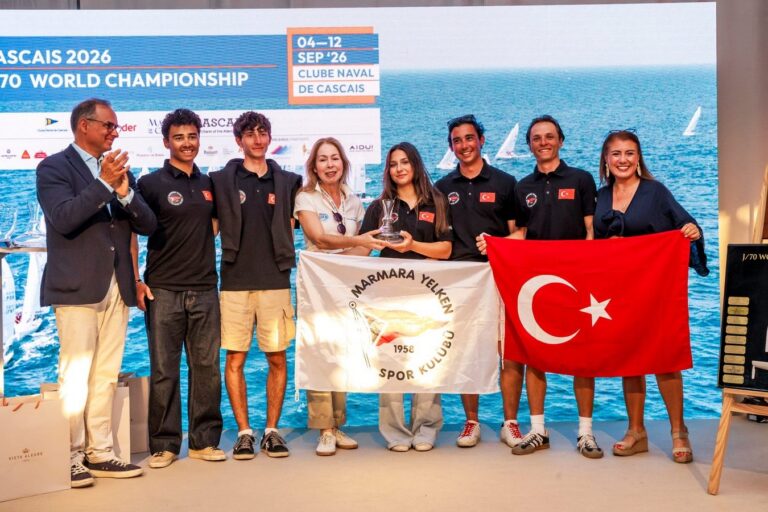
At the Cascais 2026 J/70 World Championship, Marmara Sailing’s young team became the world runner-up in the Young Crew category. Alongside the team for five days was Açelya İdikut, the Sports Director of Marmara Sailing Sports Club and TYF Provincial Judge as well...
Invited skippers will race 11MODs for the 2026 Türkiye Match Race title
The 2026 Turkish Match Race Championship will be held on October 15–16 at Marmaris Albatros Marina. Marmaris is hosting two separate match race events within a month; for both, the organizing club is the same, and the fleet is the same: 11MOD.