11MOD Opens a New Chapter in Türkiye: From the World Championship to the European Match Race Tour
The 11 Metre One Design returns to race in Marmaris this September.
 Written by Rana Akkurt

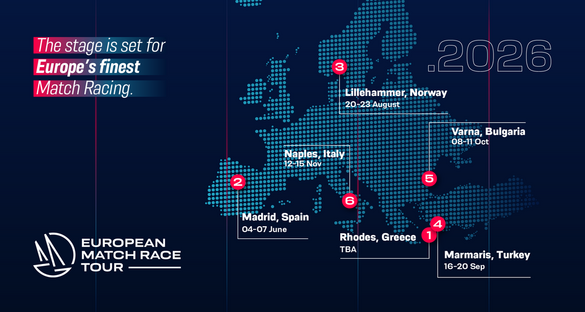
The Türkiye leg of the European Match Race Tour will be held at Albatros Marina on 17–20 September, hosted by Datça Yacht Sport Club. Marmaris is one of five qualifying stops on the tour’s 2026 calendar, and the racing will be sailed in 11MOD boats supplied by the organisers.
As the regatta approaches, there is other news about the class from Türkiye. The Turkish Sailing Federation congratulated Hasan Çıplak on his role in the organisation of the 11MOD One Design World Championship. The federation’s letter of 20 August notes that Çıplak has been elected Vice President of the 11MOD One Design / World Sailing class association and has received the Designer’s Award presented by the class designer, Ron Holland.
So in September we will be watching the 11MOD in Marmaris not only through the results, but through the boat itself and the racing format.
Because on the European Match Race Tour the aim is not to leave a whole fleet behind.
Here, two boats go head to head.
And the race is a bit of a tango on the water.
What kind of boat is the 11MOD?
Behind the 11 Metre One Design is Ron Holland.
The boat was developed to bring high-performance sailing to a more accessible class. Ron Holland Design describes the 11MOD as the world’s first official “sports boat”. Holland’s own 11MOD was the second boat built; he raced it in England and Ireland.
So racing has been the boat’s starting point from the very beginning.
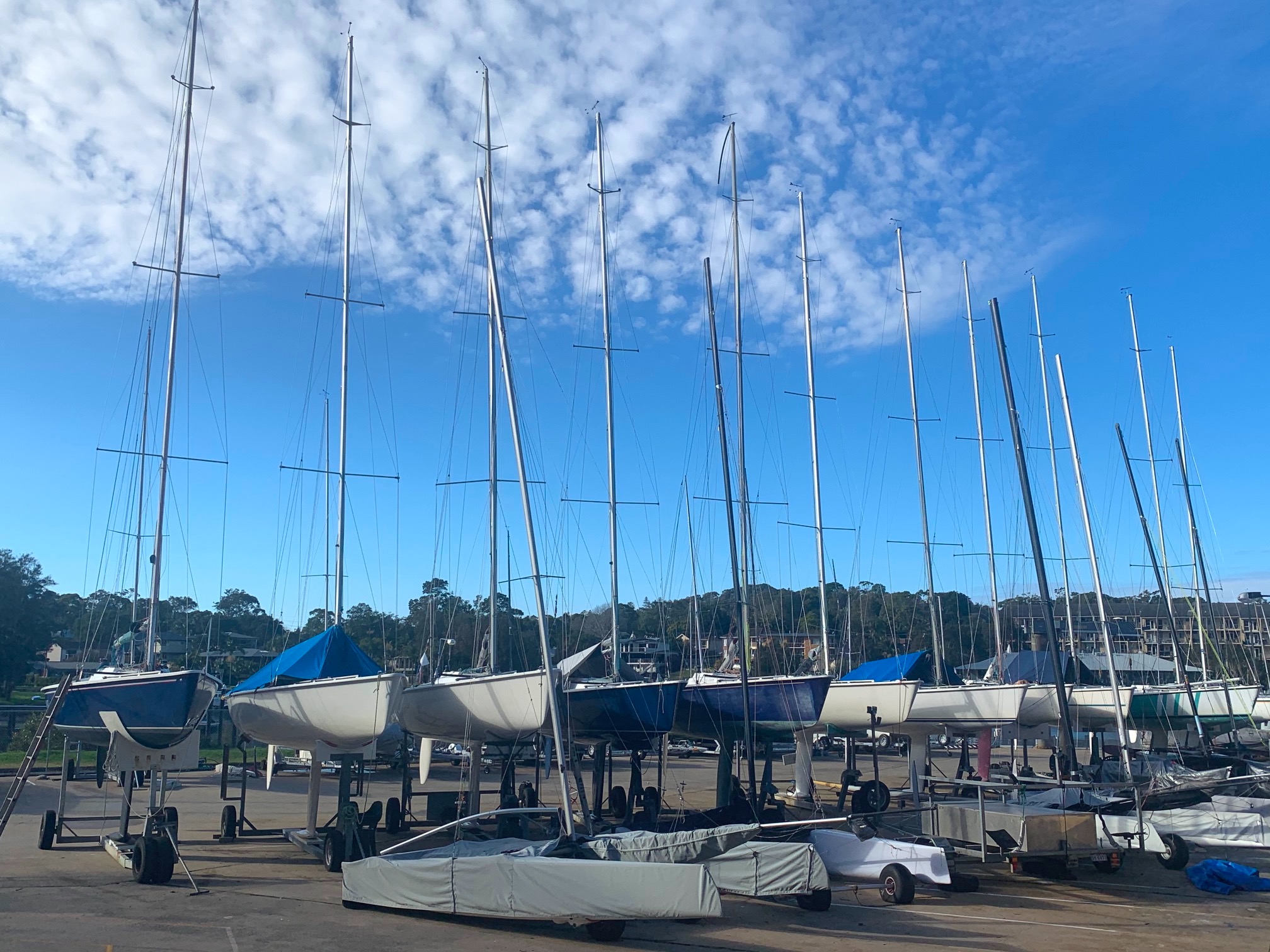
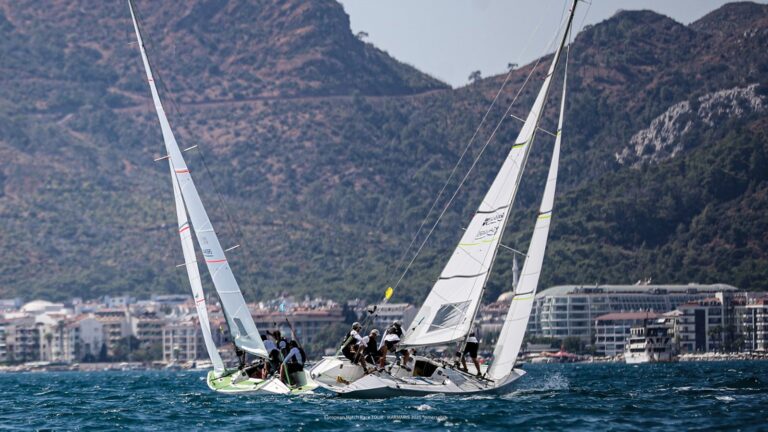
A light hull, a narrow form and a powerful sail plan make the boat a platform that responds quickly to crew movement and manoeuvres. In Marmaris the boats will race with mainsail, jib and spinnaker.
But for this regatta the most important part of the 11MOD is the second half of its name:
One Design.
Boats of the same design race against each other. There is no system comparing different boat models through a rating.
At the Marmaris leg of the European Match Race Tour, the crews do not bring their own boats either. The organisers supply the 11MODs, and the boats are distributed among the crews by a system set by the race committee. According to the notice of race, boats may be allocated by draw on a daily or per-round basis, and boats may be swapped between crews during the knockout stages.
This detail matters.
Because it moves the focus of the race away from “whose boat is faster?” and towards who makes better use of the same platform.
Five-person crews, a 430 kg limit
At the Marmaris leg, the 11MODs will race with five-person crews, skipper included.
Total crew weight may not exceed 430 kg. Weight can be re-checked during the event. The notice of race also states that after the warning signal the skipper may not hand over the helm except in an emergency.
So from crew structure to boat allocation, as level a playing field as possible is created at the start of the regatta.
The rest is up to the crew.
Why is match racing a different kind of race?
In most of the yacht races we follow in Türkiye, we see a fleet on the same start line.
In match racing the picture is much simpler:
Two boats.
In each match, one crew races against the other. The format is built on a tactical battle between two identical boats, one on one.
But fewer boats does not mean less to do.
On the contrary: because there is only one opponent in front of you, everything they do becomes more important.
In a fleet race you can sometimes split from the fleet to find the right breeze. You can set your own course and look for a long-term advantage.
In match racing, breaking away from your opponent is not always what you want.
Which side you keep them on, whether you can cover their wind, when you force them to tack and in what position you enter the mark rounding are all a direct part of the race.
So the fastest course is not always the right one.
Sometimes what matters more is denying your opponent the course they want.
What happened in Marmaris last year?
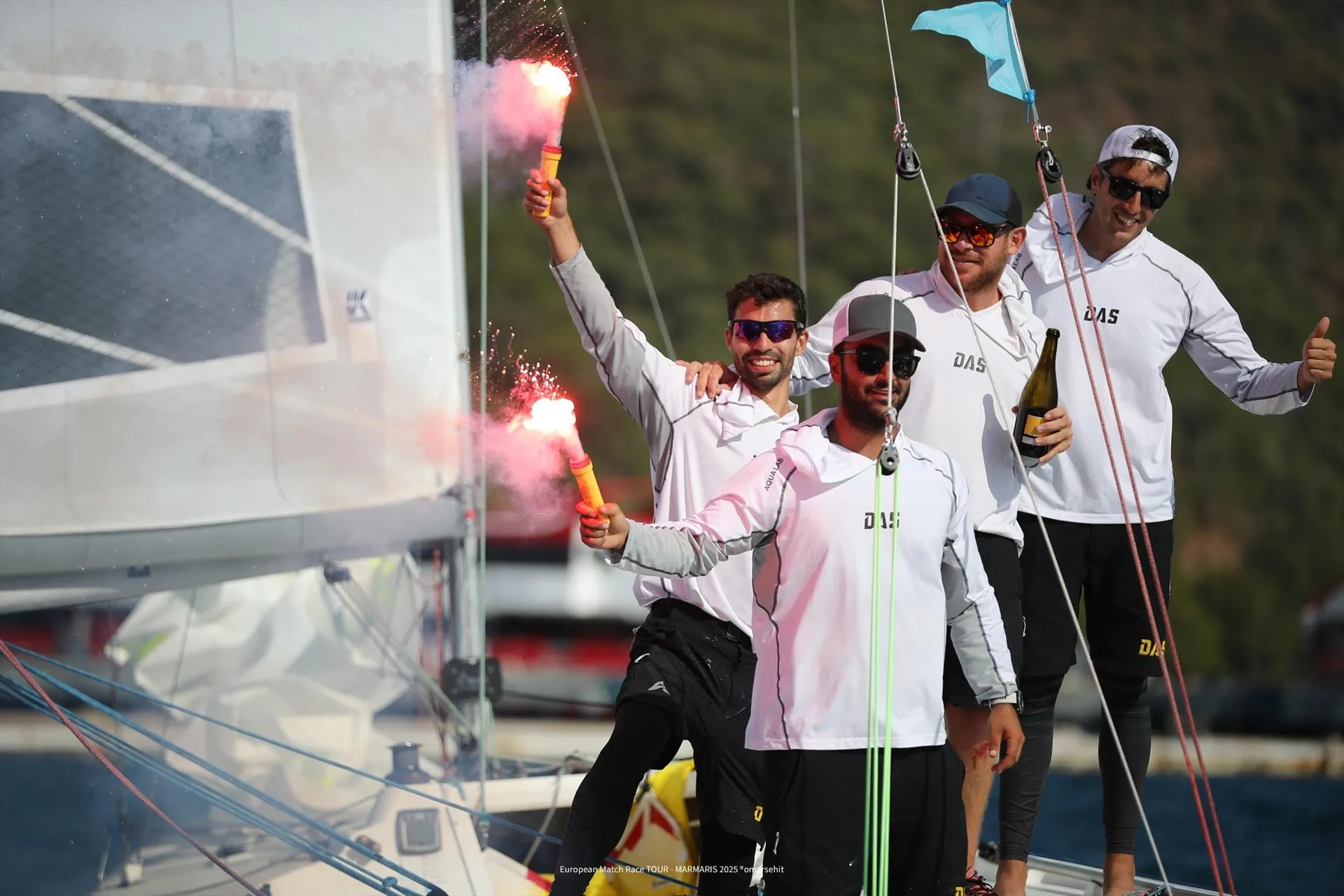
The European Match Race Tour came to Marmaris for the first time in 2025.
At last year’s leg, crews from different countries raced one on one in 11MODs for four days. Marmaris’s steady breeze brought out both the speed of the boats and the close-contact side of match racing.
In the round robin stage the crews sailed against each other, then the top four went through to the semi-finals. In the final, Doğa Arıbaş and his crew won the Marmaris leg.
More interesting than last year’s results was the kind of racing the 11MOD produced in this format. In boats this light and responsive, a small trim difference, a mark rounding or a few seconds of crew coordination showed up directly in position.
The tango on the water starts before the start
One of the most distinctive parts of match racing is the pre-start.
The two boats do not simply come to the start line and wait for the clock. Before the start, they begin positioning against each other.
A crew may try to keep its opponent on the wrong side of the start line, to narrow their room to manoeuvre, or to drag them into an unfavourable position.
That is why, watching a match race before the start, you can see the boats circling each other, slowing down, speeding up again or making one manoeuvre after another.
To someone watching for the first time these moves look unnecessary, but each one is creating position for the next.
That is where the tango comparison comes from.
One boat’s move determines the other’s answer.
Knowing the rules is not only about avoiding penalties
Match racing is governed separately within the World Sailing Racing Rules of Sailing.
The rules for this format are found under Appendix C – Match Racing Rules.
Basic racing rules such as starboard–port, leeward–rüzgar üstü and right of way still apply here. But because only two boats are racing close to each other, these rules become a much more direct part of the tactics.
By bringing your opponent into a particular position, you can force them to give way or draw them into a rule infringement.
So good rules knowledge does not only protect you here.
It becomes a racing skill you can use against your opponent.
The umpire is part of the race
One of the important points that separates match racing from fleet racing is the umpire system.
Umpires follow the two racing boats on the water. So you do not always have to wait for a post-race protest committee to see the outcome of a disputed position.
The decision can come during the race.
And that changes the game instantly.
A crew that has been penalised now has to calculate not only how to pass its opponent, but when to complete its penalty.
And since forcing your opponent into a rule infringement can itself be part of match racing tactics, a penalty is not only the umpire’s decision; sometimes it is the result of a game the other side set up several moves earlier.
That is why a few boat lengths are not always enough
In a fleet race, once you have opened up a certain gap, your relationship with the boat behind you gradually fades.
Match racing is different.
The opponent is always in the game.
If you are carrying an uncompleted penalty, even the gap you have opened approaching the finish may not be enough. Where you take the penalty, relative to your opponent’s position, becomes a new decision.
So the leader of the race a few minutes earlier and the first boat across the finish line may not be the same.
This closeness is one of the most watchable things about match racing.
What will we be watching in Marmaris?
The Marmaris leg of the European Match Race Tour will show not so much the speed of the 11MOD as how much difference two crews can make in the same boat.
Same boats. Same course. Only one opponent in front of you.
The difference can come from the position taken in the pre-start, a tack at the right moment, a few metres at the mark rounding, a spinnaker manoeuvre, or a single move that forces the opponent into a mistake.
That is why reading match racing simply as “a race with two boats” falls short. Here your opponent is not just the boat you have to pass; they are part of every decision you make.
The Marmaris leg of the European Match Race Tour will take place on 17–20 September, organised by Datça Yacht Sport Club. In racing sailed in 11MODs, the real difference will come from how two crews race each other in the same boat.
In Marmaris we will be looking beyond the results: the pre-start, the tactical battle, the crews, and how the 11MOD is used in this format.
Videos, interviews and live moments from the racecourse, on our Instagram.
@ruzgar.ustu
Follow on InstagramPodcast
Stories from sailing in Türkiye, told in English. Listen to Windward Türkiye on Spotify.
Listen on SpotifyRüzgar Üstü on Spotify
Keep reading
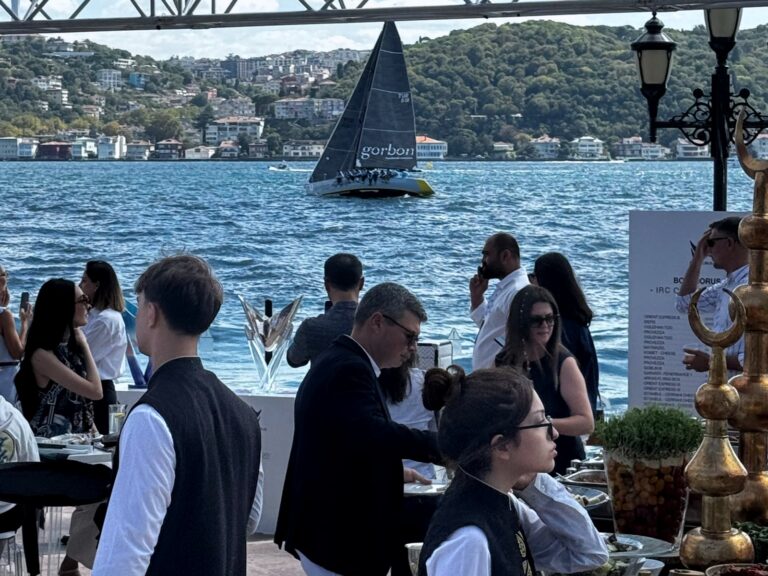
The Bosphorus Cup at 25, seen from Çırağan
The Bosphorus Cup celebrated its quarter-century on the Bosphorus, and the trophy went to Orient Express VI. We watched the final from Çırağan Palace Kempinski: the battle on the water, highlights of the celebration, comparisons with its global counterparts, and suggestions for the next quarter-century.
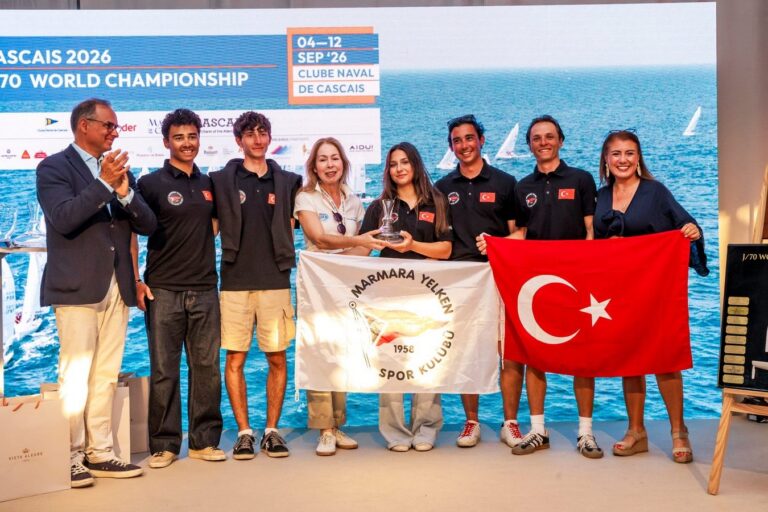
Cascais 2026: a 100-boat World Championship seen from the chase boat
At the Cascais 2026 J/70 World Championship, Marmara Sailing’s young team became the world runner-up in the Young Crew category. Alongside the team for five days was Açelya İdikut, the Sports Director of Marmara Sailing Sports Club and TYF Provincial Judge as well...
Invited skippers will race 11MODs for the 2026 Türkiye Match Race title
The 2026 Turkish Match Race Championship will be held on October 15–16 at Marmaris Albatros Marina. Marmaris is hosting two separate match race events within a month; for both, the organizing club is the same, and the fleet is the same: 11MOD.